- Top Pick: Ring Sensors: Car Tracker and Alarm — Vehicle location tracking, easy installation, on Amazon Sidewalk, no monthly subscription
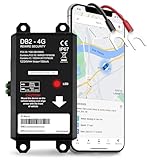
- Best Value: REWIRE SECURITY DB2-4G GPS Tracker for Vehicles – Real-Time Vehicle Tracking Device for Car, Van, Motorhome | Easy Battery Install | Live App Tracking | 4G Fleet Tracking | Low Cost Plan | Free Trial
- Premium Choice: CARLOCK Anti Theft Car Device – Real Time 4G Car Tracker & Car Alarm System. Comes with Device & Phone App. Tracks Your Car in Real Time & Notifies You Immediately of Suspicious Behavior.OBD Plug&Play

TL;DR: Van security means layers — a loud alarm to deter smash-and-grabs, a hidden GPS tracker to recover the van if stolen, reinforced entry points to slow down any determined attempt, and stealth practices that avoid drawing attention in the first place. This guide covers all of it.
Van Security Alarm and GPS Tracker: Complete Guide to Protecting Your Home on Wheels
Your van isn’t just a vehicle — it’s your home, your bedroom, and often your entire worldly possession collection on wheels. A factory car alarm and a prayer isn’t a security strategy. Full-time vanlifers who’ve had a van broken into describe it as one of the most violating experiences imaginable. A layered security approach — alarm, tracking, physical hardening, and stealth — makes your van a much harder target and dramatically improves your odds of recovery if something does happen.
As an Amazon Associate we earn from qualifying purchases.




🛒 Best Price Today on Amazon
Prime members get fast, free shipping on everything above, plus member-only deals. New members get a 30-day free trial — cancel anytime.
Start 30-Day Prime Free Trial →See Today’s Amazon Deals- Top Van Security Products
- Van Security: A Layered Approach
- Van Alarm Systems
- GPS Trackers for Vans
- Physical Security: Door Locks and Reinforcement
- Stealth Security: The Best Defense
- Van Security Alarm and GPS Tracker: FAQ
- Protect Your Investment Before You Need To
- Frequently Asked Questions
- Related Articles
- Related Guides
Top Van Security Products
The security tools vanlifers trust to protect their builds:


As an Amazon Associate we earn from qualifying purchases. Product prices and availability are accurate as of the date/time indicated.

WAYSKA Diesel Heater 12V, 5L Tank, Diesel Heater 2KW, Muffler, Diesel Parking Heater with LCD Monitor & Remote Control for Trucks, Trailer, Boat and Motor-Home


As an Amazon Associate we earn from qualifying purchases. Product prices and availability are accurate as of the date/time indicated.

Ivation Portable Camping Shower | Compact Handheld & Hands-Free Rechargeable Outdoor Shower Head & Cleaning System w/ 3.7V Pump, 6-Ft Hose, Bidet Head, Removable Filter, Multiuse Hook & USB Cable


As an Amazon Associate we earn from qualifying purchases. Product prices and availability are accurate as of the date/time indicated.
Van Security: A Layered Approach
See also: Can You Listen to Apple Music Offline? • Top Radeon Graphics Deals
| Layer | What It Does | Cost Range | Priority |
|---|---|---|---|
| Alarm system | Deters opportunistic break-ins with noise | $50–$300 | High |
| GPS tracker | Enables recovery if van is stolen | $30–$200 + subscription | High |
| Door locks/deadbolts | Slows forced entry significantly | $50–$200 | High |
| Window film | Prevents smash-and-grab visibility | $30–$80 | Medium |
| Steering wheel lock | Visual deterrent, slows joyriders | $25–$80 | Medium |
| Kill switch | Prevents hotwiring/driving away | $20–$100 installed | Medium |
| Stealth practices | Avoids drawing attention | Free | High |
Van Alarm Systems
Most factory van alarms only cover the cab — slide doors and rear doors often have no sensors at all. An aftermarket alarm system adds coverage to all entry points plus motion sensing for interior protection.
What to look for in a van alarm:
- All-door coverage: Sensors on every door — cab doors, sliding door, rear doors. Don’t assume your factory alarm covers them all.
- Motion sensor: PIR (passive infrared) motion detection inside the van catches anyone who gets past the door sensors.
- Glass break sensor: Detects the frequency of breaking glass, triggering the alarm before an intruder is fully inside.
- Shock sensor: Detects impacts to the van — someone leaning hard on the door, using a slim jim, or hitting the vehicle. Adjust sensitivity to avoid false alarms from passing trucks.
- Remote notifications: 2-way pagers or smartphone app alerts let you know the alarm triggered even when you’re out of earshot.
- Siren: 110-120dB siren draws immediate attention. The louder and more piercing, the better as a deterrent.
Viper, Compustar, and Python are the most reliable aftermarket alarm brands. Professional installation runs $150-300 but ensures sensors are properly integrated and won’t false-alarm constantly.
GPS Trackers for Vans
An alarm deters theft. A GPS tracker recovers your van after theft. They’re complementary, not interchangeable. GPS trackers have recovered stolen RVs and vans from chop shops, across state lines, and in situations where the van would otherwise have been a total insurance loss.
Key GPS tracker considerations:
- Hardwired vs. OBD-II plug-in: Hardwired trackers are hidden and can’t be easily removed; OBD plug-in units are easier to install but visible to anyone who looks under the dash.
- Subscription cost: Most GPS trackers require a monthly cellular data plan — typically $10-25/month. Factor this into your ongoing costs.
- Update frequency: Real-time trackers update every 10-60 seconds. For theft recovery, faster is better. Some units update every 3 minutes on a cheaper plan — acceptable for knowing general location but not for a moving vehicle.
- Battery backup: If your van’s battery is disconnected, a tracker with internal backup battery keeps reporting. Essential — thieves sometimes cut power to the vehicle.
- Geofencing alerts: Set a perimeter around your parking spot. If the van moves unexpectedly, you get an instant notification.
Popular options in 2025: Bouncie (affordable subscription, decent update rate), LandAirSea 54 (waterproof, battery backup), and MOTOsafety. For maximum recovery odds, hide a second GPS tracker in a non-obvious location — behind trim panels, inside the wheel well housing, or under the dash away from the OBD port area.
Physical Security: Door Locks and Reinforcement
Alarms and trackers are reactive. Physical hardening makes entry harder — slowing down an attacker enough that they move to an easier target.
Rear Door Security
Van rear doors are the most common entry point. The factory latch on most vans can be defeated in under 30 seconds. Add a slide bolt deadbolt mounted to the interior — thieves can’t access it from outside. Two-bolt systems (top and bottom of the door) are significantly more resistant to prying than a single center lock.
Sliding Door Reinforcement
Sliding doors are harder to reinforce due to their mechanism. A slam lock (replaces the factory latch, automatically deadbolts when closed) is the most popular solution. For extra security, a pin lock through the door track prevents the door from opening even if the latch is defeated.
Cab Door Considerations
Factory cab door locks are reasonably secure. The bigger risk is a broken window — most cab break-ins are smash-and-grabs targeting valuables visible through the windshield. Never leave anything visible in the cab. A steering wheel club is an effective visual deterrent that makes your van look like more trouble than the next one.
Stealth Security: The Best Defense
The most effective van security technique is looking unremarkable. A plain cargo van with blacked-out windows and no obvious life-in-van indicators draws far less attention than a heavily outfitted build with a roof deck, solar panels, and a “Home Is Where You Park It” sticker. Some practical stealth principles:
- Park in well-lit, moderately trafficked areas — not isolated lots or dark side streets
- Don’t run cords, hoses, or antennas out of the van while parked in public
- Keep window coverings installed when sleeping — no light leakage
- Vary your parking spots — parking in the same spot nightly makes you predictable
- Research neighborhoods before parking for the night — crime map apps give real data
A solid van electrical setup also supports security — your LiFePO4 battery bank powers the alarm system, GPS tracker, and any interior cameras continuously without draining the starter battery.
Van Security Alarm and GPS Tracker: FAQ
What is the best alarm system for a cargo van?
Viper 5906V and Compustar CS7900-AS are top-rated aftermarket alarm systems for vans, offering two-way communication, smartphone integration, and full coverage of all entry points. For van-specific applications, look for a system that includes interior motion sensing and glass break detection — these are often add-ons with basic alarm kits but worth the extra cost for a vehicle you live in.
Where should I hide a GPS tracker in my van?
Common hiding spots: behind interior trim panels (pull back the lower wall trim), inside the engine bay secured to the frame, under the vehicle attached magnetically to a structural member, or behind the dashboard away from the OBD port. The goal is a location that’s difficult to find without a radio frequency scanner, inaccessible from the driver’s seat, and not visible during a casual search. Hide at least one tracker in a location completely separate from the obvious OBD port area.
Do van alarms drain the battery?
A properly installed aftermarket alarm draws 20-50 milliamps in standby — approximately 0.5-1.2 amp-hours per day. This is negligible for a healthy battery and completely irrelevant for a van with a lithium house battery bank. The GPS tracker adds another 20-100mA depending on the model and update frequency. Total security system parasitic draw of under 150mA won’t cause any battery issues.
Should I get a car alarm or a GPS tracker first?
If budget forces a choice, start with the GPS tracker — it’s the lower-cost option and provides something an alarm can’t: recovery capability. A determined thief will ignore or disable an alarm; no alarm stops a tow truck. A well-hidden GPS tracker with a cellular subscription is your best chance of getting your van back if it’s taken. Add the alarm as a deterrent layer once you have tracking covered.
Can I install a van alarm myself?
Basic alarm systems with plug-and-play harnesses (some Viper models) can be DIY-installed if you’re comfortable with automotive wiring. More capable systems with custom sensor placement are better left to a professional installer — incorrect wiring causes false alarms, drained batteries, and can interfere with your van’s CAN bus systems on modern vehicles. Professional installation ($150-300) is cheap insurance on a $50,000+ home.
Protect Your Investment Before You Need To
Van security isn’t something to think about after a break-in — the time to build your security system is before you hit the road. A loud alarm, a hidden GPS tracker, reinforced door locks, and smart parking habits create a layered defense that deters most thieves and recovers from the ones it doesn’t deter. Pair your security system with the rest of your build’s foundation — good plumbing, reliable heating, and solid power — and you have a van that’s not just comfortable to live in, but genuinely secure wherever the road takes you.
Frequently Asked Questions
How much battery does a GPS tracker use if I leave the van parked?
A hardwired tracker reporting hourly draws about 10-25 milliamps, or roughly 0.5Ah per day, which a starter battery tolerates for a couple of weeks. Trackers pinging every minute draw far more. Wire it to the house bank with solar rather than the starter battery if the van sits for months.
Should the tracker go on 12V hardwire or run on its own battery?
Hardwired trackers never need charging and can report ignition events, but a thief who cuts power kills them. The best setup is a hidden hardwired unit with an internal backup cell, plus a second cheap battery-powered tracker concealed somewhere completely separate, such as inside a cabinet or under trim.
Do van alarms actually deter break-ins?
Audible sirens deter opportunists but are widely ignored in cities. The measures that genuinely stop entry are physical: slam locks and deadbolts on the slider and rear doors, door pin reinforcement plates, and a steering lock. Treat the alarm and tracker as recovery tools, not prevention.
Where should I hide the tracker so a thief cannot find it?
Away from anywhere a scanner or a quick glance reaches: inside a headliner cavity, behind a kick panel, or inside a factory wiring loom. Avoid the OBD port and the glovebox, which are the first places checked. GPS needs some sky view, so all-metal enclosures will hurt lock accuracy.
Does a tracker keep working in cold or without cell signal?
Cellular trackers store positions when out of coverage and upload when a signal returns, so a backcountry gap is not a blind spot. Extreme cold reduces internal battery life significantly, so hardwired units are far more reliable in winter. Check your tracker supports the LTE bands in the areas you travel.