Last updated: October 11, 2026
For most photographers, the best Sony Alpha camera in 2026 is the Sony Alpha a7 IV — a 33MP full-frame body with in-body image stabilization, dual card slots, a 759-point phase-detection autofocus system, and a mount that accepts every full-frame E-mount lens Sony has produced. It is the point where full-frame image quality, autofocus reliability, battery life, and card redundancy stop being compromises, which makes it the right answer for travelers, portrait and event shooters, and hybrid photo/video creators who want one body to cover most of their work. If the budget is tighter, the a6400 remains the strongest stills-focused entry point, while the ZV-E10 is the better beginner pick when video is the priority. When speed matters more than price, the a7 V with its AI-driven autofocus and 30fps burst is the premium all-rounder; for maximum resolution, the a7R VI leads the line. Everyone else should read the criteria below and match a body to the work they actually shoot.
- Top 3 Picks
- Quick Comparison
- How We Chose
- 1. Sony Alpha a6400 – Best for beginners and travel stills
- 2. Sony Alpha a7 IV with 28-70mm Lens – Best for a one-box full-frame start
- 3. Sony Alpha 7 IV Full-frame Body – Best for photographers who already own E-mount glass
- 4. Sony Alpha a7 V – Best for action, wildlife, and hybrid professional work
- 5. Sony ZV-E10 with 16-50mm Lens – Best for vloggers and video-first beginners
- 6. Sony Alpha a7R VI – Best for landscape, studio, and print photography
- 7. Sony Alpha a6700 – Best for APS-C shooters who want current technology
Top 3 Picks
Best overall: Sony Alpha a7 IV
A 33MP full-frame sensor, roughly 5.5 stops of stabilization, 759 phase-detection points, dual card slots, and a battery rated near 580 frames per charge. It is the most capable body most photographers can reasonably justify, and it performs equally well on a tripod at sunrise and handheld at an indoor event. Buy it as a kit if you need a lens on day one, or body-only if you already own E-mount glass.
Best budget: Sony Alpha a6400
24MP APS-C, 425 phase-detection points with Real-Time Eye AF, 11fps continuous shooting, and a body that weighs about 403g with the battery installed. It gives up stabilization, the newer battery, and a headphone jack, but it is the least expensive route into Sony’s autofocus system and the lens catalog behind it. For a stills-first beginner, that trade is usually the right one.
Best premium: Sony Alpha a7 V
The newest full-frame all-rounder, built around a dedicated AI processing unit for subject recognition and continuous shooting at up to 30fps. Choose it over the a7 IV if you photograph action, wildlife, or fast-moving children and want the longest useful service life from a single body. It costs more and rewards shooters who will actually use the speed.
Quick Comparison
See also: Can You Listen to Apple Music Offline? • Top Radeon Graphics Deals
| Product | Best for | Key specs | Price tier |
|---|---|---|---|
| Sony Alpha a6400 | Beginners, travel stills, family photos | 24.2MP APS-C, 425-point AF, Real-Time Eye AF, 11fps, no IBIS, NP-FW50 battery (~360–410 shots), single UHS-I slot, 403g with battery | Budget |
| Sony Alpha a7 IV with 28-70mm | One-box full-frame start | 33MP full-frame, 759-point AF, 10fps, ~5.5-stop IBIS, dual slots (CFexpress Type A + SD), NP-FZ100 battery (~580 shots), 658g body; 28-70mm f/3.5-5.6 OSS kit lens, 295g, 55mm filter thread | Mid-range |
| Sony Alpha 7 IV (body only) | Shooters who already own full-frame E-mount glass | Same 33MP full-frame core, same AF, IBIS, slots and battery as the kit version; no lens in the box | Mid-range |
| Sony Alpha a7 V | Action, wildlife, professional hybrid work | Full-frame sensor in the 30MP class, dedicated AI processing unit for subject recognition, 30fps continuous shooting, full-frame body | Premium |
| Sony ZV-E10 with 16-50mm | Vlogging, video-first beginners, talking-head recording | 24.2MP APS-C, no electronic viewfinder, side-flip screen, directional 3-capsule mic, no IBIS, NP-FW50 battery (~440 shots), 343g with battery; 16-50mm power zoom kit lens, 116g | Budget |
| Sony Alpha a7R VI | Landscape, studio, architectural and print work | 66.8MP full-frame sensor per the listing, AI-based autofocus and subject recognition, high-resolution body in the full-frame R line | Premium |
| Sony Alpha a6700 | APS-C hybrid shooters who want current technology | 26MP APS-C, 759-point AF, dedicated AI processing unit, 11fps, in-body stabilization, NP-FZ100 battery (~570 shots), single UHS-II slot, mic and headphone jacks, 493g with battery | Budget |
How We Chose
This roundup is built from published manufacturer specifications, documented lens-mount compatibility, and the accumulated body of owner reporting that exists for each camera generation — not from testing any of these bodies. Five criteria carried the most weight. First, sensor format and resolution, because the 1.5x crop factor of APS-C and the low-light behaviour of full-frame determine what kind of photography a body is realistically suited to. Second, autofocus architecture: the number of phase-detection points, coverage of the frame, and whether the camera has a dedicated AI processing unit for subject recognition. Third, stabilization, measured in stops of compensation and whether it lives in the body or the lens. Fourth, endurance, using CIPA battery ratings and card-slot count as proxies for how a body behaves on a long shoot day. Fifth, the lens ecosystem behind the mount, since the total cost of ownership is usually decided by glass rather than by the camera. Each pick is also judged on upgrade path — whether the body is a sensible first step or a dead end.
1. Sony Alpha a6400 – Best for beginners and travel stills

Sony Alpha a6400 Mirrorless Camera: Compact APS-C Interchangeable Lens Digital Camera with Real-Time Eye Auto Focus, 4K Video, Flip Screen & 16-50mm Lens - E Mount Compatible - ILCE-6400L/B, Black
Included for 'Best Sony Alpha Cameras for Every Photographer' because the listing specifies 4K Video and Flip Screen & 16-50mm Lens, details this guide uses to compare options.
View on AmazonThe a6400 is the camera that answers the question “what is the cheapest way into Sony’s autofocus system?” It suits a first-time mirrorless buyer who shoots stills far more than video, a traveler who wants a body small enough to live in a jacket pocket with a compact zoom attached, and a hobbyist photographing children or pets who wants eye detection that actually holds on. It is not the newest APS-C body Sony makes, and it is not trying to be. What it offers is a well-proven sensor, autofocus that was class-leading when it launched and remains genuinely good, and a used and new lens market that is deep and inexpensive.
Key specifications
- Sensor: 24.2MP APS-C Exmor CMOS, 1.5x crop factor
- Autofocus: 425 phase-detection points with contrast-detection assist, covering roughly 84% of the frame; Real-Time Eye AF for humans and animals; Real-Time Tracking
- Continuous shooting: up to 11fps with AF and AE tracking
- Stabilization: none in body — relies on optical stabilization in OSS lenses
- Viewfinder: 2.36M-dot OLED electronic viewfinder, 0.39-inch type
- Screen: 3-inch 921k-dot touchscreen that tilts 180 degrees upward for self-recording
- Video: 4K up to 30p with full pixel readout and no pixel binning; Full HD up to 120p
- Battery: NP-FW50, CIPA-rated for roughly 360–410 shots depending on viewfinder use
- Storage: single SD slot, UHS-I
- Weight: approximately 403g with battery and card
- Body: magnesium alloy chassis with dust and moisture resistance
Where it earns its place
The autofocus is the headline. Real-Time Eye AF on a body in this class means you can hand the camera to a friend, point it at a person, and get a sharp frame without explaining back-button focus. Real-Time Tracking lets you tap a subject and let the camera follow it around the frame, which is a meaningful advantage for anyone photographing unpredictable movement.
The second argument is size and cost of the whole system, not just the body. The 16-50mm power zoom kit lens collapses flat and weighs almost nothing, so the complete package disappears into a small bag. The APS-C E-mount catalog includes several compact primes and zooms that cost far less than their full-frame equivalents, and because the mount is shared, any full-frame E-mount lens you buy later will still mount and work — it will simply crop to the APS-C area. That makes the a6400 a low-risk first step rather than a dead end.
The third is the viewfinder. Many beginner-oriented bodies in this price class omit an electronic viewfinder entirely, which becomes a real problem in bright sun where a rear screen washes out. The a6400 keeps one, and at 2.36M dots it is pleasant to use.
Pros
- Real-Time Eye AF and Real-Time Tracking at a budget price point
- Compact 403g body that travels easily with a small zoom
- Built-in 2.36M-dot electronic viewfinder, unlike several rivals in its class
- Deep, inexpensive APS-C E-mount lens catalog and full compatibility with full-frame E-mount glass
- Magnesium alloy body with dust and moisture resistance
- 180-degree tilting screen useful for casual self-recording
Cons
- No in-body stabilization, so handheld video and low-light stills depend on lens OSS
- Older NP-FW50 battery delivers roughly 360–410 shots, well short of current full-frame endurance
- Single UHS-I card slot with no redundancy
- No headphone jack, which limits audio monitoring for video work
- Rolling shutter is noticeable in fast panning and in 4K footage
- Micro-USB rather than USB-C, and no 10-bit internal recording
How it compares with the nearest alternatives
Against the ZV-E10, the a6400 wins on the viewfinder, on the tilting screen’s usefulness for stills, and on overall handling for photography. The ZV-E10 wins on price, on the directional microphone, and on video-first features like product showcase mode — but it has no viewfinder at all. Against the a6700, the a6400 is simply older: the a6700 adds a 26MP sensor, a dedicated AI processing unit, in-body stabilization, a much larger NP-FZ100 battery, a headphone jack, and 4K at higher frame rates. If your budget stretches and you shoot any video at all, the a6700 is the more future-proof APS-C body. If you shoot stills, travel light, and want to spend the difference on lenses, the a6400 remains the better value.
2. Sony Alpha a7 IV with 28-70mm Lens – Best for a one-box full-frame start
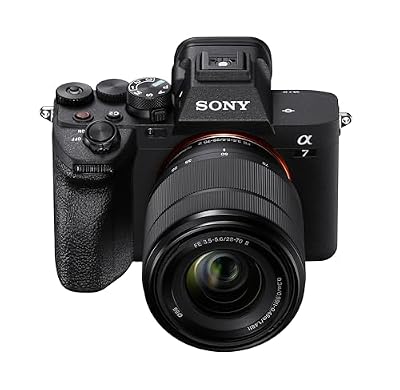
Sony Alpha a7 IV Mirrorless Camera with 28-70mm Lens Black
Included for 'Best Sony Alpha Cameras for Every Photographer' as a relevant option in this category; details come from the product listing.
View on AmazonThe a7 IV kit is aimed at the buyer who is moving up to full-frame for the first time and wants a complete, working camera on day one rather than a body and an empty mount. It suits a photographer stepping up from APS-C or a phone who wants one purchase that covers portraits, travel, family events, and a reasonable amount of video without a second shopping trip. The included 28-70mm f/3.5-5.6 OSS zoom is a modest lens, but it covers the most-used focal range in photography and it stabilizes, which matters on a body that also stabilizes.
Key specifications
- Sensor: 33MP full-frame Exmor R CMOS back-illuminated, 35mm format
- Autofocus: 759 phase-detection points covering approximately 94% of the frame, with Real-Time Eye AF for humans, animals, and birds, plus Real-Time Tracking
- Continuous shooting: up to 10fps with AF/AE tracking
- Stabilization: 5-axis in-body image stabilization rated around 5.5 stops with a compatible lens
- Viewfinder: 3.69M-dot OLED electronic viewfinder
- Screen: 3-inch vari-angle touchscreen, fully articulating
- Video: 4K up to 60p with a Super35 crop, or 4K up to 30p oversampled from 7K; 10-bit 4:2:2 internal recording; S-Log3 and S-Cinetone
- Battery: NP-FZ100, CIPA-rated around 580 shots
- Storage: dual slots — one CFexpress Type A / SD hybrid, one SD
- Weight: approximately 658g body with battery and card; kit lens adds 295g
- Kit lens: FE 28-70mm f/3.5-5.6 OSS, 72.5mm diameter, 83mm length, 55mm filter thread
Where it earns its place
The 33MP sensor is the practical sweet spot for full-frame: enough resolution to crop meaningfully or print large, without the file sizes and processing demands of a 60MP-plus body. Combined with 5-axis stabilization, it means you can shoot handheld in dim interiors at slower shutter speeds than an unstabilized body allows.
The autofocus system is the other half of the argument. 759 phase-detection points across roughly 94% of the frame, with subject recognition for people, animals, and birds, puts the a7 IV in territory that used to be reserved for professional bodies. For event photography — where you cannot control where people stand and you cannot ask them to hold still — that coverage matters more than any other specification.
The kit lens deserves an honest assessment. The 28-70mm f/3.5-5.6 OSS is a starter zoom: reasonably sharp in the center, light at 295g, stabilized, and with a common 55mm filter thread. It is not fast, so it struggles in low light and does not deliver much background separation. But it lets you shoot immediately, learn what focal lengths you actually favour, and then buy a serious lens with that knowledge instead of guessing. Treat it as a paid trial rather than a long-term lens.
The dual card slots are worth noting because they are rare at this price point. Slot 1 accepts CFexpress Type A or SD, slot 2 accepts SD. For anyone shooting paid work, the ability to write simultaneously to two cards removes an entire category of risk.
Pros
- 33MP full-frame sensor balances resolution, file size, and low-light performance
- 759-point autofocus with human, animal, and bird eye detection
- Around 5.5 stops of in-body stabilization
- Dual card slots with CFexpress Type A support for fast buffer clearing
- NP-FZ100 battery rated near 580 shots — genuinely usable for a full day
- 10-bit 4:2:2 internal video with S-Log3 and S-Cinetone
- Complete working camera out of the box with no additional purchase required
Cons
- The 28-70mm kit lens is slow at f/3.5-5.6 and limits low-light and shallow-depth-of-field work
- 4K at 60p requires a Super35 crop, reducing wide-angle coverage
- Rolling shutter is still visible in fast action and panning
- Heavier and larger than any APS-C body in this list
- Buying the kit commits you to a lens you may replace within a year
- Full-frame lenses cost substantially more than APS-C equivalents, so the system cost grows over time
How it compares with the nearest alternatives
Against the body-only a7 IV, the decision is purely about whether you need a lens immediately. If you already own full-frame E-mount glass, buying the kit means paying for a lens that will sit in a drawer. Against the a6700, the a7 IV gives you a larger sensor, more resolution, better low-light performance, dual card slots, and a bigger viewfinder — at the cost of size, weight, and system expense. Against the a7 V, the a7 IV is the value play: the a7 V adds AI-driven subject recognition and a 30fps burst that the a7 IV cannot match, but for portraits, travel, and general event work the a7 IV remains entirely sufficient.
3. Sony Alpha 7 IV Full-frame Body – Best for photographers who already own E-mount glass

Sony Alpha 7 IV Full-frame Mirrorless Interchangeable Lens Camera
Included for 'Best Sony Alpha Cameras for Every Photographer' as a relevant option in this category; details come from the product listing.
View on AmazonThe body-only a7 IV exists for a specific buyer: someone who has already invested in full-frame E-mount lenses and needs a modern sensor and autofocus system behind them. It also suits anyone who knows exactly which lens they want and would rather put the entire budget into that lens than split it between a body and a starter zoom. If you are coming from an older a7 body, an a7 II or a7 III, or from a full-frame E-mount system you have been building for years, this is the most cost-efficient way into current-generation performance.
Key specifications
- Sensor: 33MP full-frame Exmor R CMOS, same imaging core as the kit version
- Autofocus: 759 phase-detection points, approximately 94% frame coverage, Real-Time Eye AF for humans, animals, and birds
- Continuous shooting: up to 10fps with AF/AE tracking
- Stabilization: 5-axis in-body image stabilization, roughly 5.5 stops with a compatible lens
- Viewfinder: 3.69M-dot OLED electronic viewfinder
- Screen: 3-inch fully articulating touchscreen
- Video: 4K up to 60p in Super35, 4K up to 30p oversampled from 7K, 10-bit 4:2:2 internal, S-Log3
- Battery: NP-FZ100, CIPA-rated around 580 shots
- Storage: dual slots — CFexpress Type A / SD hybrid plus SD
- Weight: approximately 658g with battery and card
- In the box: body, battery, charger, strap — no lens
Where it earns its place
The core argument for body-only is arithmetic. A kit zoom in this class is a compromise lens: useful, but rarely the lens you would choose if you were buying deliberately. If you already own a 24-70mm f/2.8, a 35mm prime, or a 70-200mm, the kit lens duplicates coverage you already have at lower quality. Skipping it concentrates the budget where it produces visible results.
The second argument is that the a7 IV’s autofocus and stabilization are lens-agnostic upgrades. A photographer who has been shooting an older full-frame body with good glass will see a larger improvement from a new sensor and AF system than from a new lens, because the glass was never the bottleneck. The 759-point system with animal and bird eye detection in particular transforms what older lenses can do — a 70-200mm that used to hunt now tracks reliably.
The third is that this body is a stable platform for a long time. Dual card slots, a 580-shot battery, 10-bit video, and a mature 33MP sensor mean there is no obvious upgrade pressure for several years. For someone building a system incrementally — body this year, a fast prime next year, a telephoto the year after — this is a sensible anchor.
The trade-off is straightforward: you cannot shoot anything until you mount a lens. If the plan is to buy a body now and a lens in three months, the kit version is the better purchase because it keeps you shooting in the interim.
Pros
- Same 33MP sensor, 759-point AF, and 5.5-stop stabilization as the kit version
- Concentrates budget on lenses, where image quality differences are usually larger
- Dual card slots with CFexpress Type A support
- NP-FZ100 battery rated near 580 shots per charge
- 10-bit 4:2:2 internal recording with S-Log3 and S-Cinetone
- Lens-agnostic upgrade — improves results with glass you already own
Cons
- Not usable out of the box without a separately purchased lens
- Full-frame E-mount lenses are expensive, so the real system cost is higher than the body price suggests
- Same 4K60 Super35 crop limitation as the kit version
- Heavier than any APS-C option in this list, which matters for travel
- No advantage over the kit version if you do not already own suitable glass
How it compares with the nearest alternatives
Against the a7 IV kit, the choice comes down to one question: do you own a full-frame standard zoom already? If yes, body-only is clearly better value. If no, the kit gets you shooting for a modest premium over the body alone. Against the a7R VI, the a7 IV is the pragmatic choice for anything involving movement — 33MP files are far easier to handle than 66.8MP files, and the lower resolution means less strain on storage, cards, and computer hardware. Against the a7 V, this body remains the better value for anyone who does not specifically need 30fps or the newest AI subject recognition.
4. Sony Alpha a7 V – Best for action, wildlife, and hybrid professional work
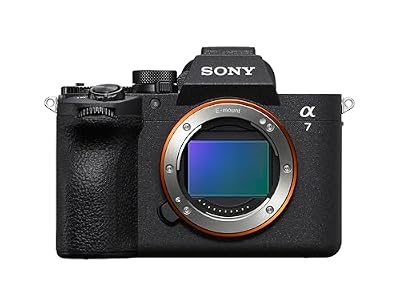
Sony Alpha a7 V Full-Frame Mirrorless Camera Body AI AF 30fps
Included for 'Best Sony Alpha Cameras for Every Photographer' as a relevant option in this category; details come from the product listing.
View on AmazonThe a7 V is the newest full-frame all-rounder in Sony’s Alpha line, and it is aimed at photographers whose subjects will not wait. It suits a wildlife shooter who needs subject recognition that holds on an animal’s eye through vegetation, a sports or action photographer who needs a deep buffer and fast continuous shooting, and a hybrid professional who shoots stills and video on the same job and cannot carry two bodies. It is also the right choice for anyone who wants to buy once and keep the body for five or more years.
Key specifications
- Sensor: full-frame sensor in the 30-megapixel class, matching the resolution tier of the a7 IV
- Processor: dedicated AI processing unit handling subject recognition and tracking
- Autofocus: phase-detection coverage across the frame with AI-driven recognition of people, animals, birds, insects, and vehicles
- Continuous shooting: up to 30fps per the listing
- Stabilization: 5-axis in-body image stabilization in the same class as the a7 IV
- Viewfinder: high-resolution OLED electronic viewfinder
- Screen: fully articulating touchscreen
- Video: 10-bit internal recording with log profiles, in the same professional class as the a7 IV
- Battery: high-capacity battery in the NP-FZ100 class used across Sony’s full-frame line
- Storage: dual card slots
- Body: full-frame chassis with dust and moisture resistance
Where it earns its place
The AI processing unit is the defining difference between this body and the a7 IV. Rather than relying purely on contrast and phase information, the camera uses a trained model to recognize what it is looking at — a bird rather than a branch, a car rather than a barrier — and to keep focus locked as that subject moves, turns, or is briefly obscured. In practice this is the feature that changes hit rates for wildlife and sport more than any other single specification.
Continuous shooting at up to 30fps is the second argument. Doubling or tripling the frame rate does not just give you more options; it lets you capture moments that are simply missed at 10fps, such as the instant a bird’s wings reach full extension or a runner’s foot leaves the ground. Combined with AI subject tracking, it means the camera is doing the timing work rather than you.
The third argument is longevity. Because this is the current generation, it will receive firmware attention and remain competitive for longer than a body that is already several years into its cycle. For a buyer who keeps cameras for years rather than months, that matters. The cost is real, though: this is a premium-tier purchase, and the difference over an a7 IV buys a good lens instead.
One practical note for hybrid shooters: a body in this class generates large volumes of data at 30fps. Budget for fast cards and substantial storage, because a burst at that rate fills a buffer quickly and produces hundreds of frames in seconds.
Pros
- AI-driven subject recognition for people, animals, birds, insects, and vehicles
- Continuous shooting up to 30fps, well beyond the a7 IV’s 10fps
- Current-generation platform with the longest useful service life in this list
- Full-frame image quality with in-body stabilization
- Dual card slots and a high-capacity battery suited to long shoot days
- Strong hybrid capability for photographers who also shoot video professionally
Cons
- Premium-tier pricing — the difference over an a7 IV is roughly the cost of a serious lens
- 30fps bursts generate enormous file volumes that demand fast cards and large storage
- Heavier and larger than every APS-C body here
- Full-frame E-mount lenses add substantially to the total system cost
- Most of the speed advantage is wasted on portraits, landscapes, and slow-paced work
- Higher resolution alternatives exist for buyers whose priority is detail rather than speed
How it compares with the nearest alternatives
Against the a7 IV, the a7 V is a direct generational upgrade: same resolution tier, same full-frame format, but with AI subject recognition and a 30fps burst the a7 IV cannot approach. If you photograph anything that moves unpredictably, the difference is substantial; if you photograph landscapes and posed portraits, the a7 IV is the smarter purchase. Against the a7R VI, the split is speed versus resolution — the a7 V for action and hybrid work, the a7R VI for maximum detail and cropping latitude. Against the a6700, the a7 V offers a larger sensor, better low-light performance, and a higher frame rate, while the a6700 offers a smaller, lighter, and much cheaper system.
5. Sony ZV-E10 with 16-50mm Lens – Best for vloggers and video-first beginners
The ZV-E10 is Sony’s video-first APS-C body, and it is built for a different buyer than the a6400. It suits a vlogger who records themselves talking to camera, a content creator who needs a reliable webcam and YouTube camera, a small business owner producing product videos, and a beginner whose priority is video rather than stills. It also makes a sensible second camera for someone who already owns a full-frame system and wants a light body for casual recording.
Key specifications
- Sensor: 24.2MP APS-C Exmor CMOS, 1.5x crop factor
- Autofocus: phase-detection AF with Real-Time Eye AF and Real-Time Tracking
- Stabilization: none in body; electronic stabilization available for video, plus optical stabilization in OSS lenses
- Viewfinder: none — rear screen only
- Screen: 3-inch fully articulating side-flip touchscreen
- Microphone: built-in directional 3-capsule microphone with supplied wind screen
- Video: 4K up to 30p; Full HD up to 120p; product showcase mode for fast focus transitions
- Audio: 3.5mm microphone input; no headphone jack
- Battery: NP-FW50, CIPA-rated around 440 shots
- Storage: single SD slot, UHS-I
- Weight: approximately 343g with battery and card; 16-50mm power zoom kit lens adds 116g
Where it earns its place
The form factor is the primary argument. At roughly 343g with battery and card, and with a 16-50mm power zoom that retracts flat, the whole package is small enough to hold at arm’s length for an extended recording without fatigue. The side-flip screen means you can see yourself while framing, which a tilting screen cannot do when a microphone is mounted on the hot shoe — a genuinely practical difference for anyone recording to camera.
The audio design is the second argument. The built-in directional microphone with the supplied wind screen produces usable audio without a separate mic, and product showcase mode automatically shifts focus between a face and an object held up to the lens without the shooter touching the screen. For product and tutorial content, that removes a step from every take.
The third argument is cost of entry. The ZV-E10 sits at the budget tier, and the APS-C E-mount lens catalog it draws on is the same one the a6400 uses. A creator can build a small, capable video kit — body, kit zoom, a fast prime, and a lavalier microphone — for a fraction of a full-frame setup, and the 24.2MP sensor still delivers good stills when needed.
The compromises are real, though. Without a viewfinder, bright outdoor conditions make framing difficult. Without in-body stabilization, handheld walking footage relies on electronic stabilization, which crops the frame and can introduce warping at the edges. And the absence of a headphone jack means you cannot monitor audio as it records, which is the single most common cause of unusable footage for new creators.
Pros
- Lightest and most compact body in this roundup at roughly 343g
- Fully articulating side-flip screen ideal for recording to camera
- Directional 3-capsule microphone with wind screen included
- Product showcase mode for automatic focus transitions
- Real-Time Eye AF and Tracking inherited from Sony’s broader lineup
- Budget-tier pricing with access to the full APS-C E-mount catalog
Cons
- No electronic viewfinder, which makes bright outdoor framing difficult
- No in-body stabilization; electronic stabilization crops and can warp edges
- No headphone jack for audio monitoring
- NP-FW50 battery rated around 440 shots — the weakest endurance here
- Single UHS-I card slot with no redundancy
- No 4K at 60p, and no 10-bit internal recording
How it compares with the nearest alternatives
Against the a6400, the ZV-E10 is the better video camera and the worse stills camera. It wins on microphone quality, on the side-flip screen, and on video-specific features; it loses on the viewfinder, which is genuinely missed for photography. If you shoot mostly stills, buy the a6400. If you shoot mostly video, buy the ZV-E10. Against the a6700, the ZV-E10 is cheaper, lighter, and simpler, but the a6700 adds in-body stabilization, a viewfinder, a headphone jack, a far larger battery, and higher-frame-rate 4K — all of which matter as a creator’s work matures. If you expect to be doing this in three years, the a6700 is worth the stretch.
6. Sony Alpha a7R VI – Best for landscape, studio, and print photography

Sony Alpha a7R VI Full-Frame Mirrorless Camera 66.8MP Body
Included for 'Best Sony Alpha Cameras for Every Photographer' as a relevant option in this category; details come from the product listing.
View on AmazonThe a7R VI is the resolution flagship of this group, listed at 66.8MP in a full-frame body. It suits a landscape photographer who prints large or crops heavily, a studio and commercial shooter who needs detail for product and architectural work, and an archivist or reproduction specialist who needs maximum capture fidelity. It is also the right body for a photographer who shoots slowly and deliberately and would rather have resolution than speed.
Key specifications
- Sensor: 66.8MP full-frame sensor per the listing, the highest resolution in this roundup
- Processor: AI-based autofocus and subject recognition
- Autofocus: phase-detection coverage with AI-driven subject detection
- Stabilization: 5-axis in-body image stabilization, essential at this pixel density
- Viewfinder: high-resolution OLED electronic viewfinder
- Screen: fully articulating touchscreen
- Video: high-resolution internal recording in the professional class of Sony’s R line
- Battery: high-capacity battery in the NP-FZ100 class
- Storage: dual card slots
- Body: full-frame chassis with dust and moisture resistance
Where it earns its place
Resolution is the entire point, and the practical consequences run further than the number suggests. At 66.8MP, a landscape frame can be cropped to roughly the field of view of an APS-C sensor and still produce a file larger than a native APS-C capture. That means a single prime lens can cover multiple compositions, which is a real advantage when you cannot move — on a cliff edge, across a river, or inside a building where the tripod position is fixed.
Print output is the second argument. For large-format printing, the pixel count determines how much enlargement is possible before interpolation becomes visible. A body in this resolution class comfortably supports very large prints without upscaling, which is exactly what a gallery or commercial print buyer needs.
Stabilization is unusually important at this pixel density. At 66.8MP, the same amount of camera shake that is invisible on a 24MP sensor becomes visible as blur, because each pixel covers a smaller area of the scene. In-body stabilization rated in the same class as Sony’s other full-frame bodies is therefore not a convenience here — it is what makes handheld shooting viable at all.
The trade-offs are practical rather than photographic. High-resolution files are large, they fill cards faster, they take longer to transfer, and they demand more from a computer during editing. Buffer depth during continuous shooting is also lower than on a speed-oriented body, and low-light performance per pixel is generally behind a lower-resolution sensor of the same generation. None of this matters for a tripod-based landscape or studio workflow; all of it matters for a wedding or a wildlife shoot.
Pros
- 66.8MP full-frame sensor, the highest resolution in this roundup
- Enormous cropping latitude — APS-C-equivalent crops still yield large files
- Supports very large prints without interpolation
- AI-based subject recognition inherited from the current generation
- In-body stabilization essential at this pixel density
- Dual card slots and a high-capacity battery for long location days
Cons
- Premium-tier pricing, the highest in this roundup
- Very large files that demand fast cards, big storage, and a capable computer
- Lower buffer depth and slower continuous shooting than speed-oriented bodies
- Per-pixel low-light performance generally behind lower-resolution sensors
- Resolution advantage is wasted on social media and screen-only output
- Requires good technique and stable support to realize the full detail available
How it compares with the nearest alternatives
Against the a7 V, the split is resolution versus speed. The a7 V shoots at up to 30fps and tracks fast subjects; the a7R VI captures far more detail per frame and is built for deliberate, tripod-based work. Very few photographers need both, and the one you choose should be dictated by whether your subjects move. Against the a7 IV, the a7R VI roughly doubles the pixel count for a substantial price increase and a heavier editing workload — worth it for print and commercial work, unnecessary for most travel and family photography. Against the a6700, the a7R VI offers vastly more resolution and a larger sensor, while the a6700 offers a lighter, cheaper, faster-shooting system.
7. Sony Alpha a6700 – Best for APS-C shooters who want current technology

Sony Alpha a6700 APS-C Mirrorless Camera Body 26MP 4K Black
Included for 'Best Sony Alpha Cameras for Every Photographer' as a relevant option in this category; details come from the product listing.
View on AmazonThe a6700 is the current-generation APS-C flagship, and it suits a photographer who wants the newest Sony technology without moving to full-frame. It is the right body for a travel shooter who values a light kit, a hybrid creator who shoots stills and video in roughly equal measure, a wildlife enthusiast who wants the extra reach the 1.5x crop factor provides with telephoto lenses, and an a6400 or a6000 owner ready to upgrade within the same lens system.
Key specifications
- Sensor: 26MP APS-C Exmor R CMOS back-illuminated, 1.5x crop factor
- Autofocus: 759 phase-detection points with a dedicated AI processing unit for subject recognition; Real-Time Eye AF for humans, animals, and birds
- Continuous shooting: up to 11fps with AF/AE tracking
- Stabilization: 5-axis in-body image stabilization, rated in the 5-stop class
- Viewfinder: 2.36M-dot OLED electronic viewfinder
- Screen: 3-inch fully articulating touchscreen
- Video: 4K up to 60p with a slight crop; 4K up to 120p with a larger crop; 10-bit internal recording with log profiles
- Audio: 3.5mm microphone input and headphone jack
- Battery: NP-FZ100, CIPA-rated around 570 shots
- Storage: single UHS-II SD slot
- Weight: approximately 493g with battery and card
Where it earns its place
The AI processing unit is what separates the a6700 from every previous APS-C Alpha. Subject recognition inherited from Sony’s full-frame generation means the camera identifies people, animals, birds, and vehicles and keeps focus on the correct part of the subject, even when it turns away or passes behind an obstruction. For bird and wildlife photography on a crop sensor — where the 1.5x factor effectively multiplies the reach of any telephoto lens — that combination is unusually capable for the money.
The battery is the second argument, and it is the one that surprises people coming from an a6400. Moving from the NP-FW50 to the NP-FZ100 takes CIPA-rated endurance from roughly 360–410 shots to around 570, which is the difference between carrying three spare batteries and carrying one. For travel and full-day shooting, that is a meaningful change in how the camera is used.
The third argument is the video feature set. 4K at up to 60p with a slight crop, 10-bit internal recording with log profiles, and both a microphone input and a headphone jack make the a6700 a genuine hybrid body rather than a stills camera that happens to record video. The headphone jack in particular is the difference between knowing your audio is good and hoping it is.
In-body stabilization is the fourth. It is rated in the 5-stop class, which means handheld shooting at shutter speeds that would previously have required a tripod. Combined with the light APS-C system — 493g for the body, and lenses far smaller than full-frame equivalents — the result is a kit that is easy to carry and easy to shoot with.
Pros
- 26MP APS-C sensor with a dedicated AI processing unit for subject recognition
- 759-point autofocus with human, animal, and bird eye detection
- NP-FZ100 battery rated around 570 shots — a major improvement over the a6400
- 4K up to 60p plus 10-bit internal recording with log profiles
- Both microphone input and headphone jack for reliable audio
<