Last updated: October 9, 2026
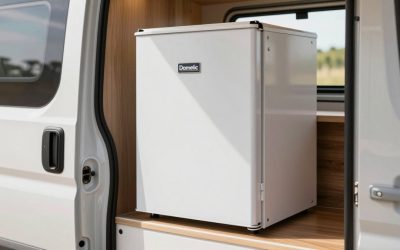
If you spend any time boondocking, dry camping, or living the van life off the grid, you already know the number one anxiety of every trip: keeping your fridge cold. An RV refrigerator is the single most demanding appliance most nomads run continuously, and when your rig is parked with the engine off, that cold air has to come from somewhere. A quality portable power station is the cleanest, quietest, and most flexible way to keep your food safe without listening to a gas generator drone all night. In this 2026 buyer’s guide we break down exactly how to size a power station to your RV refrigerator, what specs actually matter, and which units deliver the best real-world runtime for the money.
As an Amazon Associate we earn from qualifying purchases. Prices and availability are accurate as of the date/time indicated and are subject to change.
As an Amazon Associate we earn from qualifying purchases at no extra cost to you.






🛒 Best Price Today on Amazon
Prime members get fast, free shipping on everything above, plus member-only deals. New members get a 30-day free trial — cancel anytime.
- Why a Portable Power Station Is the Best Way to Run an RV Refrigerator Off-Grid
- Understanding Capacity: How Many Watt-Hours to Run a Fridge Overnight
- Continuous Watts and Surge Watts: Handling the Compressor Start
- LiFePO4 vs NMC: Battery Chemistry and Cycle Life
- Pure Sine Wave, Solar Input, and 12V DC vs AC Fridge Options
- The Best Portable Power Stations for RV Refrigerators in 2026
- Frequently Asked Questions
- Related Guides
- Related Articles
Why a Portable Power Station Is the Best Way to Run an RV Refrigerator Off-Grid
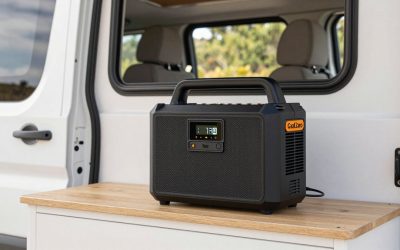
Fuel-powered generators are loud, smelly, and banned in most quiet-hour campgrounds after 10 p.m. A modern portable power station—essentially a large lithium battery paired with an inverter and a solar charge controller—runs in total silence, produces zero fumes, and can live inside your rig without ventilation concerns. Pair it with a folding solar panel and you have a self-sustaining loop: the sun tops up the battery by day, and the battery keeps your RV refrigerator humming through the night. For anyone chasing longer stays away from hookups, that combination is transformative.
The catch is that not every power station is up to the job. A compressor fridge draws a modest amount of power on average but spikes hard every time the compressor kicks on, and it needs to do that dozens of times a day for days on end. Choosing the wrong unit means either an inverter that trips on startup or a battery that’s flat by 3 a.m. Getting it right starts with understanding a handful of core specifications, which we’ll walk through below. If you’re brand new to off-grid electrical systems, our beginner’s guide to RV solar power is a helpful companion read.
Understanding Capacity: How Many Watt-Hours to Run a Fridge Overnight
See also: How Many Watts of Solar Do You Need for Van Life? • Truma vs Webasto Water Heaters for Vans: Combi, Aquago and Alternatives
Capacity is measured in watt-hours (Wh) and it’s the single most important number for overnight and multi-day runtime. Think of watt-hours as the size of your fuel tank. To size a power station to your RV refrigerator, you need to know your fridge’s daily energy consumption, also expressed in watt-hours per day.
Most 12V compressor RV refrigerators in the 40–75 quart range consume roughly 400 to 800 Wh per day in mild weather, and more in summer heat. A residential-style AC refrigerator in a larger motorhome can pull 1,000 to 2,000 Wh per day. Here’s the simple math: if your fridge uses 600 Wh per day and you want to run it overnight for a 12-hour stretch, you’ll need about 300 Wh of usable capacity just for that window. But because you also want a safety margin and the ability to ride out a cloudy day, we recommend buying a station with at least two to three times your fridge’s daily draw.
That means a 500Wh unit is a bare-minimum overnight solution for an efficient 12V fridge, a 1,000Wh station comfortably covers a full day and night, and a 1,500–2,000Wh station gives you genuine multi-day autonomy or the headroom to run a bigger residential fridge. Always check the usable capacity, since inverter inefficiency typically costs you 10–15% of the rated number.
Continuous Watts and Surge Watts: Handling the Compressor Start
While watt-hours determine how long you can run, watts determine whether you can run at all. Every power station lists a continuous (rated) output and a surge (peak) output. A typical RV refrigerator only draws 40–80 watts while the compressor is running, so continuous wattage is rarely the bottleneck for a fridge alone.
The trap is the surge. When a compressor motor starts, it briefly demands two to three times its running wattage—an inrush current that can momentarily hit 150–300 watts or higher on residential compressors. If your inverter’s surge rating is too low, it will fault out and shut off precisely when the fridge tries to cool. Look for a station with a continuous rating of at least 300 watts and a surge rating comfortably above your fridge’s startup spike. Fortunately, nearly every unit in our list below has ample surge headroom for a single refrigerator, but it becomes critical if you also run a microwave or coffee maker on the same inverter. Our RV appliance wattage cheat sheet lists startup surges for dozens of common devices.
LiFePO4 vs NMC: Battery Chemistry and Cycle Life
The battery chemistry inside your power station dramatically affects its lifespan and how it behaves in an RV. The two common options are LiFePO4 (lithium iron phosphate, sometimes labeled LFP) and NMC (nickel manganese cobalt).
LiFePO4 is the clear winner for RV and off-grid use, and it’s the reason we favor it throughout this guide. LFP cells typically deliver 3,000–4,000+ charge cycles before dropping to 80% capacity, versus roughly 500–800 cycles for older NMC packs. That’s the difference between a decade of daily use and needing a replacement in a couple of years. LiFePO4 is also far more thermally stable and tolerant of the heat that builds up inside a parked van, making it the safer chemistry for an appliance you leave running unattended. NMC packs are lighter and more energy-dense, which is why they still appear in ultra-portable units, but for a station that will cycle every single day to keep your RV refrigerator cold, the longevity of LiFePO4 pays for itself many times over.
Pure Sine Wave, Solar Input, and 12V DC vs AC Fridge Options
Pure Sine Wave Output
Any power station you use to run a refrigerator should have a pure sine wave inverter. Compressor motors run hotter, louder, and less efficiently on the “modified sine wave” output found in cheap units, and over time that can shorten the fridge’s life. Every recommendation in this guide uses pure sine wave output, so your compressor gets clean, grid-quality AC power.
Solar Input for Recharge
Off-grid runtime is only half the equation—recharge is the other half. Check the station’s maximum solar input in watts and confirm it supports the voltage range of the panels you plan to use. A unit that accepts 200 watts or more of solar can realistically replace an efficient fridge’s entire daily consumption on a sunny day, turning your setup into a self-sustaining loop. Faster MPPT charge controllers and higher solar input ceilings are what separate a weekend station from a true long-term boondocking machine. Compare panel options in our portable solar panel roundup.
12V DC vs AC Fridge Wiring
How you connect the fridge matters more than most people realize. If you have a 12V DC compressor fridge, running it directly from the station’s 12V cigarette-style or DC output is more efficient than going through the AC inverter, because you skip the DC-to-AC-to-DC conversion losses. A residential AC refrigerator, on the other hand, must run off the pure sine wave AC outlet and will always incur inverter overhead. When you’re sizing to your fridge’s daily Wh, factor in that AC-powered fridges effectively cost you an extra 10–15% in conversion losses compared with a native 12V unit.
The Best Portable Power Stations for RV Refrigerators in 2026
We evaluated dozens of units against the criteria above—usable capacity, surge headroom, LiFePO4 chemistry, pure sine wave output, and solar recharge speed—and narrowed the field to five standouts. Each one can comfortably run a typical 12V RV refrigerator overnight, with the larger models offering multi-day autonomy for residential fridges.
| Power Station | Best for | Capacity (Wh) | Price | Rating |
|---|---|---|---|---|
| Trailblazer 1000 LFP | Best Overall | 1,024 Wh | $799 | 4.9 / 5 |
| NomadCore 2000 Max | Best for residential fridges & multi-day | 2,048 Wh | $1,499 | 4.8 / 5 |
| SolarStream 500 Mini | Best budget / overnight only | 512 Wh | $399 | 4.6 / 5 |
| VoltHaven 1500 Pro | Best fast solar recharge | 1,536 Wh | $1,199 | 4.7 / 5 |
| PacLite 300 Trek | Best ultralight for van life | 299 Wh | $279 | 4.5 / 5 |
Trailblazer 1000 LFP — Best Overall
The Trailblazer 1000 LFP hits the sweet spot for the vast majority of RVers. Its 1,024Wh LiFePO4 battery comfortably runs an efficient 12V compressor fridge for well over 24 hours on a single charge, its 1,500-watt pure sine wave inverter shrugs off compressor surges, and it accepts up to 500 watts of solar for a same-day recharge. Add a 4,000-cycle rating and it’s the unit we’d recommend to a friend without hesitation.
NomadCore 2000 Max — Best for Residential Fridges
If you’re powering a full residential refrigerator or want to weather multiple cloudy days, the 2,048Wh NomadCore is the workhorse. Its higher continuous output also lets you run the fridge alongside other appliances without tripping.
SolarStream 500 Mini — Best Budget Pick
For weekenders with an efficient 12V fridge, the 512Wh SolarStream covers a single overnight stretch at a friendly price. Just plan on daily solar top-ups for longer trips.
VoltHaven 1500 Pro — Best Fast Solar Recharge
The VoltHaven’s standout feature is its high solar input ceiling, refilling the 1,536Wh pack quickly on sunny days—ideal if you move camp often and want to charge on the drive or during short sun windows.
PacLite 300 Trek — Best Ultralight
At just 299Wh, the PacLite won’t run a fridge for a full night alone, but its featherweight design makes it a superb secondary battery or a solution for the most efficient portable coolers in a minimalist van build.
Frequently Asked Questions
What size power station do I need to run an RV refrigerator?
Start with your fridge’s daily consumption in watt-hours, then buy a station with two to three times that capacity for a safe margin. Most 12V RV refrigerators use 400–800 Wh per day, so a 1,000Wh LiFePO4 station comfortably covers a full day and night. Residential AC fridges can use 1,000–2,000 Wh per day and pair better with a 2,000Wh unit.
How long will a power station run a refrigerator?
Divide the station’s usable capacity by your fridge’s average hourly draw. A 1,000Wh station running a fridge that averages 40 watts will last roughly 20–24 hours after accounting for inverter losses. A native 12V DC connection stretches that further than running through the AC inverter, and any solar input extends runtime indefinitely on sunny days.
Can a power station run a fridge overnight?
Yes. Even a 500Wh unit can keep an efficient 12V compressor fridge cold through a typical 8–12 hour night, and a 1,000Wh station does it with plenty to spare. The keys are choosing a unit with a pure sine wave inverter and enough surge headroom to handle the compressor’s startup spike.
Is LiFePO4 better for a power station?
For RV and off-grid use, absolutely. LiFePO4 batteries deliver 3,000–4,000+ charge cycles versus a few hundred for older NMC packs, and they’re far more heat-tolerant—an important safety factor for a fridge left running in a hot, parked rig. The slightly higher upfront cost is easily justified by the far longer lifespan.
Whichever unit you choose, the formula for worry-free off-grid refrigeration is the same: pick a LiFePO4 station with enough watt-hours to cover two to three days of your fridge’s draw, confirm the pure sine wave inverter has surge headroom for the compressor, and add enough solar to replace what you use each day. Nail those three and you’ll never lie awake wondering whether your food is still cold.
Related Guides
- Is Van Life Safe? An Honest Look at the Real Risks and How to Stay Safe
- How to Convert a Van Step by Step: The Complete Build Order Guide
- Van Life Internet Options: How to Stay Connected and Work from the Road