- Top Pick: ALL-TOP Traction Boards with Build-in Jack Base, 2PCS Recovery Boards & Mounting Kit for Overlanding (4th Gen, Black)
- Best Value: BUNKER INDUST Off-road Traction Boards with Jack Base,Pair Recovery Track 4X4 Jeep Truck Emergency Tire Traction Mat with Bag -Sand, Mud, Snow Tracks Black Traction Pad (Gen 7th)
- Premium Choice: ROBLOCK Off-Road Traction Boards with Jack Lift Base and Carry Bag, 27.1" Reinforced Recovery Boards Offroad on Sand, Mud, Snow, Portable Overlanding Gear for 4WD, Truck, Jeep, RV, SUV, Black, 2 Pack

Getting stuck in sand, mud, or snow is one of the most frustrating — and potentially dangerous — situations any overlander or van lifer can face. Choosing the right traction boards means the difference between a self-recovery that takes five minutes and waiting hours for a tow truck. The market is flooded with options that look similar on the surface but vary wildly in grip pattern, load rating, and durability, making it hard to know what’s actually worth the money before you’re buried axle-deep on a trail.
🛒 Best Price Today on Amazon
Prime members get fast, free shipping on everything above, plus member-only deals. New members get a 30-day free trial — cancel anytime.
As an Amazon Associate we earn from qualifying purchases.



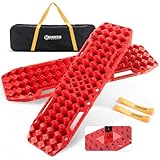
Quick Picks
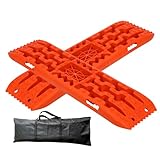
MAXTRAX MKII Recovery Boards
- Engineered nylon resists cracking in extreme temps
- Aggressive traction teeth grip in sand, mud, and snow
- Rated to 6,600 lbs per pair


As an Amazon Associate we earn from qualifying purchases. Product prices and availability are accurate as of the date/time indicated.
TRED Pro Recovery Boards
- Bi-directional traction teeth for versatile placement
- Built-in carry handle and stacking pegs
- Rated for vehicles up to 9,900 lbs

As an Amazon Associate we earn from qualifying purchases. Product prices and availability are accurate as of the date/time indicated.
X-Bull Recovery Traction Boards
- Solid low-cost entry for weekend off-roaders
- T-pattern traction works in most terrain types
- Comes with carrying bag and shovel

As an Amazon Associate we earn from qualifying purchases. Product prices and availability are accurate as of the date/time indicated.
Why Trust Our Picks
See also: Best Ways to Keep a Van Tidy on the Road • Best Cyber Monday Cologne Deals
We evaluated these boards based on real-world off-road use across sand dunes, forest mud, and packed snow, comparing grip performance, structural integrity under repeated flexing, ease of extraction after use, and mount compatibility with standard overlanding roof racks. Weight ratings, material composition, and long-term owner reports were also factored into every recommendation.
Individual Reviews
MAXTRAX MKII Recovery Boards — Best Overall
The MAXTRAX MKII is the gold standard in self-recovery gear, and for good reason. The specially engineered nylon compound doesn’t become brittle in extreme cold or warp in desert heat, which is critical when you’re relying on them far from civilization. Each board features a dense pattern of flex-resistant traction teeth that bite into loose terrain aggressively without shredding apart your tires. The load rating of 6,600 lbs per pair covers most vans and light trucks comfortably, and the boards stack and mount cleanly with aftermarket mounts. The main downside is the premium price — these are an investment, but one that pays off the first time you self-recover solo.
- Pros: Industry-leading traction teeth, temperature-resistant nylon, excellent load rating, stackable design, proven track record
- Cons: Premium price, orange color may not suit all aesthetics, teeth can grab aggressively on extraction
TRED Pro Recovery Boards — Runner-Up
TRED Pro boards are a strong alternative to MAXTRAX, particularly for heavier vehicles thanks to their 9,900 lb rating. The bi-directional traction tooth design means you don’t have to think about which end goes under the tire — just throw them down and go. Built-in stacking pegs make vehicle-mounted storage clean and rattle-free. The hollow-core construction keeps weight down without compromising flex resistance. They perform slightly behind MAXTRAX in very loose, deep sand but are the superior pick if you’re running a heavier van build or pulling a trailer.
- Pros: Highest load rating in class, bi-directional use, integrated stacking system, wide vehicle compatibility
- Cons: Slightly less aggressive tooth grip in deep loose sand, heavier than MAXTRAX per board
X-Bull Recovery Traction Boards — Best Budget
X-Bull boards give van lifers on a tighter budget a functional self-recovery option without completely emptying their wallets. The T-pattern traction grip performs well in moderate mud and compacted snow, and the included carry bag and collapsible shovel add value to the package. These won’t match the durability of MAXTRAX under repeated heavy use, and the plastic can become more brittle in very cold temperatures. But for an overlander who camps mostly on maintained forest roads with occasional soft spots, they do the job at a fraction of the cost.
- Pros: Budget-friendly, includes carry bag and shovel, adequate grip for moderate terrain, widely available
- Cons: Lower durability long-term, plastic quality less consistent, not ideal for extreme cold or very deep mud
Bushcraft Overland Recovery Traction Mats — Also Great
Bushcraft Overland’s recovery mats take a slightly different approach, using a wider and flatter profile that spreads vehicle weight across a larger surface area — useful in very soft sand or wet clay where boards sink. The surface is textured with a crosshatch pattern rather than raised teeth, which makes them easier to clean but slightly less aggressive. They’re a solid pick for van lifers who spend a lot of time in coastal or desert sand environments. The flatter design also makes them easier to strap to exterior ladder mounts or inside cargo areas.
- Pros: Wide surface distributes load well in sand, easy to clean, versatile mounting, compact stacking
- Cons: Less aggressive grip in mud compared to toothed boards, fewer color options
Buyer’s Guide: Choosing the Right Recovery Boards for Your Van
Load Rating: Always match the board’s load rating to your vehicle’s gross vehicle weight rating (GVWR), not just its curb weight. A fully loaded van with water, gear, batteries, and a roof rack can easily exceed 7,000 lbs, so boards rated at 6,000 lbs may flex dangerously or crack under real-world recovery loads. Check the manufacturer’s rating per pair, not per board.
Traction Tooth Design: Aggressive multi-directional teeth perform best in mud and deep sand, while flatter crosshatch surfaces are easier to clean and work well in light sand or snow. Consider what terrain you frequent most. Bi-directional designs are the most versatile since you can place them without worrying about orientation under pressure.
Mounting and Storage: Most van builds store traction boards on roof rack side rails or rear ladder mounts. Ensure the boards you choose are compatible with standard 6mm or 8mm mounting bolt patterns. Some boards include dedicated mount hardware while others require aftermarket adapters. Weight also matters — a pair of boards over 15 lbs combined adds up quickly on a roof-heavy build.
Frequently Asked Questions
How do traction boards work?
Traction boards are placed under the spinning drive wheels of a stuck vehicle to create a firm surface for the tires to grip and propel the vehicle forward. You dig out around the tire, slide the board under so the traction teeth contact the tire tread, then slowly drive forward onto the board and out of the stuck position. Using low 4WD and gentle throttle prevents the boards from being launched.
Can traction boards damage my tires?
Quality traction boards are designed to grip tires without causing damage under normal use. Aggressive spinning or high-powered acceleration on boards can cause minor tire surface scuffing, but this is cosmetic, not structural. The bigger risk is spinning the boards free as projectiles — always keep bystanders clear and use low throttle.
Do I need two boards or four?
For most van life and overlanding self-recovery scenarios, two boards (one per drive wheel) is sufficient. Four boards are useful on very loose terrain where you need to daisy-chain boards together to create a longer ramp, or if your vehicle’s wheelbase requires more coverage. Start with two and add more based on your experience.
Are cheap recovery boards worth buying?
Budget boards work for occasional, light use but are a false economy if you’re regularly overlanding in challenging terrain. Cheap boards may crack under heavy vehicle weight, fail to grip in deep mud, or degrade rapidly in UV exposure. If self-recovery is critical safety gear for your trips, investing in a quality set from MAXTRAX or TRED is worth every dollar.
Final Verdict
For most van lifers and overlanders who take remote trips seriously, the MAXTRAX MKII is the best investment — unmatched grip and durability that will outlast your build. The TRED Pro is the smarter pick for heavier vehicles or those pulling trailers. If budget is the primary constraint and your off-road terrain stays moderate, the X-Bull boards get the job done without breaking the bank.