- Top Pick: Hozzen Camping Cooking Utensil Set – Car Camping Essentials Cooking Gear for Outdoor Kitchen Grilling, Stainless Steel & Silicone Ideal Gift for RV Tent Camper, Picnics, BBQs
- Best Value: Berglander Camping Essentials, Camping Cooking Utensils Set, Camping Accessories Gear Must Haves, Come with Camping Silverware Sets, Plates and Cups, Great for Outdoor Stove, Picnic, BBQ
- Premium Choice: Camping Cooking Set- 24 Pcs Camping Utensils Camping Essentials Camping Gear for Camp Kitchen Cooking and Grilling, Portable Outdoor Cooking Travel Set for RV Tent Camper, BBQs, Camping Accessories
Road Trip Cooking Gear Essentials: The Best Van Kitchen Setup for 2026
TL;DR Quick Answer
Road trip cooking gear success comes down to three decisions: heat source (propane, butane, or 12V induction), cold storage (a good 12V fridge beats coolers for full-time vanlife), and compact cookware that nests cleanly. A $150 two-burner stove, a nesting cookset, and a quality cutting board gets you 90% of the way there. Add a 12V fridge and you stop buying ice forever.
Van cooking isn’t glamping. It’s daily meal prep in a space roughly the size of a hallway, with limited counter space, inconsistent power, and no dishwasher. The gear that survives this environment is compact, multi-use, and easy to clean. The gear that fails is bulky, single-purpose, and designed for a full kitchen with infinite storage.
As an Amazon Associate we earn from qualifying purchases at no extra cost to you.


This guide covers the road trip cooking gear that actually works for full-time and part-time vanlifers — from $20 camp stoves to full 12V induction setups. We’ve organized it by category so you can build your kit incrementally as your budget allows.
🛒 Best Price Today on Amazon
Prime members get fast, free shipping on everything above, plus member-only deals. New members get a 30-day free trial — cancel anytime.
Start 30-Day Prime Free Trial →See Today’s Amazon Deals- Top Picks at a Glance
- Heat Source: Propane vs. Butane vs. 12V Induction
- Cold Storage: Cooler vs. 12V Fridge
- Essential Cookware for Van Life
- Spice, Pantry & Food Storage System
- Water, Washing & Dishware
- Van Kitchen Ventilation: Not Optional
- Road Trip Cooking Gear by Budget
- Related Vanlife Guides
- Frequently Asked Questions
- Related Articles
- Related Guides
Top Picks at a Glance
BEST OVERALL CAMP STOVE
Camp Chef Explorer Two-Burner — 30,000 BTU total, wind-resistant, built for daily use


As an Amazon Associate we earn from qualifying purchases. Product prices and availability are accurate as of the date/time indicated.
BEST COOKWARE SET
GSI Outdoors Pinnacle Camper Cookset — nests fully, includes plates and cups, van-optimized footprint

WAYSKA Diesel Heater 12V, 5L Tank, Diesel Heater 2KW, Muffler, Diesel Parking Heater with LCD Monitor & Remote Control for Trucks, Trailer, Boat and Motor-Home


As an Amazon Associate we earn from qualifying purchases. Product prices and availability are accurate as of the date/time indicated.
BEST BUDGET STOVE
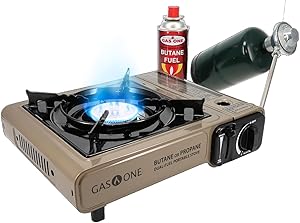
GasOne Dual Fuel Stove — runs on both propane and butane canisters, lightweight and reliable

Ivation Portable Camping Shower | Compact Handheld & Hands-Free Rechargeable Outdoor Shower Head & Cleaning System w/ 3.7V Pump, 6-Ft Hose, Bidet Head, Removable Filter, Multiuse Hook & USB Cable


As an Amazon Associate we earn from qualifying purchases. Product prices and availability are accurate as of the date/time indicated.
Heat Source: Propane vs. Butane vs. 12V Induction
See also: Spanish Cuisine: Classic Dishes and Ingredients • Sugar Free Cocktail Recipes That Actually Taste Good
Your stove choice drives everything downstream — fuel storage, ventilation needs, power draw, and where you can legally cook. Here’s the honest breakdown:
| Heat Source | Cost to Run | BTU Output | Best For | Downside |
|---|---|---|---|---|
| Propane (1lb canisters) | ~$1.50/canister | 8,000–20,000 | Part-timers, occasional use | Pricey long-term, canister waste |
| Propane (20lb tank) | ~$0.20/cook | 10,000–30,000 | Full-timers, extended trips | Refill logistics, tank storage space |
| Butane canister | ~$1.00/canister | 7,000–10,000 | Compact builds, minimal cooking | Struggles in cold weather |
| 12V Induction | ~$0.05/cook (solar) | Variable | Solar-heavy builds, boondocking | High amp draw, needs strong battery bank |
| Alcohol stove | ~$0.50/cook | 1,000–2,000 | Ultralight, minimalist | Slow, no simmer control |
For most vanlifers, a two-burner propane stove connected to a 20lb tank is the sweet spot. You’ll spend about $20–25 to fill a 20lb tank, which lasts 2–4 months of daily cooking for one person. Induction is compelling if you have a robust solar setup with 400W+ panels and a large lithium battery bank — but it’s not a day-one solution.
Cold Storage: Cooler vs. 12V Fridge
The cooler vs. fridge debate ends quickly for full-timers: ice costs $5–8 per day in summer, adds up to $150–240/month, requires constant draining, and limits what you can store. A quality 12V compressor fridge costs $300–800 upfront and pays for itself within 3–6 months. For part-timers on weekend trips, a quality rotomold cooler (YETI, ORCA, Pelican) is perfectly adequate.
See our dedicated 12V portable fridge guide and the detailed dual-zone fridge comparison for specific model recommendations. The short answer: Alpicool and BougeRV offer excellent value; Dometic and ARB are premium builds. All run on the same compressor technology — you’re paying for build quality, warranty support, and temperature consistency at extremes.


As an Amazon Associate we earn from qualifying purchases. Product prices and availability are accurate as of the date/time indicated.
Essential Cookware for Van Life
Van cookware has one cardinal rule: it has to nest. Every item needs a defined home. Loose pots rattling around a cabinet are a noise problem, a breakage problem, and a space problem. Here’s a complete kit that fits in roughly a 12x12x8-inch cabinet:
- 2-quart saucepan — rice, pasta, soups, oatmeal. Your most-used item.
- 10-inch skillet — eggs, stir fry, sautéing. Go non-stick for easy cleanup.
- 1-quart pot with lid — sauces, reheating, small batches.
- Cutting board — flexible silicone rolls up; rigid bamboo doubles as a serving board.
- Chef’s knife + paring knife — two knives. That’s all you need.
- Spatula + wooden spoon + silicone tongs — three utensils handles 95% of cooking.
- Camp coffee setup — Aeropress weighs 4oz and makes better coffee than most $200 machines.
Skip the full cast iron unless you have a dedicated, secured storage spot. A 12-inch cast iron skillet is incredible but weighs 8 lbs and requires specific drying/oiling. For most van builds, a good carbon steel or hard-anodized non-stick is the better daily driver.
Spice, Pantry & Food Storage System
The pantry is where van kitchens fail. Random bags of rice, half-open spice containers, and loose cans sliding around is the enemy of good road trip cooking. A system that works:
- Spice rack: Magnetic spice tins on a steel sheet inside a cabinet door. 12–15 spices accessible without searching.
- Dry goods: Clear airtight containers (OXO Pop or Rubbermaid Brilliance) for rice, oats, lentils, pasta. Label with masking tape.
- Canned goods: Bungee cord or cabinet lip keeps cans from rolling. Organize by protein/carb/sauce.
- Condiment management: Small fridge door organizer or dedicated bin. Ketchup bottles that fall over daily get thrown out.
- Produce: Mesh hanging bag near a window allows airflow and keeps onions/garlic/avocados accessible.
Tie your pantry restock to your driving rhythm. If you move every 2–3 days, stock 5–7 days of dry goods and restock fresh produce at every grocery stop. If you park for weeks at a time, you can stock more liberally.
Water, Washing & Dishware
Dishwashing in a van is a two-basin system: one basin with soapy water, one with clean rinse water. Use a collapsible 3-gallon silicone basin — it folds flat when not in use. A spray bottle of diluted Dr. Bronner’s cuts grease on a single paper towel for light cleanups between meals.
For plates and bowls: enamelware or lightweight melamine. Both survive being knocked around, can go directly on a camp stove (enamel), and weigh less than ceramic. Avoid actual ceramic — a single pothole can shatter your entire dishware collection. See our portable shower and water guide for managing water consumption in tight builds.
Van Kitchen Ventilation: Not Optional
Cooking in an enclosed van without ventilation produces CO buildup (from propane combustion), grease vapor, and humidity that destroys insulation and promotes mold. Every van cooking setup needs: a roof vent fan running on exhaust while cooking, a cracked window for fresh air intake, and a CO/propane detector mounted low (where heavy gases settle). This is non-negotiable safety infrastructure — not an upgrade.
Consider your essential RV accessories list for other safety and convenience items that apply equally to van builds.
Road Trip Cooking Gear by Budget
| Category | Budget ($) | Mid-Range ($$) | Premium ($$$) |
|---|---|---|---|
| Stove | GasOne dual fuel — $35 | Camp Chef Explorer — $110 | Dometic Hub 2 — $350 |
| Cold storage | RTIC 45 cooler — $120 | Alpicool C20 fridge — $280 | Dometic CFX3 35 — $750 |
| Cookware | GSI Pinnacle Camper — $75 | MSR Ceramic Nesting set — $140 | All-Clad compact set — $300 |
| Coffee | Aeropress — $35 | Wacaco Nanopresso — $70 | Wacaco Picopresso — $110 |
| Water/washing | Collapsible basin — $12 | Sea to Summit basin set — $35 | Built-in sink with pump — $200+ |
Related Vanlife Guides
- Best 12V Portable Fridge for Camping — Full Comparison
- 12V Fridge Freezer Dual Zone: Top Picks Compared
- RV Accessories Must-Have 2026: The Complete List
- Portable Camping Shower for Vanlife — Best Options
- MPPT Solar Charge Controller Guide for Van Builds
Frequently Asked Questions
What is the best stove for road trip cooking?
For most vanlifers, a two-burner propane stove connected to a 20lb tank offers the best balance of power, fuel cost, and cooking capability. The Camp Chef Explorer and Coleman Classic are two reliable choices under $120. If you want to cook inside, pair any propane stove with a CO detector and roof vent running on exhaust mode. For induction cooking, you need at least 200Ah of lithium battery capacity and a robust solar setup to sustain daily use.
Do I need a 12V fridge or will a cooler work?
For weekend trips and occasional use, a quality rotomold cooler (YETI, ORCA) holds ice 5–7 days and costs $250–400 once. For full-time vanlife or any trip longer than 5 days, a 12V compressor fridge pays for itself in 2–4 months by eliminating daily ice purchases. The Alpicool and BougeRV brands offer reliable performance at $250–400. Dometic and ARB cost more but offer better warranty support and more consistent temperature performance in extreme heat.
How do I cook safely inside a van?
Three safety requirements: CO/propane detector mounted 12 inches above the floor (where propane settles), roof vent fan running on exhaust while cooking, and at least one window cracked for fresh air intake. Never sleep with a propane stove running or leave it unattended on low. Butane canisters can rupture if stored in a hot van — keep them in a ventilated exterior storage box or cool interior cabinet, never under direct sun exposure.
What cookware is best for van life?
Nesting cooksets designed for camping — GSI Outdoors, MSR, and Sea to Summit make the best options. A two-pot nesting set with a lid that doubles as a frying pan handles 80% of van meals. For a permanent van build with more space, a 10-inch skillet and 2-quart saucepan in hard-anodized aluminum give you restaurant-quality cooking performance. Avoid full cast iron unless you have secured storage — it’s heavy, requires maintenance, and slides dangerously in a moving van if not bolted down.
How do I manage food storage in a small van?
The system matters more than the containers. Designate fixed zones: cold storage (fridge or cooler), dry goods cabinet (airtight containers), produce area (ventilated mesh bag), and spices (magnetic wall-mounted tins). Stock 5–7 days of dry goods and restock produce every 2–3 days. Plan meals before grocery runs to avoid buying items you won’t use before they expire. A weekly meal framework — two proteins, three vegetables, two grains — simplifies shopping and reduces food waste significantly.
Prices verified May 2026. Check Amazon links for current pricing.