Last updated: October 4, 2026
The best 12V fridge for van life is a compressor fridge sized to your shopping rhythm: about 35–45 liters for a solo traveler or weekend couple, 50–60 liters for a full-time couple who shop once a week, and a 70+ liter dual-zone unit only if you genuinely need a separate freezer. Thermoelectric coolers and absorption fridges both have their place, but for a battery-powered van a compressor fridge is the only type that holds food-safe temperatures in summer without draining the system. Once you know the size, the deciding factors are daily energy use, how the fridge loads (chest or upright), and whether it fits the cabinet you have.
Why Compressor Fridges Win in a Van
A compressor fridge for a van works like a home refrigerator in miniature. It cycles on and off to hold a set temperature regardless of outside heat, and it can freeze. Thermoelectric “coolers” can typically only chill about 30–40°F below ambient, so on a 95°F day the inside may sit near 55–65°F, which is unsafe for meat and dairy. Absorption fridges run on propane well but are inefficient on 12V and need to be level to work properly.

Dometic DMC4081CFRH RV Refrigerator - 8 cu.ft. Storage, 12VDC Compressor Cooling, Right Hinge
Included for 'Best 12V Fridge for Van Life: Matching Capacity and Power Budget to Your Trips' because the listing specifies 8 cu.ft. Storage and 12VDC Compressor Cooling, details this guide uses to compare options.
View on Amazon
Dometic CFX5 95L Dual Zone Electric Cooler
Included for 'Best 12V Fridge for Van Life: Matching Capacity and Power Budget to Your Trips' as a relevant option in this category; details come from the product listing.
View on Amazon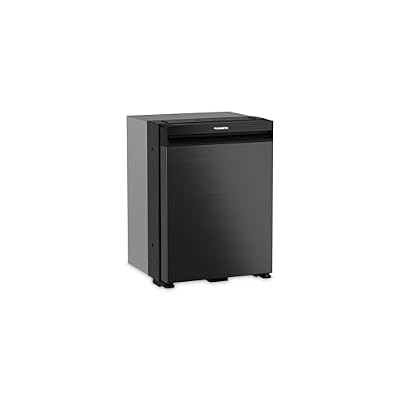
Dometic NRX35-E Marine Refrigerator – 34L (1.2 cu ft) – Full Refrigerator, Energy Efficient, LED Lighting, Vent Mode, Black
Included for 'Best 12V Fridge for Van Life: Matching Capacity and Power Budget to Your Trips' because the listing specifies 34L (1.2 cu ft) and Full Refrigerator, details this guide uses to compare options.
View on AmazonSizing: Match Liters to How You Shop
See also: Spanish Cuisine: Classic Dishes and Ingredients • Sugar Free Cocktail Recipes That Actually Taste Good
| Capacity | Holds roughly | Best for | External size (L x W x H) | Empty weight |
|---|---|---|---|---|
| 25–35 L | 2–3 days of food for one, or drinks plus basics | Weekenders, small vans, solo travelers | 23 x 14 x 17 in | 25–35 lb |
| 40–45 L | 4–5 days for one, 3 days for two | Solo full-timers, couples on short trips | 27 x 15 x 19 in | 35–45 lb |
| 50–60 L | About a week for two | Full-time couples, longer remote trips | 28 x 18 x 20 in | 40–55 lb |
| 70–95 L dual zone | A week for two plus a dedicated freezer | Families, long remote stretches | 35 x 19 x 20 in | 55–75 lb |
A useful rule: plan for about 10–12 liters per person per day between shops, then add 10 liters for drinks. A couple shopping every five days needs roughly 50–60 liters.
Power Budget: The Calculation That Matters
Running draw is less important than daily energy use. Most modern 12V portable fridge freezers draw 3–5 amps while the compressor runs, but they cycle off much of the time. Approximate daily consumption in summer conditions:
| Fridge size | Mild weather (70°F) | Hot weather (90°F+) | As freezer (0°F) in heat |
|---|---|---|---|
| 35–45 L | 15–25 Ah (190–320 Wh) | 30–40 Ah (380–510 Wh) | 45–60 Ah |
| 50–60 L | 20–30 Ah (255–385 Wh) | 35–50 Ah (450–640 Wh) | 55–70 Ah |
| 70–95 L dual zone | 30–40 Ah (385–510 Wh) | 50–70 Ah (640–900 Wh) | Depends on split |
Worked example: a 50 L fridge in Arizona summer uses roughly 45 Ah per day. A 100Ah lithium battery provides about 90 usable amp-hours, so without charging the fridge alone would empty it in two days. With 300 W of solar producing around 1,200 Wh (about 90 Ah) on a clear day, the fridge takes half your harvest, leaving the rest for lights, fans, and devices. If you also run a roof fan and charge laptops, plan for 200Ah of battery and 400 W of solar, or add alternator charging through a DC-DC charger.
Real Models Worth Comparing
Several established lines dominate the van market, and each has a slightly different strength:
- Dometic CFX3 series (35, 45, 55IM, 75DZ, 95DZ): efficient compressors, app control, and the 55IM includes an ice-making compartment. Usually priced at the premium end, around $800–$1,300 depending on size.
- ICECO VL series (such as the VL45 and VL60): Secop-style compressors, steel bodies, and single or dual-zone options, typically $500–$900.
- Engel MT series: a long-running swing-motor design known for low draw and durability, usually $900–$1,500.
- ARB Zero: dual-zone options and rugged build aimed at overlanders, generally $900–$1,600.
- Budget compressor brands such as BougeRV and Alpicool: lighter builds and simpler controls, often $250–$500, a reasonable choice for occasional use.
Decision Matrix
| Your situation | Recommended setup |
|---|---|
| Weekend trips, budget under $500 | 35–45 L single-zone budget compressor fridge |
| Solo full-timer, small battery bank | 40–45 L premium single-zone with low draw |
| Couple living in the van full time | 50–60 L single zone, or 60 L dual zone if you freeze meat |
| Want ice without a separate machine | Model with a freezer compartment or ice tray zone |
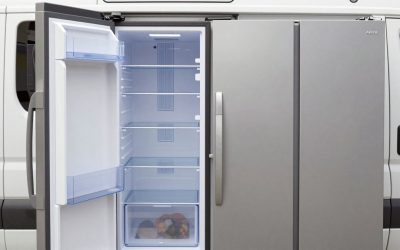
| Built-in cabinet install | Front-opening drawer fridge or upright 12V fridge |
| Car fridge for camping that moves between vehicles | 35–45 L chest fridge with handles and a 12V/AC adapter |
Chest vs Upright
Chest-style portable fridges are more efficient because cold air stays in when you open the lid, and they are easier to move. Their downside is access: you dig for items at the bottom, and they need lid clearance. Upright front-opening 12V fridges look like a home fridge and fit neatly into a galley, but they lose more cold each time the door opens and typically use 10–20% more energy. Drawer-mounted chest fridges on slides offer a middle path if you have the floor space.
Install and Ownership Tips
- Ventilation: leave at least 2–4 inches around the compressor vents. A fridge buried in a closed cabinet can use 30% more energy.
- Wire gauge: run 10 AWG or heavier for runs over 10 feet so voltage drop does not trigger low-voltage cutoff.
- Battery protection: set the fridge’s cutoff to the high setting on lead-acid batteries; lithium users can use the low setting.
- Set point: 37–38°F keeps food safe with less cycling than 33–34°F.
- Load cold: pre-chill the fridge on shore power and load cold food. Cooling warm groceries is the biggest single energy draw.
- Seals: lid gaskets wear first. Clean them monthly and check for a tight close with a sheet of paper; if it slides out easily, the seal needs attention.
Bottom Line
Size by shopping frequency, then verify your battery and solar can cover the hot-weather daily use with margin. For most van lifers, a 45–55 L compressor fridge from an established brand is the best mix of capacity, efficiency, and footprint.