- Top Pick: CAMPLUX Classic RV Cooktop 2 Burners Slide-in, Propane Cooktop Stove with Tempered Glass Cover, 12 Inches Propane Rangetop with Blue Indicator Light, 13,000BTU, Black RGH12IB
- Best Value: ChangBERT Portable Induction Cooktop Enhanced Version, One-Click Max Power 1800W Large Heating Coil Burner, Precise Temperature Control, NSF Certified Commercial Grade Low Noise Hot Plate
- Premium Choice: Duxtop LCD Portable Double Induction Cooktop 1800W Countertop Burner 9620LS

TL;DR: A 12V induction cooktop for camper van use is finally viable in 2026 — but only with the right battery and inverter setup. This guide covers power math, the best units, and whether your electrical system can handle it before you buy.
12V Induction Cooktop for Camper Van: Buyer’s Guide 2026
The vanlife cooking debate used to be simple: propane or nothing. Propane is cheap, portable, and works off-grid. But it requires tank storage, produces CO2 and moisture inside your van (humidity is already a problem), and is banned in some camping areas and ferries.
As an Amazon Associate we earn from qualifying purchases.


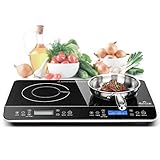
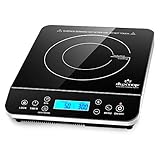
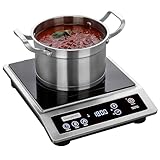

Electric induction has changed the conversation. Not because van 12V induction cooktops run directly on 12V — most don’t — but because modern LiFePO4 battery banks are large enough and inversion-efficient enough to run induction burners for real cooking sessions. Here’s what actually works.
🛒 Best Price Today on Amazon
Prime members get fast, free shipping on everything above, plus member-only deals. New members get a 30-day free trial — cancel anytime.
Start 30-Day Prime Free Trial →See Today’s Amazon Deals- The Terminology Problem: “12V Induction Cooktop” Explained
- The Power Math: Can Your System Handle It?
- Top Picks at a Glance
- Best Induction Burners for Van Use: What to Look For
- Induction vs. Propane for Vanlife: The Honest Comparison
- Inverter Selection: Pure Sine vs. Modified Sine
- Ventilation: The Most Overlooked Induction Factor
- Van Kitchen Setup: The Full System
- FAQ
- Frequently Asked Questions
- Related Articles
- Related Guides
The Terminology Problem: “12V Induction Cooktop” Explained
Most products marketed as “12V induction cooktop camper” units are not actually 12V — they’re standard 120V or 240V induction burners designed to run off a 12V system via an inverter. True 12V DC induction cooktops exist but are rare, expensive, and limited to ~600W (slower cooking). The practical setup for vanlife:
- Option A — Inverter + standard induction burner: Your LiFePO4 bank powers a 1000–2000W pure sine inverter → runs a standard 1800W induction burner. Most common vanlife setup.
- Option B — True 12V DC induction: Units like the Webasto HeatMaster run directly on 12V but draw 50–70A and produce less heat. Good for simmering, slow for boiling.
- Option C — Portable propane as backup: Induction for primary cooking when power allows, propane for cold mornings and low-battery days.
The Power Math: Can Your System Handle It?
See also: Spanish Cuisine: Classic Dishes and Ingredients • Sugar Free Cocktail Recipes That Actually Taste Good
An 1800W induction burner running through a 90%-efficient inverter pulls 2000W from your battery — roughly 167A at 12V. That’s a lot. Here’s what you need to support induction cooking in a van:
| Component | Minimum Spec | Recommended |
|---|---|---|
| Battery Bank | 100Ah LiFePO4 | 200Ah LiFePO4 |
| Inverter | 1000W pure sine | 2000W pure sine |
| Battery cable to inverter | 2/0 AWG | 4/0 AWG |
| Fuse at battery | 200A ANL | 250A ANL |
| Daily solar recharge | 200W minimum | 400W+ |
A 100Ah LiFePO4 battery holds ~1200Wh usable (at 80% depth). An 1800W induction burner runs for about 40 minutes before depleting that battery. Realistic cooking sessions — boiling water, cooking pasta, sautéing vegetables — last 15–25 minutes. One cooking session: ~500–750Wh. Pair with a best 12v lifepo4 battery 100ah and you can cook two full meals before needing solar recharge.
Top Picks at a Glance


As an Amazon Associate we earn from qualifying purchases. Product prices and availability are accurate as of the date/time indicated.


As an Amazon Associate we earn from qualifying purchases. Product prices and availability are accurate as of the date/time indicated.

Ivation Portable Camping Shower | Compact Handheld & Hands-Free Rechargeable Outdoor Shower Head & Cleaning System w/ 3.7V Pump, 6-Ft Hose, Bidet Head, Removable Filter, Multiuse Hook & USB Cable


As an Amazon Associate we earn from qualifying purchases. Product prices and availability are accurate as of the date/time indicated.
Best Induction Burners for Van Use: What to Look For
Most induction burners sold for van/RV use are rebranded household units. The key specs to evaluate:
- Wattage settings: Look for adjustable 200–1800W. Low-power simmering (200–400W) is where you spend most cooking time — much more efficient than running at full blast.
- Flat-bottom compatibility: Induction requires magnetic cookware (cast iron, stainless steel). Copper and aluminum pans don’t work. Test with a magnet — if it sticks to the pot bottom, it’ll work.
- Size: Single-burner units at 11–12 inches diameter are the standard van kitchen size. Dual burners exist but draw 3500W+ and require serious electrical infrastructure.
- Auto-shutoff: Required for van use. Induction surfaces don’t get hot (the pan does) but auto-shutoff prevents draining your battery if you walk away.
Induction vs. Propane for Vanlife: The Honest Comparison
| Factor | Induction | Propane |
|---|---|---|
| Off-grid viability | Good with 200Ah+ bank | Excellent — independent of battery |
| Indoor air quality | No combustion byproducts | CO2 and moisture — ventilation required |
| Campsite restrictions | Allowed everywhere | Banned in some areas, ferry restrictions |
| Fire risk | Low — surface stays cool | Moderate — open flame |
| Cost per meal | Free if solar-recharged | ~$0.10–0.20 per meal in propane |
| Winter performance | Works fine in cold | Low-pressure issues below 32°F |
| Cooking speed | Fast — water boils in 3–4 min | Fast — similar to induction |
The practical conclusion: induction wins on safety and convenience when you have power. Propane wins on pure off-grid reliability. Most full-time vanlifers run both — induction primary, propane backup.
Inverter Selection: Pure Sine vs. Modified Sine
Induction cooktops require a pure sine wave inverter. Modified sine inverters cause induction units to buzz, run inefficiently, and can damage the electronics. Don’t cut this corner. Pure sine 2000W inverters from Renogy, Victron, or Giandel run $150–300 and handle not just the induction burner but everything else in your van kitchen.
Size your inverter for peak draw, not average draw. An 1800W burner has a startup surge — a 2000W inverter runs it reliably. A 1000W inverter will work at the 600–800W low settings but trips under full heat. If you’re also planning to run a blender, coffee grinder, or power tools, a 2000W inverter is the right choice.
Ventilation: The Most Overlooked Induction Factor
Induction doesn’t produce combustion gases, but cooking itself does — steam, smoke, cooking vapors, and humidity. In a sealed van, a single pot of boiling water raises interior humidity significantly. Install a roof vent fan directly above the cooking area set to exhaust mode while cooking. A Maxxair or Fan-Tastic fan on high exhaust is adequate. Without it, you’ll see condensation on windows and walls within minutes of a full cooking session.
See our 12V van fan guide for vent fan options that handle cooking ventilation effectively.
Van Kitchen Setup: The Full System
Induction cooking works best as part of a complete van kitchen system:
- Power: 200Ah LiFePO4 + 2000W pure sine inverter + 400W solar
- Cooking: 1800W single-burner induction + propane backup
- Cold storage: 12V compressor fridge (not a cooler — a real fridge)
- Water: Fresh water tank + hand pump or 12V pump faucet
- Ventilation: Roof fan above cooking area, windows cracked
A proper best 12v portable fridge camping paired with induction cooking eliminates the need for ice, propane, and cooler management — the closest you’ll get to a real kitchen in a van. For water system planning, see our vanlife water system guide.
FAQ
Can you use an induction cooktop in a camper van?
Yes — with the right electrical system. You need a LiFePO4 battery bank (100Ah minimum, 200Ah recommended), a 2000W pure sine inverter, and adequate solar to recharge. Most vanlifers run standard 1800W household induction burners through an inverter rather than buying specialty “12V” units.
How many amps does a 12V induction cooktop draw?
A standard 1800W induction burner running through a 12V inverter draws approximately 150–170A from the battery (accounting for inverter efficiency losses). This is why heavy-gauge wiring (2/0 AWG minimum) and a high-amp ANL fuse are required. Run the burner at 600–800W settings for everyday cooking and you’ll draw 55–75A — much more manageable.
What is the best induction cooktop for RV use?
Look for single-burner units with wide wattage range (200W–1800W), flat profile, and auto-shutoff. The Duxtop 9600LS and Cosori induction burner are popular among vanlifers for their reliability and compact size. Avoid units with proprietary power connectors — you want standard AC input for inverter compatibility.
Is induction better than propane in a van?
Better in some ways: no combustion gases, no CO2, allowed in areas where propane is restricted, and “free” fuel if you have solar. Worse in others: requires significant electrical infrastructure and doesn’t work when your battery is low. The ideal setup is induction primary, small propane stove as backup.
Do induction cooktops work with all pans in a van?
Only with ferromagnetic (magnetic) cookware — cast iron, magnetic stainless steel, carbon steel. Aluminum, copper, and glass pans don’t work. A simple magnet test at the store: if it sticks firmly to the pan bottom, it’ll work on induction. Cast iron is the best van induction cookware — durable, multipurpose, and works at any wattage level.
For the full van electrical system that powers your induction cooking, see our Rv Accessories Must Have and our portable solar panel guide for the recharge side of the equation.
Frequently Asked Questions
Does a true 12V induction cooktop exist?
Yes, but they are limited. Native 12V and 24V units typically top out around 500-800W, which is enough to boil a small pot or simmer but slower than a household hob. Most van kitchens still use a 120V 1,500W unit through a pure sine inverter for real cooking speed.
How much battery does it use per meal?
A 500W 12V unit run for thirty minutes uses about 250Wh, or roughly 21Ah, which a 200Ah lithium bank handles easily. A 1,500W unit through an inverter for the same half hour draws around 850Wh once conversion loss is counted, which is a much bigger bite.
What wiring does it need?
A native 12V 800W cooktop draws about 67 amps, requiring 4 AWG cable on a short run and an 80A fuse. This is not a plug-in-a-socket appliance; it needs a dedicated hardwired circuit direct from the battery bus with a proper disconnect switch.
Does the surface handle spills and cleaning?
The ceramic top wipes clean and is not damaged by water, but the unit itself is not sealed against liquid running into the vents underneath. Never hose it, never install it flush in a wet counter without a sealed gasket, and let it cool before wiping to avoid thermal shock.
Is it hard to install into a countertop?
Cutting the counter opening is simple with a jigsaw, but you must leave the manufacturer-specified air gap below and provide ventilation, since the electronics fail from heat. Do not build it directly above a fridge compressor or a battery. Budget half a day including the heavy-gauge wire run.