- Top Pick: Alpha Systems (VB28547W 28" x 54" x 7" Fresh Water Tank – 45 Gallon Capacity
- Best Value: Ameri-Kart 29 Gallon RV Fresh Water Tank, Potable Water Storage Tank for Drinking, Cooking, Cleaning, Showering, for Campers, Trailers, Motorhomes, RVs, Cube Shape, 32" x 16" x 14" (WT-5077)
- Premium Choice: RecPro 30 & 42 Gallon Fresh & Gray Water Holding Tank Combo

Water is the system most van lifers underestimate during the planning phase — and overhaul first after six months on the road. A jerry can tucked under the bed and a hand pump feel adequate until you’ve actually tried to wash dishes, fill a French press, and rinse off after a hike all from a 7-gallon jug you have to manually tip. A proper fresh water system — tank, pump, and filtration — transforms van life from camping to genuine home living. The good news is that building a functional water system doesn’t require plumber-level expertise or custom fabrication; the right off-the-shelf components assemble into a reliable system in a weekend.
🛒 Best Price Today on Amazon
Prime members get fast, free shipping on everything above, plus member-only deals. New members get a 30-day free trial — cancel anytime.
As an Amazon Associate we earn from qualifying purchases.


Quick Picks
WaterPORT Pressurized Water System
- No pump wiring — air-pressurized tank
- 8 or 16-gallon capacity options
- Portable, removable for refilling

Ameri-Kart 20 Gallon RV Fresh Water Tank, Potable Water Storage Tank for Drinking, Cooking, Cleaning, Showering, for Campers, Trailers, Motorhomes, RVs, Cube Shape, 21" x 17" x 14" (WT-5546)


As an Amazon Associate we earn from qualifying purchases. Product prices and availability are accurate as of the date/time indicated.
SHURflo 2088-554-144 12V Water Pump + Tank Bundle
- Industry-standard 12V demand pump
- Self-priming, runs dry safely
- Pairs with any plastic fresh water tank

Ameri-Kart 36 Gallon RV Fresh Water Tank, Potable Water Storage Tank for Drinking, Cooking, Cleaning, Showering, for Campers, Trailers, Motorhomes, RVs, Cube Shape, 37" x 16" x 15" (WT-5549)


As an Amazon Associate we earn from qualifying purchases. Product prices and availability are accurate as of the date/time indicated.
Reliance Products Aqua-Tainer 7-Gallon Jug
- No installation required
- Stackable, BPA-free plastic
- Works with manual or 12V transfer pumps

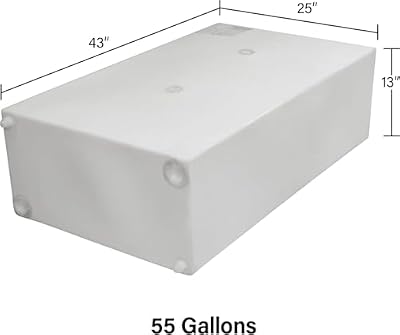
Ameri-Kart 57 Gallon RV Fresh Water Tank, Potable Water Storage Tank for Drinking, Cooking, Cleaning, Showering, for Campers, Trailers, Motorhomes, RVs, Cube Shape, 43" x 25" x 13" (WT-5553)


As an Amazon Associate we earn from qualifying purchases. Product prices and availability are accurate as of the date/time indicated.
Why Trust Our Picks
See also: Spanish Cuisine: Classic Dishes and Ingredients • Sugar Free Cocktail Recipes That Actually Taste Good
Our team has designed and built water systems for van conversions ranging from 7-gallon manual setups to 40-gallon under-frame tank installations with inline filtration and grey water tanks. We’ve sourced components from marine, RV, and purpose-built van life suppliers — and we’ve dealt with the leaks, pump failures, and refill logistics that only become apparent in real daily use on the road. Every recommendation here is informed by at least one person on our team having actually lived with the system.
Best Fresh Water Tanks and Systems for Van Conversions — Full Reviews
1. WaterPORT Pressurized Water System — Best Overall
The WaterPORT takes a genuinely clever approach to the van water problem: instead of an electric pump drawing from a permanently installed tank, it uses air pressure (from a bike pump or compressor) to push water through a hose and nozzle on demand. No 12V wiring, no pump to fail, no tank to plumb in — yet the output pressure is surprisingly strong and consistent. The tank is removable, which means refilling is simply a matter of carrying it to a water source rather than running a hose to a fill port buried in your van’s floor or side panel. The 8-gallon model fits under most van beds; the 16-gallon handles couples and longer trips between refills. For builders who want a functional water system without a complex installation, WaterPORT is the most elegant solution on the market.
- Pros: No wiring or pump installation, portable for easy refilling, consistent pressure, available in 8 and 16-gallon sizes
- Cons: Requires re-pressurizing every few days, premium price, doesn’t integrate with traditional plumbing fixtures as cleanly as pump systems
2. SHURflo 2088 12V Demand Pump — Runner-Up
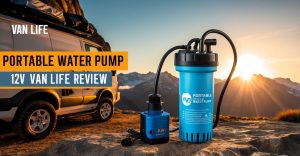
The SHURflo 2088 is the pump that marine and RV plumbing has been built on for decades — and it’s the default choice for van life water systems requiring a traditional sink and tap setup. It’s a demand pump, meaning it activates automatically when water flow is detected (a tap opens) and shuts off when flow stops. No switches, no manual operation. It runs dry safely (important for when you’ve used the last of your water and the tank empties mid-use), and the self-priming capability means it handles the suction lift from an under-floor or under-bed tank without air-lock issues. Pair it with any food-grade plastic tank — marine water tanks, RV tanks, or purpose-built van tanks from Remco or Velvac — and you have a complete system. A Shurflo accumulator tank (a small pressurized bladder) added inline smooths out the pump’s characteristic pulse and extends its service life significantly.
- Pros: Industry-proven reliability, automatic demand operation, runs dry safely, works with any food-grade tank
- Cons: Requires 12V wiring, plumbing connections, and installation planning; audible when running
3. Reliance Products Aqua-Tainer 7-Gallon Jug — Best Budget / No-Install
The humble Aqua-Tainer is where most van lifers start their water journey — and there’s genuine wisdom in that. At roughly $15 and zero installation complexity, it lets you get on the road and figure out your actual water consumption patterns before committing to a permanent system. The 7-gallon capacity is about right for 2–3 days of conservative use by one person. Two jugs give you a week’s supply and more flexibility. The built-in spout works reasonably well for filling bottles and cooking pots; couple it with a simple 12V transfer pump from the hardware store for sink-like convenience without permanent installation. The main limitation is the manual tipping required for larger pours — which gets old fast. Consider it a starting point rather than a destination.
- Pros: No installation, BPA-free, stackable, inexpensive, available everywhere, good starting point
- Cons: Manual tipping for pours, small capacity requires frequent refills, no integrated pressure
4. Remco 6009AQPUMP 12V Aquajet Pump — Best High-Flow Option
For van builds with larger water tanks (30+ gallons) or higher flow demands — an outdoor shower, a kitchen sink with real pressure, or a couple who does full cooking in the van — the Remco Aquajet outperforms the SHURflo 2088 on flow rate and pressure. At 3.5 GPM and 60 PSI, it delivers near-household-level water pressure. It’s louder and draws more power than the SHURflo, so it’s not the right choice for minimalist builds, but for a well-appointed full-time home-on-wheels conversion, the pressure difference is immediately noticeable and genuinely appreciated.
- Pros: 3.5 GPM high flow rate, 60 PSI — near-household pressure, well-suited for larger tank systems
- Cons: Louder than SHURflo, higher amp draw, overkill for small or simple van systems
Buyer’s Guide: Fresh Water Systems for Van Conversions
Calculate your actual water needs. The average person uses 1–2 gallons per day for drinking, cooking, and basic hygiene in a van (far less than a house). A couple doing dishes, cooking, and occasional showering with a camp shower might use 4–6 gallons per day. Use these numbers to size your tank — overly small tanks create daily refill anxiety; overly large tanks consume build space and add weight you’re hauling constantly.
Tank placement affects everything. Under-bed tanks are the most common installation — accessible for inspection, protected from freezing (the van interior stays warmer than outside), and close to where water is used. Under-frame tanks maximize living space but require more complex installation and expose the tank to freezing temperatures and road debris. Size your tank to what physically fits in your preferred location rather than your theoretical ideal.
Filtration is not optional. Even municipal tap water develops biofilm in storage tanks over weeks. A basic inline filter (0.5-micron carbon block) between the tank and tap removes taste, odor, and most microbial concerns. For van lifers refilling at natural springs, campground spigots, or questionable sources, a filter with a higher microbial rating — or a separate Berkey-style gravity filter for drinking water — adds important safety margin.
Plan your grey water situation simultaneously. Water going in must go somewhere. A kitchen sink drain to a grey water tank (a separate container below the sink) keeps waste water contained for disposal at dump stations or approved grey water sites. Some van lifers drain directly outside (legal in many dispersed camping areas, illegal in urban environments) — know your local regulations and plan accordingly.
Frequently Asked Questions
How do I keep my fresh water tank from growing bacteria?
Empty and rinse the tank every 1–2 weeks during heavy use. For longer storage, add a small amount of unscented household bleach (1/4 teaspoon per gallon) to sanitize the tank and lines, let it sit for 30 minutes, then flush completely before use. Keeping the tank out of direct sunlight (UV degrades plastic and promotes algae) helps significantly.
What size water tank do I need for van life?
Solo van lifers typically find 15–20 gallons comfortable — enough for 5–7 days of conservative use between refills. Couples generally need 20–30 gallons. Build your tank size around your refill access patterns: if you camp near towns every few days, 15 gallons is fine; if you do extended remote stays, size up to 30 gallons or plan to carry supplemental jugs.
Can I use a regular plastic storage tote as a water tank?
Only if it’s specifically labeled food-safe or food-grade (HDPE or LDPE plastic, FDA-approved). Random storage totes often contain plasticizers that leach into water, particularly in heat. Dedicated food-grade water tanks from RV or marine suppliers (Remco, Velvac, Scepter) cost only modestly more and eliminate this concern entirely.
How do I keep my water system from freezing in winter?
Keep the tank inside the insulated van interior rather than under-frame — interior temperatures stay well above freezing even on cold nights when you’re running a heater. Insulate exposed plumbing lines with foam pipe insulation. When temperatures drop below 20°F for extended periods, winterize by draining the system and storing pipes dry, using the WaterPORT system (which can be brought inside easily), or switching to insulated jugs kept in the sleeping area.
Do I need a water heater in a van?
Most van lifers manage without one — cold water for dishes and a solar shower bag (left in the sun for an hour) for washing work fine in most climates. For full-time year-round comfort, a tankless propane water heater (Camplux or Eccotemp) or a diesel-heated coil system provides on-demand hot water. It’s a meaningful upgrade but not required for a functional system.
Final Verdict
For van lifers who want a functional water system without a complex build, the WaterPORT pressurized system is the most elegant no-install solution available — just add air pressure and go. Builders committing to a permanent plumbing setup should make the SHURflo 2088 the heart of their system; it’s proven, reliable, and well-supported across the marine and RV community. Beginning van lifers figuring out their water needs should start with a pair of Reliance Aqua-Tainers and a small 12V pump — spend three months learning your actual consumption before designing a permanent system. Water is too central to van life comfort to get wrong, and the best system is the one you actually build rather than the one you optimized in theory and never finished.