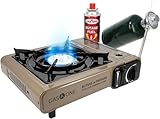
- Top Pick: Gas One GS-3400P Propane or Butane Stove Dual Fuel Stove Portable Camping Stove – Patented – with Carrying Case Great for Emergency Preparedness Kit
- Best Value: GasOne 15,000 BTU Propane or Butane Stove Dual Fuel Stove Portable Camping Stove – Patented – with Carrying Case Great for Emergency Preparedness Kit
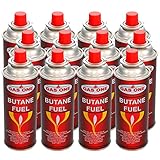
- Premium Choice: Gas One Portable Butane Camping Stove with Case: Automatic Ignition, Precise Heat Control – Camping & Tailgating and Outdoor Cooking

TL;DR: Propane wins for cold weather and high-altitude vanlife — it vaporizes at -44°F vs. butane’s 32°F cutoff. Butane burns cleaner, costs less, and works better in warm climates. For most full-time vanlifers, a dual-fuel or isobutane blend stove is the best hedge. Key decision: where you travel and what temps you camp in.
Propane vs. Butane Camping Stove: Which Is Right for Van Life?
Fuel choice for a van kitchen is a surprisingly high-stakes decision. It affects what stoves you can use, where you can buy fuel, how you store canisters, and whether your stove works at all on a cold mountain morning. This comparison cuts through the marketing to give you the real-world vanlife breakdown.
As an Amazon Associate we earn from qualifying purchases.



🛒 Best Price Today on Amazon
Prime members get fast, free shipping on everything above, plus member-only deals. New members get a 30-day free trial — cancel anytime.
Start 30-Day Prime Free Trial →See Today’s Amazon Deals- Top Picks at a Glance
- The Core Difference: Boiling Points and Cold Weather Performance
- Propane: The Full Picture
- Butane: The Full Picture
- The Third Option: Isobutane Blends
- Vanlife-Specific Considerations
- Head-to-Head Comparison Table
- Stove Type Compatibility
- Frequently Asked Questions
- The Verdict for Van Life
- Related Articles
- Related Guides
Top Picks at a Glance


As an Amazon Associate we earn from qualifying purchases. Product prices and availability are accurate as of the date/time indicated.

WAYSKA Diesel Heater 12V, 5L Tank, Diesel Heater 2KW, Muffler, Diesel Parking Heater with LCD Monitor & Remote Control for Trucks, Trailer, Boat and Motor-Home


As an Amazon Associate we earn from qualifying purchases. Product prices and availability are accurate as of the date/time indicated.

Ivation Portable Camping Shower | Compact Handheld & Hands-Free Rechargeable Outdoor Shower Head & Cleaning System w/ 3.7V Pump, 6-Ft Hose, Bidet Head, Removable Filter, Multiuse Hook & USB Cable


As an Amazon Associate we earn from qualifying purchases. Product prices and availability are accurate as of the date/time indicated.
The Core Difference: Boiling Points and Cold Weather Performance
See also: Spanish Cuisine: Classic Dishes and Ingredients • Sugar Free Cocktail Recipes That Actually Taste Good
The entire propane vs. butane debate comes down to one chemical fact: propane boils (vaporizes) at -44°F (-42°C), while butane boils at 31°F (0°C). Below freezing, butane stays liquid in the canister and won’t feed your stove. Propane vaporizes reliably down to extreme cold, making it the default choice for winter vanlife, high-altitude camping, and shoulder-season adventures in cold climates.
If you camp exclusively between April and October in moderate climates — Pacific Coast, Southeast US, lowland Europe — butane’s temperature limitation is rarely an issue. If you chase ski resorts, winter desert camping, or mountain passes, propane or a propane/isobutane blend is non-negotiable.
Propane: The Full Picture
Advantages of Propane for Vanlife
- Works in all temperatures — reliable down to -44°F; the only fuel option for cold-weather vanlife
- Higher energy density — 21,600 BTU/lb vs. butane’s 20,500 BTU/lb; slightly more cooking energy per pound
- Widely available — 1-lb canisters at virtually every hardware store, Walmart, and gas station in North America; 20-lb tanks for RV-style setups
- Compatible with large appliances — most RV-style 2-burner and 3-burner stoves, ovens, and water heaters run on propane
Disadvantages of Propane
- Tank weight — a 1-lb propane canister weighs about 1 lb filled; a 20-lb tank weighs 38 lbs full. Propane tanks are heavier than equivalent butane canisters due to thicker walls required to contain higher pressure.
- Higher pressure storage — propane requires thicker-walled tanks (150 PSI vs. ~30 PSI for butane). Tanks are heavier per unit of fuel stored.
- Van storage considerations — propane must be stored in a vented external compartment or properly sealed pass-through cabinet per code. Never store inside an unvented van living area.
- Cost — generally 10–20% more per BTU than butane in equivalent canister sizes
Butane: The Full Picture
Advantages of Butane for Vanlife
- Cleaner burn — butane combustion produces slightly less carbon monoxide than propane; relevant for poorly ventilated van kitchens
- Lower pressure canisters — thinner, lighter canister walls; the same fuel weight results in a lighter total package
- Cost — typically cheaper per BTU in small canister format; widely available in Asia and Europe where butane stoves dominate the market
- Compact stove systems — the most compact 1-burner camp stoves use butane cartridges (the flat Campingaz/Gaz 270 format); easier to store in tight van kitchens
Disadvantages of Butane
- Freezes out below 32°F — the deal-breaker for cold-climate vanlife; stove performance degrades starting around 40°F
- Harder to find in North America — butane cartridges are common in Asian grocery stores and some outdoor shops, but less ubiquitous than propane at general retailers
- No large-tank option — butane comes in small cartridges only; no equivalent to a 20-lb propane tank for high-volume cooking
The Third Option: Isobutane Blends
Isobutane (also called “iso-butane”) is a structural isomer of butane with a lower boiling point: approximately -12°F (-11°C). Most premium backpacking fuel canisters (MSR IsoPro, Jetboil Jetpower, Primus PowerGas) are blends of propane and isobutane — typically 20–30% propane, 70–80% isobutane. These blends deliver near-propane cold weather performance with butane-level clean combustion and lighter canister weight than pure propane.
For vanlifers who use compact backpacking stoves, isobutane blends are the best all-around choice. The canister cost is higher ($5–$8 per 100g vs. $2–$4 for comparable butane), but the performance envelope covers nearly all vanlife scenarios except extreme winter camping below -10°F.
Vanlife-Specific Considerations
Van Kitchen Ventilation
Any combustion appliance in a van produces carbon monoxide. Butane’s marginally cleaner burn is a minor advantage — proper ventilation matters far more than fuel type. A 12V extraction fan positioned to draw air over the cooking area and out through a roof vent or open window is essential for any van stove setup, propane or butane. Never cook in a sealed van.
12V Induction as an Alternative
Before committing to gas, evaluate whether a 12V induction cooktop meets your needs. Induction has zero combustion, works in any temperature, and has no fuel storage concerns. The tradeoff is power draw — a 12V induction cooktop pulls 10–20A, requiring a solid battery bank. For builds with 200Ah+ of LiFePO4 and adequate solar, induction eliminates the gas vs. liquid debate entirely.
Storage Safety
Propane is heavier than air — leaks accumulate at floor level and create explosion risk. Store tanks in external vented compartments or in a properly sealed under-floor pass-through with exterior venting. Butane is also heavier than air with the same risk profile. Neither fuel type should be stored inside a sealed van living area. Install a CO/propane combo detector regardless of fuel choice — they cost $25 and have saved lives.
Head-to-Head Comparison Table
| Factor | Propane | Butane | Isobutane Blend |
|---|---|---|---|
| Vaporization Temp | -44°F (-42°C) | 31°F (0°C) | -12°F (-11°C) |
| BTU/lb | 21,600 | 20,500 | ~21,000 |
| Cold Weather Use | Excellent | Poor below 40°F | Good to -10°F |
| Canister Weight | Heavy | Light | Moderate |
| Canister Pressure | High (~150 PSI) | Low (~30 PSI) | Moderate |
| Availability (N. America) | Excellent | Moderate | Good (outdoor shops) |
| Cost per BTU | Moderate | Low | High |
| Large Tank Option | Yes (20 lb+) | No | No |
| Best For | Cold climates, full-size stoves | Warm climates, compact stoves | All-season backpacking stoves |
Stove Type Compatibility
Not all stoves accept all fuels. Matching stove to fuel type matters as much as the fuel choice itself:
- Built-in van range/oven — almost universally propane; runs off an onboard 20-lb tank via regulator
- Portable 2-burner camp stove — most run propane 1-lb canisters or adapt to a bulk propane tank via hose; Coleman Classic is the iconic example
- Compact 1-burner backpacking stove — uses isobutane blend canisters (Jetboil, MSR) or butane cartridges (Korean-style stoves)
- Korean-style single burner (popular for Korean BBQ) — butane cassette cartridges only; very cheap and compact but limited to warm weather use
If you travel internationally, note that EN417 threaded canisters (isobutane blends) are available in most countries with outdoor recreation markets. Propane 1-lb cylinders in the US green-cap Lindal valve format are less common internationally.
Frequently Asked Questions
Can I use a butane stove in cold weather if I warm the canister?
Yes, with caveats. Warming a butane canister in your hands or placing it briefly in warm water (never over a flame) raises fuel pressure enough to get the stove working at temperatures slightly below freezing. This is a workaround, not a solution — output drops significantly, and you’ll constantly babysit the canister. If you regularly camp below 40°F, buy a propane or isobutane blend stove instead of fighting butane’s chemistry.
Is propane or butane safer to store in a van?
Both have similar safety profiles when stored correctly — both are heavier than air, both require vented external storage or properly designed pass-through cabinets. Propane tanks are under significantly higher pressure (150 PSI vs. ~30 PSI for butane), so physical damage to a propane canister is more dangerous. For interior storage, butane’s lower pressure is marginally safer, but proper external storage eliminates the risk for either fuel.
How long does a 1-lb propane canister last cooking in a van?
A 1-lb propane canister at full output (20,000 BTU stove) lasts about 1 hour. At typical cooking output (simmering, medium heat), expect 2–3 hours of cooking time per canister. For a couple cooking 2 meals per day, one 1-lb canister every 3–4 days is typical. Running a larger propane tank (20 lb) via a bulk hose adapter reduces per-BTU cost by 60–70% and eliminates frequent canister purchases — worth it for full-time builds.
What fuel does a Jetboil use?
Jetboil stoves use Jetboil JetPower canisters — a blend of isobutane (80%) and propane (20%). They also accept other EN417 threaded isobutane blend canisters (MSR IsoPro, Primus PowerGas, etc.). They do not accept standard 1-lb propane cylinders or butane cartridges without an adapter. The isobutane blend gives solid cold-weather performance and excellent boil speed, making Jetboil a popular choice for vanlifers who cook simple meals quickly.
Which is better for vanlife in the Pacific Northwest?
The Pacific Northwest has two challenge factors: cold temps (regularly below freezing at elevation or in winter) and high humidity. Propane or isobutane blend is the right call — butane’s cold weather limitation rules it out for year-round PNW use. Humidity doesn’t affect fuel performance but does argue for keeping your stove and canisters in dry storage when not in use. Also consider a Diesel Heater 12V Vanlife Guide for van heating so you’re not relying on your stove for warmth during cold PNW nights.
The Verdict for Van Life
For most full-time vanlifers covering varied terrain and seasons: propane for a fixed van stove, isobutane blend for a portable backup stove. This combo handles everything from ski resort winters to desert summers. If you’re a warm-weather-only van traveler on a tight budget and love the ultra-compact Korean butane stove format, butane works fine — just know its limits. And if your battery and solar system can handle the load, a 12V induction cooktop sidesteps the entire debate with safer, cleaner, zero-fuel cooking.