RV Refrigerator Gas Electric: How 3-Way Fridges Work and Whether They’re Right for Your Van
TL;DR Quick Answer
An RV refrigerator gas electric (3-way fridge) runs on propane, 120V AC, or 12V DC — switching automatically or manually between sources. They use absorption cooling with no compressor and no moving parts. For full-time vanlife with a solid LiFePO4 solar system, a 12V compressor fridge is usually more efficient. For weekend warriors, RV park dwellers, or builds without enough solar, a 3-way fridge’s propane mode is a genuine advantage. Budget $300–$900 depending on size.
The refrigerator debate is one of the most common questions in vanlife electrical planning. RV refrigerator gas electric 3-way units have been the standard in RV builds for decades — and for good reason. The ability to cool your food on propane when solar production drops, when you’re driving, or when you’re at an RV hookup gives flexibility that a pure-electric fridge cannot match.
As an Amazon Associate we earn from qualifying purchases at no extra cost to you.



This guide explains how absorption cooling works, compares 3-way vs 12V compressor fridges head-to-head, and covers the products worth considering for van builds in 2026.
🛒 Best Price Today on Amazon
Prime members get fast, free shipping on everything above, plus member-only deals. New members get a 30-day free trial — cancel anytime.
Start 30-Day Prime Free Trial →See Today’s Amazon DealsTop Picks: RV Refrigerator Gas Electric Options
BEST OVERALL — 3-WAY COMPACT
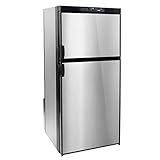
2-Way/3-Way Absorption RV Refrigerator

WAYSKA Diesel Heater 12V, 5L Tank, Diesel Heater 2KW, Muffler, Diesel Parking Heater with LCD Monitor & Remote Control for Trucks, Trailer, Boat and Motor-Home


As an Amazon Associate we earn from qualifying purchases. Product prices and availability are accurate as of the date/time indicated.
BEST 12V COMPRESSOR ALTERNATIVE
12V Portable Compressor Fridge/Freezer


As an Amazon Associate we earn from qualifying purchases. Product prices and availability are accurate as of the date/time indicated.
BEST BUDGET — THERMOELECTRIC
12V Thermoelectric Cooler for Vans

Ivation Portable Camping Shower | Compact Handheld & Hands-Free Rechargeable Outdoor Shower Head & Cleaning System w/ 3.7V Pump, 6-Ft Hose, Bidet Head, Removable Filter, Multiuse Hook & USB Cable


As an Amazon Associate we earn from qualifying purchases. Product prices and availability are accurate as of the date/time indicated.
How 3-Way Absorption Refrigerators Work
See also: Spanish Cuisine: Classic Dishes and Ingredients • Sugar Free Cocktail Recipes That Actually Taste Good
Absorption cooling has no compressor and no moving parts. Instead, it uses heat — from a propane flame, a 120V AC heating element, or a 12V DC heating element — to drive a chemical refrigeration cycle using ammonia, water, and hydrogen gas.
The cycle works like this: heat boils an ammonia-water solution, separating ammonia vapor. The vapor condenses and evaporates inside the refrigerator cabinet, absorbing heat from the interior in the process. The ammonia then recombines with water and the cycle repeats. The only “moving part” is the flow of heat itself.
Key implications for van use:
- Silent operation — no compressor cycling, no noise. Ideal for sleeping areas.
- Must be level to work properly — absorption cooling requires gravity to assist chemical flow. More than 3° off level causes performance degradation; more than 6° stops cooling entirely. This is a real constraint in vanlife use on uneven campsites.
- Slower cooling response — takes 4–8 hours to reach temperature from ambient, compared to 30–60 minutes for a compressor fridge.
- Less efficient electrically — the 12V DC mode draws 3–5A continuously (36–60W), compared to 2–4A average for a quality compressor fridge that cycles on and off.
3-Way vs 12V Compressor Fridge: Head-to-Head Comparison
| Feature | 3-Way Absorption | 12V Compressor |
|---|---|---|
| Power sources | Propane, 120V AC, 12V DC | 12V DC / 120V AC |
| Daily 12V power use | 40–60Ah | 20–45Ah |
| Noise | Silent | Compressor cycles audible |
| Level requirement | Within 3° or less | Works at any angle |
| Cooling speed | 4–8 hrs to temp | 30–60 min to temp |
| Hot climate performance | Degrades above 90°F ambient | Maintains temp up to 110°F |
| Propane backup | Yes — major advantage | No |
| Off-grid flexibility | High (propane) | High (efficient 12V) |
| Price range | $300–$900 | $250–$800 |
The honest answer: for full-time van dwellers with 200W+ of solar and a 100Ah+ LiFePO4 battery, a 12V compressor fridge wins on efficiency and performance. For part-time vanlifers, RV park users, or anyone without sufficient solar capacity, the propane mode of a 3-way fridge is a compelling advantage — you simply switch to propane when your battery is low or solar is insufficient.
Propane Mode in a Van: Safety Considerations
Running a propane-powered fridge in a sealed van requires ventilation. The absorption unit exhausts heat from the rear of the fridge and requires adequate airflow around the condenser coils. Installation requirements:
- Dedicated exterior vent on both top and bottom of the fridge cabinet — typically a louvered vent at floor level for cold air intake and a roof-level vent for heat exhaust. This ventilation is separate from living space ventilation.
- Propane supply line with a shutoff valve accessible from outside the fridge cabinet. Use flexible appliance connector rated for LP gas, not rigid copper in vibration-prone van environments.
- Carbon monoxide detector and propane detector in the living space. The fridge combustion is sealed from the interior, but a faulty connection can leak. These detectors are non-negotiable with any propane appliance.
- Do not run propane mode while driving in most situations — many tunnels, ferry crossings, and propane regulations prohibit it. Switch to 12V mode while in motion.


As an Amazon Associate we earn from qualifying purchases. Product prices and availability are accurate as of the date/time indicated.
Sizing Your RV Fridge for Van Life
Fridge capacity for a van build is constrained by two factors: physical space in the build and power budget. Common sizes and their trade-offs:
- 1.7–2.4 cubic feet (48–68L): Solo vanlifer minimum. Fits a week of groceries with careful packing. Common in compact builds and raised-roof minivans.
- 2.5–3.5 cubic feet (70–100L): Solo comfortable or couple minimum. Most popular size for full-size van builds. Allows fresh produce, leftovers, and condiments simultaneously.
- 4+ cubic feet (113L+): Couple with full kitchen expectations or anyone doing extended trips without restocking. Requires larger battery bank to sustain on 12V mode.
Match fridge size to your power system. A 3.5 cubic foot 3-way fridge running on 12V draws 50–60Ah per day. With 200W of solar producing 60–80Ah on a good day, this is manageable. On overcast days, switching to propane preserves your battery for other loads. Coordinate fridge power planning with your battery monitoring setup to track daily consumption accurately.
For van builds where leveling is a regular challenge, consider adding quality leveling blocks to your setup — keeping the van level benefits not just sleeping comfort but 3-way fridge performance directly.
FAQ: RV Refrigerator Gas Electric
Can I run a 3-way RV fridge on propane while driving?
Technically yes — the fridge will cool on propane while the van moves. However, many regulations prohibit propane operation in tunnels, on ferries, and in some campgrounds. Additionally, the open flame in the absorption unit can extinguish on rough roads or in strong wind. Most vanlifers switch to 12V mode while driving and reserve propane for stationary use when battery levels are low. This is also the safer practice if involved in a collision.
Why does my 3-way fridge stop cooling in hot weather?
Absorption fridges struggle in high ambient temperatures because the condenser relies on temperature differential to shed heat. When ambient temperatures exceed 85–90°F, the condenser cannot reject heat efficiently and cooling performance drops. This is the biggest practical disadvantage vs compressor fridges, which maintain performance up to 110°F ambient. Improving rear ventilation with a 12V fan pushing air across the condenser coils can partially compensate in hot climates.
How much propane does a 3-way RV fridge use per day?
A typical 2–3 cubic foot absorption fridge uses approximately 0.3–0.5 lbs of propane per day on its low setting, 0.5–0.8 lbs on high. A standard 1 lb disposable propane canister lasts 1–3 days. A 20 lb tank (standard BBQ size) provides 25–65 days of fridge-only operation depending on the setting and ambient temperature. Most van propane systems use 1–5 lb tanks that also serve a stove, so actual fridge runtime per fill depends on total propane consumption across all appliances.
Can I install a 3-way RV fridge myself in a van build?
Yes, with attention to ventilation and propane requirements. The electrical connections (12V DC and 120V AC) are standard wiring work within DIY capability. The propane plumbing requires careful attention — use proper LP-rated flexible connectors, test all joints with soapy water after installation, and ensure the exterior ventilation flue is sealed from the living space. Many van builders DIY the installation successfully. If you’re not confident with propane work, have a licensed tech do the propane portion and DIY the electrical connections.
Is a 3-way fridge better than a 12V compressor fridge for vanlife?
Depends on your use case. The 3-way fridge wins if you frequently camp without solar (overcast climates, forest camping with shading), use RV hookups regularly, or prefer absolute silence. The 12V compressor wins if you have a well-sized solar system (200W+), travel in hot climates, camp on uneven terrain frequently, or want better electric efficiency. Many experienced vanlifers upgrade from 3-way to 12V compressor as they expand their solar capacity — starting with a 3-way is a reasonable choice for a first build with a modest power system.
Frequently Asked Questions
How much propane does an absorption fridge use?
A typical 3-way absorption fridge burns roughly 1,400-1,600 BTU per hour on gas but cycles, so real consumption is about 1 to 1.5 pounds of propane per day. A 20-pound tank runs the fridge alone for two to three weeks, which is why gas mode still appeals to boondockers.
How many amps does a 3-way fridge draw on 12V?
Far more than people expect, usually 10-15 amps continuously, or 120-180Ah per day. That is more than most van solar systems can replace, which is why the 12V mode is intended for driving on alternator power only. Overnight on 12V will flatten a 200Ah bank in about a day.
Absorption or compressor fridge for vanlife?
Compressor fridges win for most modern van builds: they draw only 30-60Ah per day, work at any tilt, cool faster and perform in hot weather. Absorption units make sense if you have limited electrical capacity, plenty of propane, and you park level. Absorption cooling falls apart above about 90F ambient.
Does it really have to be level?
Yes. Absorption cooling relies on ammonia solution flowing by gravity, so running more than about 3 degrees off level for long causes crystal blockage and permanently kills the cooling unit. It is fine while driving because the motion keeps fluid moving; the risk is parking on a slope overnight.
What venting and safety does a gas fridge need?
It needs a sealed exterior vent pair, low intake and high exhaust, with the burner compartment isolated from the living space so combustion gases cannot enter. Install a carbon monoxide alarm and a propane leak detector regardless. Clean the burner and check the flue annually, since spiders famously block the tube.