Last updated: October 4, 2026
The best reusable ice packs for coolers are rigid, water-based hard-shell packs in the 2–5 lb range for general road-trip use, and sub-freezing phase-change packs (rated somewhere between 0°F and 18°F) only if you have a true freezer that can get them that cold. The pack type matters less than three things most buyers overlook: total pounds of frozen mass, how cold the pack starts, and how well it covers the top of the load. Get those right and even a mid-range cooler will hold safe temperatures for two to four days in a van.
Why Pack Mass Beats Pack Brand
Most reusable cooler packs store cold the same way ice does: by melting. One pound of frozen water absorbs about 144 BTU as it changes from solid to liquid at 32°F, which is far more than it absorbs warming from 0°F to 32°F. Gel packs are mostly water with a thickener, so per pound they hold roughly the same energy as ice. That is why a 10 lb collection of ordinary packs will outlast a single “premium” 2 lb pack no matter what the label claims.

YETI ICE Sheet Refreezable Reusable Cooler Ice Pack, Large
Included for 'Reusable Ice Packs for Coolers: How Long Each Type Holds Cold on the Road' because the listing specifies Large, details this guide uses to compare options.
View on Amazon
YETI ICE Block Refreezable Reusable Cooler Ice Pack, 4 lb
Included for 'Reusable Ice Packs for Coolers: How Long Each Type Holds Cold on the Road' because the listing specifies 4 lb, details this guide uses to compare options.
View on Amazon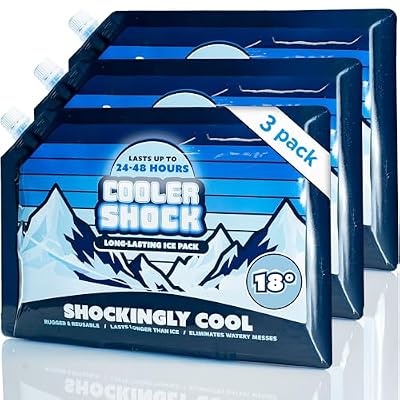
Cooler Shock Reusable Ice Packs for Cooler, 14"x10" - Long Lasting Cold Freezer Packs for Coolers and Lunch Boxes - Cooler Ice Packs for Camping Gear, Fishing, Road Trips, Beach Must Haves
Included for 'Reusable Ice Packs for Coolers: How Long Each Type Holds Cold on the Road' because the listing specifies 14"x10" and Long Lasting Cold Freezer Packs for Coolers and Lunch Boxes, details this guide uses to compare options.
View on Amazon
Kona XXL Ice Packs for Coolers, 2 Pack, 2 lb Each, Reusable, 13x10 in
Included for 'Reusable Ice Packs for Coolers: How Long Each Type Holds Cold on the Road' because the listing specifies 2 Pack and 2 lb Each, details this guide uses to compare options.
View on AmazonThe exceptions are low-temperature packs that use salt or other additives to freeze below 32°F. They keep the cooler colder, which is useful for meat and fish, but they must be frozen in a freezer that reaches their rated temperature. A typical 12V fridge-freezer set to 0°F can manage this; the small freezer box in many RV absorption fridges often cannot.
Comparison of Long Lasting Ice Packs by Type
See also: Spanish Cuisine: Classic Dishes and Ingredients • Sugar Free Cocktail Recipes That Actually Taste Good
| Pack type | Freeze point | Typical weight per pack | Approx. hold in a 45-qt hard cooler (10 lb of packs, 85°F days) | Freezer needed | Usual price range |
|---|---|---|---|---|---|
| Hard-shell water-based (e.g. YETI ICE class) | 32°F | 1–4 lb | 2–3 days | Any freezer | usually $15–$35 per pack |
| Hard-shell sub-zero (e.g. Cooler Shock class) | about 18°F | 1–3 lb | 2.5–3.5 days, colder interior | 0°F freezer, 24+ h | usually $25–$45 per set |
| Soft gel packs | about 30–32°F | 0.5–1.5 lb | 1–2 days | Any freezer | usually $10–$25 per set |
| Flexible ice sheets (cell grid) | 32°F | 1–2 lb per sheet | 1–1.5 days | Any freezer | usually $10–$20 per set |
| Frozen water jugs (DIY) | 32°F | 4–8 lb | 2–4 days | Large freezer | Cost of the jug |
Hold times are approximate and assume a pre-chilled rotomolded cooler opened four to six times a day and kept out of direct sun. A thin-walled cooler can cut these numbers roughly in half.
How Many Ice Packs for a Camping Cooler?
A reliable rule of thumb is about 1 lb of frozen mass for every 4–5 quarts of cooler capacity for a weekend, and closer to 1 lb per 3 quarts for longer trips or very hot weather.
| Cooler size | Weekend (2 days) | Long trip (4+ days) or 95°F+ heat |
|---|---|---|
| 20–25 qt | 5–6 lb of packs | 7–8 lb, or packs plus block ice |
| 35–45 qt | 8–10 lb | 12–15 lb |
| 50–65 qt | 12–14 lb | 18–22 lb |
Worked example: a 45-qt cooler for a four-day trip in July. At 1 lb per 3 qt, that is 15 lb of frozen mass. Three 4 lb packs plus one 2 lb sub-zero pack placed on top of the meat would cover it, leaving more than half the volume for food. Topping up halfway through with a bag of store ice stretches the trip further.
Choosing Freezer Packs for a Cooler in a Van
Shape and fit
Thin, flat packs line the walls and lid zone efficiently; thick blocks last longer because they have less surface area per pound. A good mix is one or two thick packs on the bottom and a flat pack on top, since cold air sinks and the top of the load warms first.
Shell durability
Packs slide around in a moving vehicle. Hard polyethylene shells survive being dropped on a tailgate; thin soft gel bags split at the seams after a season of hard use, and a burst gel pack makes a mess of your food.
Freezer space in your rig
Here is the van-specific catch: you need somewhere to refreeze the packs. A dual-zone 12V fridge with a freezer compartment can refreeze one or two 2 lb packs per day while using roughly 100–200 Wh of extra energy in warm weather. Without a freezer, plan on swapping packs at a campground freezer or switching to bagged ice on longer trips.
Food safety
Perishables should stay at or below 40°F. A cheap cooler thermometer clipped near the top of the load tells you when to add cold mass, which is more reliable than guessing from how solid the packs feel.
Ice Packs vs Bagged Ice
- No meltwater. Packs keep food dry, which is the biggest advantage in a van where draining a cooler is awkward.
- Contact. Loose ice wraps around cans and food, cooling them faster. Packs cool by contact on fewer surfaces, so pre-chilled food matters more.
- Running cost. A bag of ice usually costs $3–$5. Spending $60–$120 on a solid set of packs pays for itself after 15–30 bags if you have a way to refreeze them.
- Best combo. Many road trippers use packs on the bottom and a bag of ice on top for the first day, then let the packs carry the load once the ice melts and is drained.
Making Any Pack Last Longer
- Freeze packs for at least 24 hours, 48 for thick or sub-zero packs. A pack that is solid on the outside but slushy in the middle has lost much of its value.
- Pre-chill the cooler overnight with a sacrificial pack or a bag of ice. A warm cooler wall can eat a quarter of your cold mass before the trip starts.
- Load cold food only. Drinks and meat straight from a fridge or freezer add cold mass instead of consuming it.
- Fill air gaps with towels or extra drinks. Empty space means warm air exchange every time the lid opens.
- Keep the cooler shaded and off the sunny side of the van floor. Interior temperatures in a parked van can exceed 120°F.
- Use a separate drinks cooler so the food cooler stays closed most of the day.
Care and Common Mistakes
Wash packs with mild soap after trips involving raw meat and let them dry before freezing. Inspect seams and caps each season; a pack that sweats liquid when thawed should be replaced. Do not put sub-zero packs directly against produce or eggs, as they can freeze delicate items. Finally, label which packs are sub-zero so you remember to freeze them in the coldest part of your freezer.
For most van travelers, a set of four to six hard-shell packs totaling 10–15 lb, plus one or two sub-zero packs for meat, covers everything from weekend trips to a week between resupply stops.