Last updated: October 17, 2026
Best RV Water Pressure Regulators for Safe, Reliable Water Flow
The best RV water pressure regulator for most owners is an adjustable, gauge-equipped brass regulator with a 15–75 psi range, a standard 3/4-inch garden-hose connection, and a flow rate of at least 2 gallons per minute (GPM). Choose a preset regulator instead if you want the simplest, least expensive protection and normally use reasonably consistent campground water pressure.
Campground plumbing can deliver anything from weak flow to more than 100 psi. That pressure may feel convenient at the spigot, but it can damage an RV’s flexible tubing, fittings, water heater, toilet valve, or filter housing. A regulator reduces incoming pressure before water reaches the coach. The right choice depends on how often you move, whether you need to compensate for low-pressure parks, and how much control you want over showers and appliances.
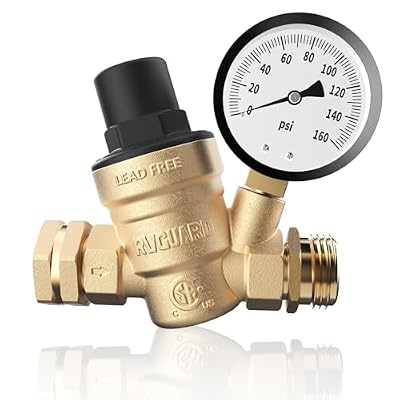
RVGUARD RV Water Pressure Regulator Valve, CSA Approved, Lead-Free Brass | Adjustable Water Pressure Reducer with Gauge, With Inlet Screen Filter, For RV Camper Travel Trailer
Included for 'Best RV Water Pressure Regulators for Safe, Reliable Water Flow' because the listing specifies CSA Approved and Lead-Free Brass, details this guide uses to compare options.
View on Amazon
RVGUARD RV Water Pressure Regulator Valve With Adjustable Knob | CSA Approved, Lead-Free Brass, Tool-Free, Water Pressure Reducer With Gauge and Inlet Screen Filter for RV Camper
Included for 'Best RV Water Pressure Regulators for Safe, Reliable Water Flow' because the listing specifies CSA Approved and Lead-Free Brass, details this guide uses to compare options.
View on Amazon
Camco Brass Marine/RV Water Pressure Regulator - Drinking Water Safe | Protects RV Kitchen Small Appliances, Plumbing & Hoses – Reduces RV Water Pressure to Safe & Consistent 40-50 PSI (40055)
Included for 'Best RV Water Pressure Regulators for Safe, Reliable Water Flow' because the listing specifies Drinking Water Safe and Protects RV Kitchen Small Appliances, details this guide uses to compare options.
View on Amazon
AOLINK RV Water Pressure Regulator Valve, Brass Lead-Free | Adjustable Water Pressure Reducer with Gauge and Inlet Filter for RV Camper and Travel Trailer
Included for 'Best RV Water Pressure Regulators for Safe, Reliable Water Flow' because the listing specifies Brass Lead-Free, details this guide uses to compare options.
View on AmazonRVGUARD RV Water Pressure Regulator Valve, CSA Approved, Lead-Free Brass | Adjustable Water Pressure Reducer with Gauge, With Inlet Screen Filter, For RV Camper Travel Trailer
Included for 'Best RV Water Pressure Regulators for Safe, Reliable Water Flow' because the listing specifies CSA Approved and Lead-Free Brass, details this guide uses to compare options.
View on AmazonRVGUARD RV Water Pressure Regulator Valve With Adjustable Knob | CSA Approved, Lead-Free Brass, Tool-Free, Water Pressure Reducer With Gauge and Inlet Screen Filter for RV Camper
Included for 'Best RV Water Pressure Regulators for Safe, Reliable Water Flow' because the listing specifies CSA Approved and Lead-Free Brass, details this guide uses to compare options.
View on Amazon
STMOUTUO RV Water Pressure Regulator Valve for Camper. Lead-Free Brass.
Included for 'Best RV Water Pressure Regulators for Safe, Reliable Water Flow' as a relevant option in this category; details come from the product listing.
View on Amazon
Camco Adjustable RV Water Pressure Regulator - Lead-Free Brass
Included for 'Best RV Water Pressure Regulators for Safe, Reliable Water Flow' because the listing specifies Lead-Free Brass, details this guide uses to compare options.
View on Amazon
Camco Tastepure 4-in-1 Adjustable RV Water Pressure Regulator - Combines a 90° RV Hose Elbow Design, Pressure Gauge, Adjustable Regulator, & Shut-Off Valve in One RV Accessory (40065)
Included for 'Best RV Water Pressure Regulators for Safe, Reliable Water Flow' because the listing specifies Combines a 90° RV Hose Elbow Design and Pressure Gauge, details this guide uses to compare options.
View on AmazonAdjustable vs. preset RV water pressure regulators
See also: Spanish Cuisine: Classic Dishes and Ingredients • Sugar Free Cocktail Recipes That Actually Taste Good
| Regulator type | Typical outlet range | Typical flow | Best for | Main limitation |
|---|---|---|---|---|
| Preset, standard-flow | 40–45 psi | 1.5–2.0 GPM | Occasional campers and simple hookups | Cannot increase pressure at a weak site |
| Preset, high-flow | 50–55 psi | 2.0–3.0 GPM | Families and multiple water users | Fixed setting may not suit every RV |
| Adjustable, with gauge | 10–75 psi or approximately 15–85 psi | 2.0–4.0 GPM | Frequent travelers and varied campground systems | Costs more and needs occasional adjustment |
| Regulator with integrated filter | Usually 40–60 psi | 1.0–2.5 GPM | Users wanting pressure control and sediment reduction | Filter cartridges restrict flow as they load |
These are typical market specifications rather than a guarantee for every model. Always confirm the manufacturer’s pressure and flow figures, because flow is often measured at a particular inlet pressure and may fall sharply at low-pressure campgrounds.
Best overall: adjustable brass regulator with a gauge
An adjustable model is the strongest all-around choice for full-time RVers, owners of larger motorhomes, and anyone who stays at different types of parks. You can set it lower for an older RV with vulnerable plumbing or higher when the coach’s manual permits it and the site has limited flow.
Camco sells adjustable RV water pressure regulators with gauges, and Valterra also offers adjustable brass regulators in this category. Look for a readable pressure gauge, a protected adjustment screw, and a pressure range that begins around 10–15 psi rather than one that only operates near 40–50 psi.
For a typical modern RV, begin around 45–55 psi. Some RV manufacturers allow up to 60 psi, while others specify a lower maximum. The RV manufacturer’s limit takes priority over the regulator’s maximum setting. Do not turn the adjustment fully open simply to improve shower pressure.
Best simple option: preset regulator
A preset RV water pressure regulator is appropriate when you want a quick connection with no calibration. Standard versions commonly limit pressure to approximately 40–45 psi. They are compact, inexpensive, and have fewer parts to adjust or accidentally damage.
Preset regulators are less suitable for a campground with weak supply pressure. A regulator cannot create pressure; it can only reduce excessive pressure. If the spigot supplies 38 psi, a 45 psi preset regulator will still deliver less than 38 psi. In that situation, a higher-flow regulator may improve delivery slightly, but a pump or a different water source is the real solution.
Camco and Valterra both make common preset RV regulators. When comparing them, prioritize the stated flow rate and connection quality rather than choosing solely by the pressure number printed on the body.
What to compare before buying
Pressure range and gauge accuracy
A wide adjustment range is useful only if the regulator remains stable throughout that range. A gauge lets you see whether the pressure is actually near the setting and helps identify a campground supply problem. Expect inexpensive analog gauges to have a tolerance of several psi; treat them as setup indicators, not laboratory instruments.
Set the regulator while water is flowing slowly through an open faucet. Static pressure can read higher than working pressure. After adjustment, close the faucet and check that the pressure does not climb substantially. A large increase may indicate seat wear or debris inside the regulator.
Flow rate
Flow rate matters when someone showers while another person flushes a toilet or uses the kitchen faucet. A regulator rated at 1.5 GPM may be adequate for one user, but a 2–4 GPM design gives more usable margin. The rating does not mean the campground can supply that amount. It describes the regulator’s restriction under specified test conditions.
A simple sizing example explains the difference: a 10-minute shower at 2 GPM uses about 20 gallons. If a partially clogged regulator allows only 1 GPM, the shower may feel weak even though the total water use is lower. The restriction is especially noticeable when the campground supply is already marginal.
Hose connections and construction
Choose standard 3/4-inch garden-hose threads on the inlet and outlet so the regulator fits common drinking-water hoses, elbows, filters, and backflow devices. Brass bodies generally tolerate repeated hookups and accidental knocks better than lightweight plastic bodies. Stainless-steel screens or inlet washers can resist corrosion, but they still need cleaning.
Connection quality often becomes the first ownership problem. A regulator with rough threads, a thin plastic collar, or a poorly seated washer can leak even when the pressure-control mechanism works correctly. Use a fresh potable-water hose washer, tighten by hand, and use a wrench only for a small final turn if necessary. Excessive force can damage the fitting.
Filtration
An integrated sediment screen can protect the regulator seat from grit, but it is not the same as a complete drinking-water filter. A regulator with a replaceable carbon cartridge may reduce some taste, odor, or sediment concerns, but cartridge capacity and flow vary considerably.
Filtration is useful when you want fewer components at the spigot, but it adds maintenance. A clogged cartridge can produce disappointing pressure and may make you blame the regulator. For maximum flow, use a separate, correctly sized inline filter and replace it according to the cartridge instructions or when flow noticeably declines.
Decision guide by camping situation
| Your situation | Recommended choice | Target specifications |
|---|---|---|
| Occasional weekend use and tight budget | Preset brass regulator | 40–45 psi, 1.5–2.0 GPM, replaceable washer |
| Frequent travel between parks | Adjustable regulator with gauge | 15–75 psi, 2.0+ GPM, metal body |
| Large RV or two simultaneous users | High-flow adjustable model | 2.5–4.0 GPM, 3/4-inch fittings, readable gauge |
| Small storage compartment or exterior hookup box | Compact preset model | Short body, protected threads, no bulky gauge |
| Sites with visible sediment | Regulator plus separate filter | Cleanable screen and appropriately sized filter |
How to install and set an adjustable regulator
- Inspect the spigot. Remove dirt, damaged washers, and cross-threaded adapters. A regulator cannot seal reliably against a damaged outlet.
- Connect the regulator to the campground spigot. If the gauge is on the inlet side, position it where it can be read without stressing the connection.
- Attach the potable-water hose. Use a drinking-water-rated hose and a washer at each connection. Avoid ordinary garden hoses, which can affect taste and may not be intended for potable water.
- Open an RV faucet slightly, then open the campground spigot. This purges trapped air and lets you see working pressure rather than only static pressure.
- Adjust gradually. Turn the regulator screw in small increments and wait for the gauge to settle. Set pressure according to the RV manufacturer’s specification, commonly about 45–55 psi.
- Check every connection. Look for drips at the spigot, regulator, filter, hose, and RV inlet. Re-seat the washer rather than repeatedly tightening a leaking fitting.
For a city-water connection, keep the onboard water pump off unless your RV manual specifically describes a compatible arrangement. If you use a portable pump or a tank-fill connection, follow the RV manufacturer’s instructions because those systems are not protected in exactly the same way as a pressurized city-water inlet.
Durability, maintenance, and common mistakes
The pressure-control seat, spring, gauge, washers, and inlet screen are the parts most likely to wear first. Hard water, rust flakes, sand, freezing temperatures, and overtightening shorten service life. Disconnect the regulator before winter storage, drain it, and keep it from freezing while wet. Frozen water can split the body or distort internal seals.
Flush grit from the inlet screen when flow drops. Do not insert sharp tools into the valve seat, and do not use household lubricants inside the water passage. Replace a regulator if it leaks internally, the gauge stays at zero despite flow, pressure fluctuates widely, or the outlet pressure rises well above its set point with no water running.
One common mistake is installing a filter before a low-capacity regulator and then evaluating the regulator’s flow through a clogged cartridge. Another is setting the regulator based on an empty hose, when the pressure falls as soon as a shower starts. Check pressure under realistic use and keep spare hose washers in your RV maintenance kit.
Final recommendation
For the broadest range of camping conditions, choose an adjustable brass RV water pressure regulator with a gauge, 3/4-inch hose threads, a working range near 15–75 psi, and a rated flow of at least 2 GPM. A preset 40–45 psi model remains the better value for occasional users who want uncomplicated protection. Whichever type you choose, verify your RV’s maximum inlet pressure, use a potable-water hose, and treat the regulator as a pressure-control device—not as a substitute for filtration or a low-pressure water pump.