- Top Pick: AmzBoom 2-Pack Fire Extinguisher for Home, Kitchen, Car, and Grill with Mounting Bracket– Extinguishing Spray, Compact A, B, C, K – Eco-Friendly, Prevents Reignition.
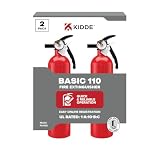
- Best Value: Kidde Basic 110 Fire Extinguisher for Home, 1-A:10-B:C, FA110G, 1 Pack
- Premium Choice: Fire Extinguisher for Home 1Pack, Kitchen, Car, and Grill,Compact Water-Based A, B, C, K Extinguisher with 6-Year Warranty and Easy Storage.
Vanlife Fire Extinguisher: What Every Van Dweller Needs to Know in 2026
TL;DR Quick Answer
Every van needs at least two fire extinguishers: a 2.5 lb ABC dry chemical unit in the cab (driver’s reach) and a 2.5 lb unit in the living space near the kitchen. Lithium battery fires require a Class D or lithium-specific extinguisher if you run a large LiFePO4 bank. Budget $30–$80 per unit. A van fire moves from ignition to total loss in under 3 minutes — the extinguisher you mount today might be the only thing that matters when it counts.
Fire is the worst-case scenario in vanlife — and it’s more common than most people think. Electrical faults, propane leaks, cooking accidents, and engine fires claim vans every year. A properly mounted vanlife fire extinguisher in the right location doesn’t just protect your build investment; it protects your life. This guide cuts through the confusion on ratings, placement, and the specific products worth buying.
As an Amazon Associate we earn from qualifying purchases at no extra cost to you.




This is not a topic to cheap out on or defer. Extinguishers are the one safety item where “I’ll get to it” is genuinely unacceptable.
🛒 Best Price Today on Amazon
Prime members get fast, free shipping on everything above, plus member-only deals. New members get a 30-day free trial — cancel anytime.
Start 30-Day Prime Free Trial →See Today’s Amazon Deals- Top Picks: Vanlife Fire Extinguisher Options
- Understanding Fire Extinguisher Ratings for Vans
- How Many Extinguishers Does a Van Need?
- Dry Chemical vs Clean Agent: Which to Choose
- Mounting: The Most Important Installation Decision
- Maintenance: When to Replace or Recharge
- FAQ: Vanlife Fire Extinguisher
- Frequently Asked Questions
- Related Articles
Top Picks: Vanlife Fire Extinguisher Options
BEST OVERALL — ABC DRY CHEMICAL
2.5 lb ABC Fire Extinguisher with Vehicle Mount

WAYSKA Diesel Heater 12V, 5L Tank, Diesel Heater 2KW, Muffler, Diesel Parking Heater with LCD Monitor & Remote Control for Trucks, Trailer, Boat and Motor-Home


As an Amazon Associate we earn from qualifying purchases. Product prices and availability are accurate as of the date/time indicated.
BEST CLEAN AGENT — NO RESIDUE
Halotron Clean Agent Fire Extinguisher


As an Amazon Associate we earn from qualifying purchases. Product prices and availability are accurate as of the date/time indicated.
BEST COMPACT — TIGHT SPACES
1 lb Mini ABC Extinguisher with Quick-Release Bracket

Ivation Portable Camping Shower | Compact Handheld & Hands-Free Rechargeable Outdoor Shower Head & Cleaning System w/ 3.7V Pump, 6-Ft Hose, Bidet Head, Removable Filter, Multiuse Hook & USB Cable


As an Amazon Associate we earn from qualifying purchases. Product prices and availability are accurate as of the date/time indicated.
Understanding Fire Extinguisher Ratings for Vans
See also: Best Ways to Keep a Van Tidy on the Road • Best Cyber Monday Cologne Deals
The letter rating tells you what type of fire the extinguisher handles. The number rating tells you how large a fire it can suppress. For vanlife, you need to understand both:
| Rating | Fire Type | Vanlife Relevance |
|---|---|---|
| Class A | Ordinary combustibles (wood, fabric, paper) | Mattress, cabinetry, clothing fires |
| Class B | Flammable liquids (gas, propane, oil) | Engine bay, propane leaks, cooking grease |
| Class C | Electrical equipment | Inverter, battery, wiring fires |
| Class ABC | All three above | Best all-around choice for van living space |
| Class D | Combustible metals (lithium) | LiFePO4 battery fires (rarely needed) |
| Class K | Cooking oils at high temp | Only if you deep-fry in the van (uncommon) |
The number prefix (1-A, 2-A, etc.) indicates extinguishing capacity — higher numbers mean larger fires suppressed. A 2.5 lb extinguisher typically carries a 1-A:10-B:C rating, adequate for contained vehicle fires caught early. The key word is “early” — these ratings assume prompt response, not an established fire.
How Many Extinguishers Does a Van Need?
The answer depends on your build complexity, but the baseline is two:
- Cab extinguisher: Mounted within driver’s reach, accessible without leaving the seat. Engine bay fires and dash electrical fires happen while driving — you need to reach this without moving.
- Living space extinguisher: Near the kitchen/cooking area, clearly visible, not buried behind gear. Cooking fires and propane incidents start fast. You need this within 5 steps from anywhere in the van.
If your build includes a large lithium battery bank (200Ah+), consider a third unit — a dedicated lithium/Class D extinguisher stored near the battery compartment. Standard ABC dry chemical does not suppress a thermal runaway LiFePO4 fire effectively. The good news: properly installed lithium battery monitoring systems with low-voltage and high-temp alerts dramatically reduce thermal runaway risk before it starts.
Dry Chemical vs Clean Agent: Which to Choose
ABC dry chemical (monoammonium phosphate powder) is the most common and affordable option. It works on all three fire classes and is highly effective. The downside: it leaves a corrosive yellow powder residue that coats every surface in the van. Post-discharge cleanup is extensive, and the powder can damage electronics and corrode metal if not removed quickly.
Clean agent extinguishers (Halotron, FE-36) discharge a gas that suppresses fire without residue. Effective on Class B and C fires, ideal for protecting electronics-heavy van builds — inverters, solar charge controllers, laptops. The trade-off: 2–3x the cost and slightly lower fire suppression capacity by weight.
Practical recommendation: use ABC dry chemical in the cab (engine bay fires benefit from powder) and a clean agent unit in the living space near expensive electronics and solar gear.
WAYSKA Diesel Heater 12V, 5L Tank, Diesel Heater 2KW, Muffler, Diesel Parking Heater with LCD Monitor & Remote Control for Trucks, Trailer, Boat and Motor-Home
As an Amazon Associate we earn from qualifying purchases. Product prices and availability are accurate as of the date/time indicated.
Mounting: The Most Important Installation Decision
An extinguisher stuffed under the bed or buried in a cabinet is essentially useless in an emergency. Proper mounting means:
- Visible and reachable in under 5 seconds from anywhere in the van interior. If you have to move gear to access it, remount it.
- Secured with a rated vehicle bracket, not bungee cords or Velcro. A 2.5 lb steel cylinder becomes a projectile in a collision. Brackets rated for vehicle use include a quick-release mechanism for fast deployment.
- Away from heat sources — not next to the propane stove, not in direct sun. Extinguishers have pressure limits; extreme heat compromises the charge over time.
- Labeled and discussed with everyone who uses the van. If you travel with a partner or passengers, everyone needs to know where the extinguisher is and how the PASS technique works (Pull, Aim, Squeeze, Sweep).
Common mounting locations that work well: driver-side A-pillar, mounted on the back of the driver’s seat, on the face of a cabinet at living space entry height, or on a dedicated panel near the kitchen.
Maintenance: When to Replace or Recharge
Most consumer dry chemical extinguishers are disposable — once discharged, replace rather than recharge (recharge costs often exceed replacement cost for small units). Key maintenance points:
- Monthly check: Verify pressure gauge needle is in the green zone. A needle in red means discharged or leaking — replace immediately.
- Annual inspection: Check for physical damage, corrosion on the cylinder, and that the safety pin and tamper seal are intact.
- 6-year replacement: Replace dry chemical extinguishers every 6 years regardless of gauge reading. The powder can compact and the cylinder seals degrade over time.
- Post-vibration check: Turn dry chemical units upside down and shake gently after long rough road sections. This prevents powder from compacting and ensures it will discharge properly when needed.
For a complete van safety kit, pair your fire extinguisher setup with a carbon monoxide detector (especially critical if you run a propane stove or gasoline-powered generator), a smoke alarm, and emergency exit planning. See our full van emergency gear guide for roadside preparedness beyond fire safety.


As an Amazon Associate we earn from qualifying purchases. Product prices and availability are accurate as of the date/time indicated.
FAQ: Vanlife Fire Extinguisher
What size fire extinguisher do I need for a van?
A 2.5 lb ABC extinguisher is the standard recommendation for van living spaces and cabs. It’s large enough to handle a contained fire effectively while remaining easy to grab and maneuver in a small space. Avoid 1 lb “mini” units as your primary extinguisher — they discharge in about 6–8 seconds, which limits their effective range and fire suppression capacity. Keep minis as supplementary units in hard-to-reach spots.
Can I use a regular ABC extinguisher on a lithium battery fire?
Standard ABC dry chemical will not effectively suppress a lithium battery in full thermal runaway. LiFePO4 batteries generate their own oxygen during thermal runaway, making them difficult to extinguish. ABC powder can help contain surrounding materials and slow spread, but the battery itself continues reacting. The best protection is prevention — quality battery monitoring with temperature and voltage alarms, proper BMS protection, and adequate ventilation around your battery compartment.
Where is the best place to mount a fire extinguisher in a van?
The cab unit belongs within arm’s reach of the driver — mounted on the driver-side A-pillar or on the floor between the seats is ideal. The living space unit should be mounted near the exit or kitchen area, visible immediately upon entering the van. The goal: you should never have to search for it or move anything to reach it. Visibility is more important than out-of-the-way placement.
How often should I replace my van’s fire extinguisher?
Replace disposable dry chemical units every 6 years regardless of gauge reading. Replace immediately after any discharge, even partial. Check the pressure gauge monthly — a reading outside the green zone means replace now, not next time you’re near a hardware store. In a van environment with vibration and temperature swings, lean toward earlier replacement rather than later. The cost of a new extinguisher is trivial versus the risk of a failed discharge when you need it.
Do I need a fire extinguisher if I don’t cook with propane?
Yes. Propane is one risk factor among many. Electrical fires from wiring faults, inverter overload, or battery issues can start without any open flame. Engine bay fires are independent of your living space setup entirely. Even an induction cooktop running on your battery system represents an electrical fire risk if connections fail. A fire extinguisher is required regardless of your cooking method — the electrical system alone justifies it.
Frequently Asked Questions
What type and size fire extinguisher does a camper van need?
Carry at least one 2.5-pound ABC dry chemical unit rated for ordinary combustibles, flammable liquids and electrical fires. Many builders add a 5-pound ABC in the garage and a small clean-agent extinguisher near electronics, since dry chemical powder is highly corrosive and will destroy an inverter or laptop it coats.
Where should I mount it?
Within arm reach of the exit door, not deep inside the van where a galley fire blocks your access, and never behind a closed cabinet door. Most people mount one by the slider and a second by the bed. Use a proper bracket rated for vibration so it does not become a projectile.
Do I need a lithium battery fire extinguisher?
Standard ABC powder does not stop a lithium thermal runaway, but true LiFePO4 runaway is rare and mostly slow. Class D or aerosol lithium extinguishers exist and are worth considering with large banks. The higher-value protection is a well-fused install, a quality BMS, and a smoke alarm above the battery bay.
How often should I check and replace it?
Check the gauge monthly and give the bottle a firm shake or invert it quarterly, because van vibration packs dry chemical powder into a solid cake that will not discharge. Rechargeable units should be professionally serviced every six years; disposable ones get replaced every ten years or after any use.
Does cold or heat affect an extinguisher?
Most ABC units are rated from about minus 40F to 120F, so normal van conditions are fine, but a bottle left in direct summer sun behind glass can exceed the rating and vent pressure. Mount it out of direct sunlight and check the gauge after any extended heatwave or deep freeze.