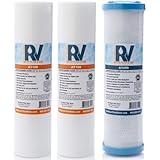
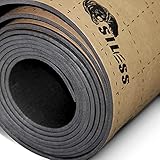
- Top Pick: Siless Liner 157 (4 mm) mil 36 sqft Car Sound Deadening Closed Cell Foam & Heat Insulation mat – PE Foam Sound Deadener Material & Heat Barrier
- Best Value: Artilife Closed Cell Foam Roll, Easy to Cut into Foam Sheets & Foam Pads for Sound Insulation, Cushion & DIY Projects (1/2" T x 13" W x 60" L)
- Premium Choice: 3M Thinsulate SM600L Automotive Camper Van Insulation 60 Inch x 120 Inch (5 Feet x 10 Feet)
Last updated: September 18, 2026
Choosing between closed cell foam and wool van insulation is less about finding a single “best” material and more about deciding what you want your space to feel like. In a camper van, both can reduce heat transfer and make the interior more comfortable, but they behave very differently around moisture, sound, installation, and everyday wear. The same tradeoffs matter when you are insulating a tiny home, garage conversion, shed, or other compact living space.
Closed cell foam is thin, water-resistant, easy to wipe clean, and relatively simple to install. Wool insulation is thicker and more natural-feeling, with strong sound-absorbing qualities and a forgiving fit around irregular cavities. Your climate, available wall depth, budget, and tolerance for maintenance may matter more than the insulation label itself.
As an Amazon Associate we earn from qualifying purchases at no extra cost to you. Product prices and availability are accurate as of the date shown and are subject to change.


Quick Verdict
Choose closed cell foam if you need a slim, moisture-resistant layer for metal panels, floors, doors, or areas exposed to condensation. It is especially practical for a weekend van build, wet climate, or installation where every inch of interior space counts.
Choose wool van insulation if your priority is a quieter, more comfortable interior and you have enough room for a thicker layer. Wool is often the better choice for long-term living, cold-weather camping, and spaces where you want insulation that can friction-fit into uneven cavities without adhesive everywhere.
For many builds, the best answer is a combination: closed cell foam as a moisture barrier or thermal break against metal, followed by wool in larger cavities. Neither material replaces ventilation, a properly sealed roof, or safe heating practices.
Side by Side
See also: Best Van Water Filter for Refill Stations in 2026: Tested and Ranked • How to Winterize a Van Water System (2026): Step-by-Step
| Factor | Closed Cell Foam | Wool Van Insulation |
|---|---|---|
| Comfort | Good thermal improvement; limited sound absorption unless used in thicker layers | Very comfortable acoustically and thermally when cavities are filled evenly |
| Durability | Resists water and compression, but can tear or separate at seams | Can last for years when kept dry and protected from pests and abrasion |
| Price range | About $1.25-$5 per square foot for common consumer rolls and mats | Often about $1.50-$4 or more per square foot, depending on thickness and brand |
| Maintenance | Low; wipeable and not prone to absorbing liquid | Needs protection from persistent leaks, pests, and exposed condensation |
| Space needed | Common products are roughly 1/8-1/2 inch thick | Common van batts are roughly 1-2 inches thick |
| Look | Clean behind panels, but seams and shiny surfaces may need covering | Soft, fibrous material that is normally hidden behind a liner or wall |
| Resale | Easy for a future owner to understand and modify | Can appeal to buyers seeking a quieter, more finished, natural-fiber build |
| Best for | Floors, doors, metal skin, damp zones, thin walls, and quick DIY projects | Large wall and ceiling cavities, sound control, and long-term occupancy |
Where Closed Cell Foam Wins
Closed cell foam contains sealed air pockets, so it does not readily absorb liquid like an open-cell sponge. That makes it useful on van floors, wheel wells, doors, and metal surfaces where condensation can occur. It also provides a helpful thermal break between a cold metal panel and an interior wall finish.
Installation is usually approachable for a first-time DIY builder. Measure the panel, cut the foam with a sharp utility knife, and apply it according to the product instructions. A 4 mm mat such as the Siless Liner 157 covers 36 square feet and is listed at $44.95. That works out to about $1.25 per square foot before shipping and other supplies. Its thin profile is useful where a thicker batt would interfere with trim, door hardware, or a finished floor.
For smaller repairs and craft-like applications, the Artilife roll measures 1/2 inch thick by 13 inches wide and 60 inches long. That equals approximately 5.4 square feet, with a listed price of $24.69, or roughly $4.56 per square foot. A roll in this format can be convenient for door panels, cabinet padding, small cavities, and custom-cut pieces, though it is not the most economical choice for insulating an entire van.
Foam is also less vulnerable to occasional splashes and is easy to clean before wall panels go back on. It does not harbor moisture in the same way a porous fiber can. However, “water-resistant” does not mean the surrounding structure is waterproof. A leak behind an enclosed panel can still cause rust, mold on adjacent materials, or trapped condensation.
The main limitation is thickness. A thin foam mat can improve surface temperature and reduce vibration, but it cannot fill a deep cavity as effectively as a properly fitted thick insulation layer. Closed cell foam is also not a complete soundproofing system. It can reduce some vibration and panel resonance, but gaps, windows, doors, and the vehicle body itself remain major paths for noise.
Where Wool Van Insulation Wins
Wool insulation is valued for its ability to fill irregular spaces without requiring every section to be perfectly flat. Batts or rolls can be cut around ribs, wiring, and framing, then held in place behind a liner. Its fibrous structure absorbs more interior sound than a thin foam sheet, helping reduce the hollow, echoing quality common in metal vehicles.
Wool is particularly appealing for people who sleep, work, or spend extended periods inside a van. It can make the interior feel less harsh by moderating temperature swings and softening road and rain noise. It is also available in thicker formats, allowing a builder to use the depth of a wall cavity instead of relying only on a thin surface layer.
Installation requires more care. Do not compress insulation simply to make a panel fit; compression reduces the amount of insulating material in the cavity. At the same time, avoid leaving large gaps around edges. Wool should be kept away from active leaks and protected from repeated wetting. A breathable, well-sealed interior finish and sensible ventilation are important, especially when cooking or sleeping in the vehicle.
One commonly available alternative is 3M Thinsulate SM600L, which is a synthetic automotive insulation rather than wool. The 60-by-120-inch package covers 50 square feet and is listed at $94, while the 60-by-240-inch package covers 100 square feet and is listed at $179. Those prices equal about $1.88 and $1.79 per square foot, respectively. It can be useful when a buyer wants a soft, lightweight batt-style material but prefers synthetic fiber. Always check the manufacturer’s installation guidance, thickness, and coverage before comparing it directly with wool.
Cost Over 5 Years
Material cost is only part of the five-year calculation. A small van may have approximately 80-120 square feet of walls, ceiling, doors, and floor requiring treatment, although the exact area varies substantially by vehicle. At $1.25-$5 per square foot, closed cell foam could cost roughly $100-$600 for material. Premium adhesive, foil tape, fasteners, and replacement blades may add another $50-$200.
Wool or wool-like batt insulation commonly costs about $1.50-$4 or more per square foot. Using the same 80-120 square feet, a reasonable planning range is approximately $120-$480 for material, plus $30-$150 for tapes, netting, adhesive, or protective liners. Specialty products can exceed these ranges.
Over five years, closed cell foam may have the lower maintenance cost because it is easy to clean and less affected by an occasional splash. Wool can remain economical if the van stays dry and the installation is protected. A serious leak, pest problem, or wall removal can erase the initial savings of either option. Neither material has an operating wattage or ongoing energy requirement; savings come indirectly from reducing the workload on a heater or air conditioner.
For a fair comparison, budget for the complete assembly rather than insulation alone. Include vapor and air-sealing decisions, wall panels, ventilation, wiring access, and any changes needed to preserve headroom. A cheaper material that forces a costly rebuild is not the cheaper five-year choice.
Which One for Your Home
Small apartment
For an apartment, closed cell foam is usually a targeted solution rather than a whole-room insulation system. Use thin foam behind a drafty removable panel, around a window insert, or as cushioning behind furniture. Wool makes more sense in a renovation where wall cavities are open and local building requirements allow it. Do not cover vents, heaters, outlets, or egress windows.
Family with kids and pets
Choose the material that can be enclosed securely behind durable panels. Closed cell foam is easier to wipe if exposed and handles occasional spills well. Wool can provide a quieter interior, but it should not be left accessible for children or pets to pull apart. In a family van, a combination of thin foam at the metal skin and thicker insulation behind a protected liner is often practical.
Rental
Closed cell foam is generally the safer rental choice because small, removable pieces can improve comfort without opening walls. Use nonpermanent window inserts or removable panel systems where permitted. Wool insulation is rarely appropriate for a rental unless the landlord is completing the work, because installing it usually requires access inside walls or ceilings.
Long-term home
For a long-term van, tiny home, or permitted renovation, prioritize the complete moisture-control design over the material’s marketing claims. Wool is attractive when you have adequate cavity depth and want sound absorption. Closed cell foam is valuable at floors, metal interfaces, and damp-prone locations. A qualified professional should review fixed electrical, propane, heating, and building-envelope work.
FAQ
Is wool warmer than closed cell foam?
Not automatically. Performance depends on thickness, density, installation quality, gaps, compression, and the rest of the wall assembly. A thick, well-fitted wool batt can outperform a thin foam mat, while foam may be the better choice where only a narrow space is available. Compare the manufacturer’s stated R-value at the installed thickness, not just the product name.
Does closed cell foam stop condensation?
It can reduce condensation on a cold metal surface by creating a thermal break, but it does not eliminate humidity. Cooking, breathing, wet clothing, and temperature changes still add moisture. Ventilation, leak repair, and careful sealing around joints remain necessary.
Can I install wool and foam together?
Yes. A common strategy is thin closed cell foam against a metal panel, with wool or another batt in the deeper cavity. Make sure the assembly does not trap water, block wiring access, or compress the batt. Follow the adhesive and fire-safety instructions for every layer.
Which insulation is easiest for a beginner?
Thin closed cell foam is usually the easiest to measure, cut, and clean up. Wool is also DIY-friendly but demands more careful fitting and moisture planning. Whichever you choose, make a template first, leave access to critical hardware, and avoid covering drains, vents, or electrical components.
Ready to decide? Our #1 pick for 2026 is the Comfort.
Live price & availability on Amazon.