TL;DR: A DIY van window privacy film kit gives you one-way daytime privacy, reduces solar heat gain by up to 70%, and installs without professional tools in a few hours. For full stealth camping blackout you still need curtains, but film handles the daytime privacy problem permanently and invisibly. Best pick: ASIN B0DPKCGTB7.
Best Van Window Privacy Film Tint DIY Kit (2026)
Stealth camping fails the moment someone can see movement inside your van during daylight hours. A quality van window privacy film tint DIY kit solves the daytime side of that problem by creating a reflective exterior surface that blocks outside views while maintaining reasonable interior visibility. It is not a substitute for a full blackout curtain at night — once it is dark outside, the light differential reverses and film alone does not hide interior lighting — but for daytime parking in urban environments it is far more effective and cleaner-looking than improvised covers. Layer it with a magnetic blackout curtain system for night and you have a complete privacy solution. Check your insulation setup too — film reduces solar heat gain significantly, working in concert with insulation to keep interior temperatures manageable. The bug screen system rounds out the window treatment stack for warm-weather camping.
As an Amazon Associate we earn from qualifying purchases at no extra cost to you.


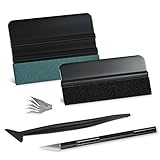
🛒 Best Price Today on Amazon
Prime members get fast, free shipping on everything above, plus member-only deals. New members get a 30-day free trial — cancel anytime.
Start 30-Day Prime Free Trial →See Today’s Amazon DealsTop Pick
Privacy Film vs. Window Curtains: What Each Does
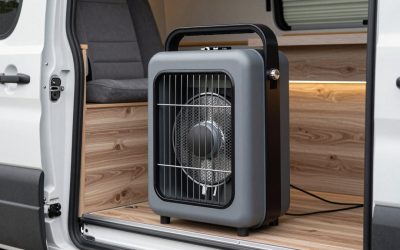
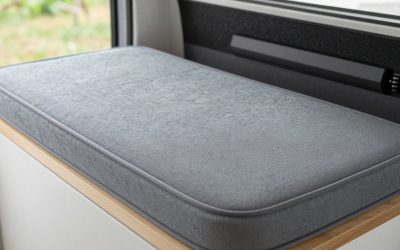
See also: Best Portable Heater for Van Life: Safe Options Compared • Best Mattresses Under $500
Privacy film and curtains solve different problems and work best together. Film provides passive daytime privacy without any action required on your part — you park, and the windows are already opaque from the outside. Curtains provide night-time blackout, morning sleep protection from sunrise, and the ability to switch between open and closed quickly. Film cannot do night blackout; curtains are conspicuous and require manual operation.
The practical van life setup is film on all cargo windows (rear and side) plus cab windows if local regulations allow, with a blackout curtain system for the sleeping zone used at night. This combination handles every lighting scenario without requiring you to think about it during daytime moves between parking spots.
Key Specs to Compare
| Spec | What to Look For | Why It Matters |
|---|---|---|
| VLT (Visible Light Transmission) | 5–20% for cargo windows | Lower % = darker tint = better privacy; 5% is near-blackout from outside |
| Heat rejection | 50–70% solar energy rejection | Directly reduces interior temperature in direct sun |
| UV rejection | 99% | Protects interior materials and occupants from UV damage |
| Film type | Static-cling or adhesive | Static-cling is removable without residue; adhesive is more permanent and bubble-resistant |
| Thickness | 2–4 mil | Thicker film resists scratching and holds shape better during install |
| Roll width | 24–36 inches | Wider rolls reduce seams on large van cargo windows |
| Clarity direction | One-way mirror (daytime only) | Reflective outside, clear inside during daylight; reverses at night with interior light |
| Legality | Check local VLT laws for front windows | Cargo van rear and side windows typically unrestricted; cab windows have state/country limits |
DIY Installation: Step-by-Step
A successful DIY install requires patience during the cutting stage. Rushing the template creates bubbles and misaligned edges that are difficult to correct after the film adheres.
- Clean the glass thoroughly — any dust, grease, or residue trapped under the film causes permanent bubbles. Use an ammonia-free glass cleaner and a lint-free microfiber cloth. Clean twice.
- Create a paper template — tape butcher paper or newspaper to the outside of the window, trace the glass edge with a pencil, then cut the template slightly inside the frame line (leave 1/8″ gap from the rubber seal).
- Cut the film — transfer the template to the film roll, cut with sharp scissors or a craft knife on a cutting mat. Precision here saves hours of trimming later.
- Wet the glass — spray the window interior with a diluted soap solution (a few drops of dish soap per quart of water). This is your slip solution — it lets you reposition the film during application.
- Apply the film — peel the film backing, wet the adhesive side with slip solution, and position on the wet glass. Work from top to bottom.
- Squeegee from center out — use a plastic squeegee (never metal) to push air and water to the edges. Firm, overlapping strokes prevent trapped bubbles.
- Dry and cure — allow 3–7 days for full cure before assessing remaining small bubbles; most self-resolve as water evaporates through the film.
Cargo Van Window Shapes: The Challenge
Transit, Sprinter, and ProMaster cargo windows are rarely flat rectangles. They have compound curves, recessed rubber seals, and varying glass thickness. Static-cling films struggle to adhere cleanly on deeply curved surfaces — the film bridges across the curve and lifts at the edges. For heavily curved windows (rear quarter windows on Transits in particular), a wet-apply adhesive film conforms better. Some van lifers use pre-cut kits designed for specific van makes and years, which eliminate the template step entirely and guarantee edge-to-edge coverage.
Frequently Asked Questions
Does window privacy film actually work for van stealth camping?
During daylight hours, yes — a 5% VLT mirror film makes it essentially impossible to see inside when there is more light outside than inside the van. At night with interior lighting, the one-way effect reverses and the film provides no privacy. For full stealth camping, film handles the daytime problem while blackout curtains handle the night. Together they cover all scenarios.
Is window tint film legal on all van windows?
Laws vary by state and country. In most US states, cargo area windows (rear and side of the cargo section) have no legal VLT minimum and can be tinted to any darkness. Front side windows (driver and passenger) and the windshield have strict limits — typically 70% VLT for front side windows and no tint on windshields. Always verify your state’s specific regulations before applying film to cab windows.
How long does DIY window film last on a van?
Quality adhesive window film lasts 5–10 years with proper installation. Static-cling film degrades faster, particularly in high UV environments (desert, high altitude) — expect 2–4 years before edges begin lifting and clarity deteriorates. Signs of end-of-life include purple discoloration (dye failure in cheaper films), bubbling, and delamination at window edges. Ceramic or carbon films last significantly longer than dyed films and maintain color stability better in harsh sun.
Can window film be removed without damaging the glass?
Yes, though the process requires patience. Heat the film with a heat gun or hair dryer to soften the adhesive, then peel slowly from a corner. Residual adhesive comes off with an adhesive remover or soapy water and a plastic scraper. Avoid metal razors on tempered glass — they can leave microscopic scratches that become visible under certain lighting. Static-cling film removes instantly with no residue.
What is the difference between privacy film and regular window tint for a van?
Standard window tint reduces light and UV uniformly but is semi-transparent from both sides — it darkens the view in and out equally. One-way privacy film (mirror film) uses a reflective metallic layer that creates an asymmetric effect: the brighter side sees only its own reflection while the darker side can see through. In daylight, the outside is brighter, so outside viewers see reflection while you see out. This is what makes privacy film superior to standard tint for stealth camping applications.
Complete your van privacy system with a magnetic blackout curtain for night-time stealth, a bug screen for ventilated summer parking, and read the van insulation guide to understand how film and insulation work together to control interior temperature year-round.