Last updated: October 4, 2026
The best diesel heaters for camper vans are 2 kW air heaters from established makers such as the Webasto Air Top 2000 STC, the Eberspächer (Espar) Airtronic S2 D2L and the Autoterm Air 2D, with budget all-in-one units a workable fallback if you accept more maintenance and a careful install. A 2 kW unit is the right size for nearly every van; the 5 kW and 8 kW boxes sold cheaply are oversized for a space under 15 cubic meters and spend most of their life running at minimum, which is exactly when diesel heaters soot up.
This guide skips the hype and focuses on what separates a van diesel heater you forget about from one that needs a teardown every winter: output range, altitude handling, noise, power draw, and how the unit is installed.
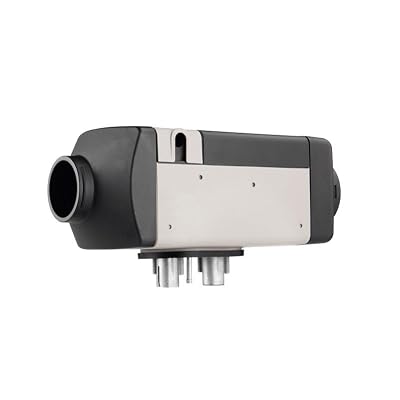
Webasto Air Top 2000STC Diesel Air Heater w/Installation Kit & Smartemp 2.0 Controller
Included for 'Best Diesel Heaters for Camper Vans: Why 2 kW Wins, Running Costs and Safe Install Basics' as a relevant option in this category; details come from the product listing.
View on Amazon
VEVOR Bluetooth App Control Diesel Air Heater, 12V 2KW Diesel Heater with Automatic Altitude Adjustment, Remote Control and LCD, Diesel Parking Heater for RV Trailer Camper Van Boat and Indoors
Included for 'Best Diesel Heaters for Camper Vans: Why 2 kW Wins, Running Costs and Safe Install Basics' because the listing specifies 12V 2KW Diesel Heater with Automatic Altitude Adjustment and Remote Control and LCD, details this guide uses to compare options.
View on Amazon
VEVOR Diesel Heater, 2KW 12V/24V All in One Diesel Air Heater with Bluetooth APP Control, Remote Control and Display Screen, CO Alarm, Portable Fast Heating for Vehicles, RVs, Trucks, and Outdoors
Included for 'Best Diesel Heaters for Camper Vans: Why 2 kW Wins, Running Costs and Safe Install Basics' because the listing specifies Remote Control and Display Screen and CO Alarm, details this guide uses to compare options.
View on Amazon
maXpeedingrods 2KW Diesel Heater 12V/24V, App Remote Control,LCD Control
Included for 'Best Diesel Heaters for Camper Vans: Why 2 kW Wins, Running Costs and Safe Install Basics' because the listing specifies App Remote Control and LCD Control, details this guide uses to compare options.
View on AmazonWhy 2 kW Beats 5 kW in a Van
A parking heater for van use needs to hold temperature for hours, not blast heat for ten minutes. Diesel heaters burn most cleanly near the middle-to-top of their output range. A 5 kW heater idling at 1 kW in a small van burns cool and rich, which builds carbon in the combustion chamber and glow plug screen. A 2 kW heater running at 1.2 to 1.6 kW is in its comfortable zone.
As a rough guide, a well-insulated mid-size van (Transit, Sprinter or ProMaster around 10 to 14 cubic meters of living space) needs about 0.8 to 1.5 kW to hold 18 to 20°C when it is near freezing outside. Even at -15°C, a 2 kW unit at full output is usually enough if the floor, walls and windows are covered.
Diesel Heater Comparison by Spec Class
See also: Best Portable Heater for Van Life: Safe Options Compared • Best Mattresses Under $500
| Heater / class | Heat output | Fuel use | Running power draw | Typical price range |
|---|---|---|---|---|
| Webasto Air Top 2000 STC | 0.9 – 2.0 kW | about 0.12 – 0.24 L/h | about 14 – 29 W | $1,100 – $1,700 (kit) |
| Eberspächer Airtronic S2 D2L | 0.85 – 2.2 kW | about 0.10 – 0.28 L/h | about 8 – 29 W | $1,100 – $1,800 (kit) |
| Autoterm Air 2D | about 0.85 – 2.0 kW | about 0.10 – 0.24 L/h | about 10 – 30 W | $650 – $1,000 (kit) |
| Budget split unit, 2 kW class | roughly 1 – 2 kW (label often says 5 kW) | about 0.15 – 0.25 L/h | about 10 – 40 W | $120 – $300 |
| Budget all-in-one box, 5 – 8 kW label | real output often 2 – 4 kW | about 0.15 – 0.5 L/h | about 15 – 50 W | $100 – $250 |
All of these draw a short startup spike of roughly 8 to 10 amps at 12 V for a minute or two while the glow plug heats, then settle down. Shutdown also runs the fan for a few minutes to purge and cool the chamber, so never cut power to stop the heater.
Picks by Situation
Full-time living and cold climates: Webasto or Eberspächer
These have the longest track record, wide dealer networks for parts, and controllers designed for long run times. The Air Top 2000 STC handles altitude better than older models thanks to its sensor-based combustion control, and the Airtronic S2 D2L has one of the widest low-end ranges, which helps on mild nights. If you live in the van year-round, the higher upfront cost tends to pay back in fewer teardowns.
Best value for most builds: Autoterm Air 2D
Autoterm (formerly sold under the Planar name) sits between premium and budget. It is a proper parking heater with documented parts, thermostat control, and a high-altitude option on its controllers. For weekend and seasonal van owners this is often the sweet spot for a diesel heater for camper conversion work.
Tight budget: a 2 kW split-style budget unit
If money is the deciding factor, choose a split unit (heater body separate from tank and controls) rated around 2 kW rather than an all-in-one 8 kW box. Plan to replace the supplied exhaust clamps, fuel line clips and sometimes the glow plug, and expect to decarbonize it more often. Budget units are the most likely to need an aftermarket CO alarm upgrade and better fuel filters, so treat their price as the starting cost, not the final one.
Running Cost: A Worked Example
Assume a 10-hour winter night averaging 1.3 kW output on a 2 kW heater.
- Fuel: about 0.16 L/h x 10 h = 1.6 L per night. A 10 L tank lasts roughly six nights; tapping the vehicle tank removes the refill chore.
- Electricity: about 15 W average x 10 h = 150 Wh, plus around 15 Wh for startup. That is about 14 Ah from a 12 V battery, easy for a 100 Ah lithium bank but noticeable on a small AGM in cloudy weather.
- Cost per night: at typical diesel prices, fuel runs a few dollars per night, far below campground electric hookup fees.
Safety Notes That Are Not Optional
Diesel heaters are safe when installed properly, but the failure modes are serious. Keep these points front and center:
- Install a CO alarm. Mount a battery-powered carbon monoxide alarm in the sleeping area, plus a smoke alarm. Replace them on the manufacturer’s schedule.
- Combustion air and exhaust stay outside. The heater should draw combustion air from outside and the exhaust must exit outside the vehicle, away from doors, windows, and any intake. Never place the heater body or exhaust inside the living space.
- Fuse the supply. Run the heater from a fused circuit sized per the manufacturer’s manual, with the fuse close to the battery or distribution point.
- Avoid DIY fuel tank taps you do not understand. Tapping the vehicle tank is common, but a professional or a vehicle-specific standpipe kit avoids leaks and fuel starvation.
- Do not use a heater with damaged exhaust parts. Exhaust gaskets and clamps are wear items; inspect them at the start of every season.
If you are not confident with fuel and exhaust routing, have a qualified installer do the job. Many van owners do their own electrics but hand off the heater install, and that is a reasonable split.
Ownership Realities: What Wears First
- Glow plug and screen: carbon buildup is the most common cause of failed starts. Running the heater at full output for 20 to 30 minutes every week or so helps burn deposits off.
- Fuel pump ticking noise: the dosing pump clicks audibly. Mount it on a rubber-isolated bracket outside, angled per the manual.
- Altitude: above roughly 1,500 m, heaters without altitude compensation run rich and soot quickly. Use a model or controller with high-altitude mode if you camp in the mountains.
- Summer storage: run the heater for 15 minutes once a month during the off season to keep the pump and fuel moving.
Quick Decision Matrix
| Your situation | Best fit | Why |
|---|---|---|
| Full-time, below -10°C often | Webasto Air Top 2000 STC or Airtronic S2 D2L | Proven longevity, parts availability |
| Weekend or seasonal use, mid budget | Autoterm Air 2D | Most heater per dollar with real support |
| Frequent high-altitude trips | Any model with altitude compensation | Prevents rich running and carbon buildup |
| Lowest upfront cost | 2 kW budget split unit | Works, but budget for upgrades and cleaning |
Choose the output range that matches your van, prioritize a clean outside exhaust and a CO alarm, and the diesel heater becomes the single biggest comfort upgrade in a cold-weather build.