Last updated: October 4, 2026
The best van awning for sun protection is one that throws at least 6 feet of shade out from the side of the van, uses a tightly woven or coated fabric rated UPF 50+, and can be extended and tensioned by one person in under five minutes. For most camper vans that means either a roof-rail mounted pull-out awning around 8 x 8 feet or a cassette-style roll-out awning such as the Fiamma F45s on a high-roof van. A 270-degree awning gives the most shade but adds weight and cost that only make sense if you spend a lot of time parked in hot, open country.
What Actually Blocks the Sun
Shade quality comes down to fabric, color, and geometry. A UV blocking awning stops ultraviolet light, but how cool it feels underneath depends on how much visible light and heat pass through and how far the shade reaches.

ARB 4x4 Accessories 814410 Retractable Awning with Led Light Strip Included 2500x2500mm 8.2 Feet, Ideal for Camping, Roadtrips, Outdoor Trips, Travel, Expeditions, RV, Camper, 4x4 and SUV
Included for 'Best Van Awning for Sun Protection: Fabric, UPF and Shade Area Explained' because the listing specifies Ideal for Camping and Roadtrips, details this guide uses to compare options.
View on Amazon
ARB 814301 Retractable Awning 1250 x 2100 mm 4x4 Accessories, self-Standing Retractable awnings fit onto The Side of Most roof Racks and roof Bars
Included for 'Best Van Awning for Sun Protection: Fabric, UPF and Shade Area Explained' as a relevant option in this category; details come from the product listing.
View on Amazon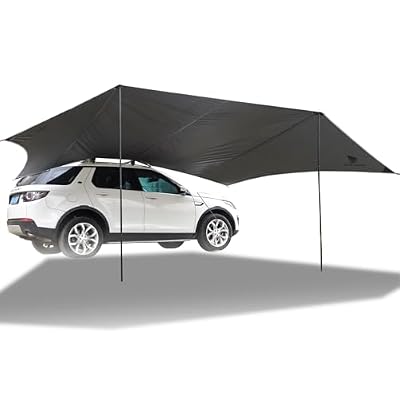
GEERTOP Car Side Awning 19 x 11 FT, Waterproof Overland Vehicle Shelter
Included for 'Best Van Awning for Sun Protection: Fabric, UPF and Shade Area Explained' because the listing specifies Waterproof Overland Vehicle Shelter, details this guide uses to compare options.
View on Amazon- Fabric weight and coating. Poly-cotton ripstop canvas in the 280–400 gsm range blocks nearly all direct sun and breathes, so it feels cooler. PU or PVC-coated polyester blocks UV well but can trap heat on still days. Woven acrylic, common on cassette awnings, fades slowly and sheds water well.
- Blackout coatings. Some vehicle awnings add a silver or black underside coating that cuts visible light and radiant heat further. Under strong desert sun, the difference is noticeable.
- Color. Lighter tops reflect heat; darker undersides reduce glare. Mid-grey and sand colors are a sensible compromise.
- Angle. At midday, shade falls nearly straight down. In the late afternoon, a 6-foot awning may shade only 2–3 feet of ground, which is where a sun wall or side screen earns its keep.
Comparison of Camper Van Awning Types
See also: How Many Watts of Solar Do You Need for Van Life? • Truma vs Webasto Water Heaters for Vans: Combi, Aquago and Alternatives
| Type | Typical size | Shade area | Weight | Setup time (one person) | Wind tolerance (guyed) | Usual price range |
|---|---|---|---|---|---|---|
| Roof-rail pull-out (bag awning) | 6.5 x 6.5 to 8 x 8 ft | 42–64 sq ft | 18–30 lb | 3–5 min | Up to about 20–25 mph | usually $250–$600 |
| Cassette roll-out (wall or roof mount) | 8.5 x 8 to 14.5 x 8 ft | 68–116 sq ft | 40–75 lb | 1–3 min | Up to about 20 mph with tie-downs | usually $900–$1,800 |
| 270-degree free-standing | About 8 ft radius | 120–150 sq ft | 50–80 lb | 3–6 min | Up to about 20 mph, guy lines essential | usually $800–$2,000 |
| Tarp or freestanding shade (no mount) | 10 x 10 ft | 100 sq ft | 5–15 lb | 10–20 min | Varies widely | usually $40–$200 |
| Magnetic or suction van side awning | 6 x 8 ft | About 48 sq ft | 5–10 lb | 5–10 min | Light breeze only | usually $80–$250 |
Wind figures are general guidance, not certifications. Every manufacturer publishes its own limits, and all of them recommend retracting when gusts pick up.
How Much Shade Do You Actually Need?
Work out the area you want covered, then add margin for the sun angle.
- Two camp chairs and a small table need about 6 x 7 feet, or roughly 42 sq ft.
- A cooking area plus seating needs closer to 8 x 10 feet, or 80 sq ft.
- Morning or evening sun can reduce effective shade by 40–60%, so add a side wall or choose a longer awning.
Worked example: a couple who cook outside and spend afternoons in the shade in Utah would want about 80 sq ft at midday. An 8 x 8 ft pull-out gives 64 sq ft, which falls short once the sun drops. Adding a single 8 ft sun wall on the west side fills that gap for less weight than stepping up to a 270-degree unit.
Decision Matrix by Van and Travel Style
| Your situation | Best fit | Why |
|---|---|---|
| Mid-roof van with roof rack, weekend use | 8 x 8 ft roof-rail pull-out | Light, affordable, bolts to existing rack |
| High-roof Sprinter, Transit or ProMaster, full-time travel | Cassette roll-out such as a Fiamma F45s or Thule Omnistor wall-mount | Fastest deploy, cleanest look, fabric protected in a case |
| 4×4 van in deserts and open camps | 270-degree awning with side walls | Shade wraps around the rear doors and side |
| Small van, no rack, tight budget | Tarp with poles or a magnetic side awning | No drilling, packs away small |
| Frequent windy coastal camps | Shorter pull-out with strong guy-out points | Less sail area, easier to stake down |
Mounting: The Part People Underestimate
Roof-rail pull-out awnings, such as the ARB awning or Rhino-Rack Sunseeker, bolt to crossbars or platform racks with L-brackets. Check that your rack’s dynamic load rating covers the awning weight plus anything else you carry. Cassette awnings usually need van-specific brackets riveted or bolted to the roof or body, and many owners have them installed by a dealer because sealing the fasteners correctly is critical to keeping water out.
Mount height matters for headroom. On a high-roof van, the front edge of a fully extended awning can sit 7–8 feet above the ground, which is great for standing but leaves a gap where low sun gets under. Adjustable legs let you drop one edge to block that angle and to shed rain.
Ownership Realities
- Never pack it wet for long. Canvas and acrylic will mildew in a few days if rolled up damp. Open it at the next dry stop.
- Pitch one corner low in rain. Pooled water can bend arms and tear fabric. A 6-inch drop at one corner is enough to drain it.
- Guy it out every time. Sudden gusts are the top cause of bent awning arms. Two guy lines and stakes take a minute and prevent most damage.
- Check fasteners monthly. Road vibration loosens bracket bolts. A quick check with a wrench after rough roads saves the rack and the awning.
- Clean with mild soap only. Harsh cleaners strip waterproof and UV coatings that keep the fabric performing.
- Replace the bag or cover first. On pull-out awnings, the PVC travel bag usually wears out before the fabric, often after 3–5 years of sun.
Bottom Line
Pick the size by the shade area you want at midday, add a side wall for low sun, and match the mount type to your roof. For most camper van owners, an 8 x 8 ft UPF 50+ pull-out awning delivers the best balance of shade, weight, and price, while full-time travelers on high-roof vans get the most convenience from a cassette awning.