TL;DR: RV awning rope tie-downs anchor your awning to the ground so wind gusts don’t flip it, tear the fabric, or damage the arms. A $15 tie-down kit is cheap insurance against a repair bill that can run $300–$800. Always stake your awning if wind is possible — no exceptions.
RV Awning Rope Tie: Stop Wind from Destroying Your Setup
A retractable RV awning gives you instant shade and turns any campsite into a livable outdoor space. It also acts like a sail in wind. If you’ve ever watched an awning arm buckle and the fabric shred in a sudden gust, you know exactly how quickly a relaxing afternoon turns into an expensive problem. RV awning rope tie systems — also called guy lines, tether kits, or stake-down systems — are the solution. Simple, inexpensive, and effective.
As an Amazon Associate we earn from qualifying purchases at no extra cost to you.


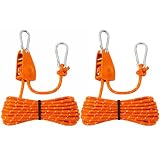


This guide covers the best RV awning rope tie options, proper setup technique, and the wind conditions that require tying down versus rolling up.
🛒 Best Price Today on Amazon
Prime members get fast, free shipping on everything above, plus member-only deals. New members get a 30-day free trial — cancel anytime.
Start 30-Day Prime Free Trial →See Today’s Amazon DealsTop Picks: RV Awning Rope Tie Systems


As an Amazon Associate we earn from qualifying purchases. Product prices and availability are accurate as of the date/time indicated.


As an Amazon Associate we earn from qualifying purchases. Product prices and availability are accurate as of the date/time indicated.

Ivation Portable Camping Shower | Compact Handheld & Hands-Free Rechargeable Outdoor Shower Head & Cleaning System w/ 3.7V Pump, 6-Ft Hose, Bidet Head, Removable Filter, Multiuse Hook & USB Cable


As an Amazon Associate we earn from qualifying purchases. Product prices and availability are accurate as of the date/time indicated.
Why Awning Wind Damage Is So Common
See also: Best Ways to Keep a Van Tidy on the Road • Best Cyber Monday Cologne Deals
Most RV awnings are designed to handle light wind — roughly 10–15 mph — in their extended position. The problem is that campsite conditions change fast. An afternoon storm cell, a ridgeline wind funnel, or even a passing semi-truck on a highway site can generate 25–40 mph gusts in seconds. At that speed, the force on an 18-foot awning is enormous. The arms are the weak point — they flex laterally and can snap at the pivot point, pulling the mounting hardware out of the RV sidewall in the process.
Rope tie systems prevent this by creating diagonal tension lines from the awning rail or arm tips down to ground stakes. This triangulates the structure and dramatically increases its wind resistance. A properly staked awning can survive gusts that would otherwise destroy an unsecured one.
Types of RV Awning Tie-Down Systems
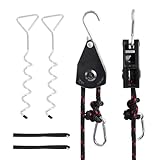
Standard guy line kit: Nylon or polypropylene rope with cam buckle tensioners and ground stakes. Attaches to the awning rafter arms or roller tube. Most affordable option, widely available, and works on any awning brand.
Ratchet strap kit: Uses 1-inch ratchet straps instead of rope for more precise tension control. Better for permanent setups or situations where you want to set maximum tension once and leave it. Heavier than rope but more durable long-term.
Arm-tip anchor system: Attaches specifically to the awning arm tips with a purpose-made clamp, then runs to the ground. Cleaner look and more direct load path than rafter attachment. Best choice if your awning has reinforced arm tips.
Spiral ground anchors: Replace traditional tent stakes with corkscrew-style anchors that screw into the ground for dramatically higher pull-out resistance. Essential for loose soil, sand, or dry desert ground where flat stakes pull out easily.
Tie-Down System Specs at a Glance
| Feature | Rope/Cam | Ratchet Strap | Spiral Anchor |
|---|---|---|---|
| Breaking Strength | 400–600 lbs | 800–1,500 lbs | N/A (ground) |
| Weight | Light | Medium | Medium |
| Setup Time | 3–5 min | 5–8 min | 2 min per stake |
| Works on Hard Ground | Partial | Partial | No (screw type) |
| Works on Loose Soil | Poor | Poor | Excellent |
| Cost | $10–$25 | $20–$40 | $15–$30/set |
Proper Setup Technique
Angle is everything. Run your tie lines at 45 degrees from the awning arm tip to the ground stake. Steeper angles (more vertical) are less effective because the force vector is working against the ground rather than the awning. Shallower angles (more horizontal) don’t provide enough downward tension to stabilize the arm. The 45-degree sweet spot balances lateral pull with downward force effectively.
Stake placement: put your anchors 6–8 feet out from the side of the RV, directly in line with the awning arm tips. If the awning extends 10 feet out, you want your stakes roughly 8 feet from the RV wall — not directly below the arm tips.
Tension: snug but not guitar-string tight. Overtightening puts stress on the awning mounting hardware. You want the lines taut enough that they don’t flap in the wind, not so tight that they’re pulling the arm into an unnatural angle.
For hard caliche, rocky desert soil, or paved sites, traditional stakes won’t work. Use a weight-based anchor system — sandbags or water-filled weights clipped to the tie lines — or bring a ratchet strap that can loop around a tree, picnic table leg, or vehicle tire.
When to Roll Up Instead of Tie Down
Tie-downs improve wind resistance — they don’t make your awning storm-proof. If sustained winds are forecast above 25 mph, or if you’re leaving the site for more than an hour, roll the awning in. No tie-down system is a substitute for retracting the awning when conditions are serious. The general rule: if you’re hesitating about whether to tie down or retract, retract.
Also consider your awning’s age. Older fabric becomes brittle and tears at lower wind speeds than new material. If your awning is 5+ years old or shows cracking along the fold lines, be more conservative about wind exposure even with tie-downs in place. Check out our guide to RV awning care and maintenance for fabric inspection tips and UV treatment recommendations.
Frequently Asked Questions
How do rv awning rope tie systems attach to the awning?
Most systems use one of three attachment methods: a clamp that grips the awning rafter arm, a hook that clips into the roller tube end, or a loop that wraps around the arm and cinches tight with a cam buckle. Clamp-style attachments are the most secure and don’t require any drilling or permanent hardware on the awning. Check your awning brand’s tie-down recommendations — Dometic, Carefree, and A&E all have compatible accessories.
What wind speed is safe for an RV awning without tie-downs?
Most manufacturers rate extended awnings for winds up to 15 mph without tie-downs. At 20 mph, you should have tie-downs in place. At 25 mph sustained, consider rolling the awning in regardless of tie-downs. Gusts — which can be 1.5–2x the sustained wind speed — are the real danger since they hit without warning. Always monitor your local forecast and watch for building cloud formations that signal wind changes.
Can I use regular tent stakes for rv awning tie-downs?
Standard tent stakes work in firm, moist soil but fail in loose sand, dry desert ground, or anything rocky. For reliable awning anchoring, use purpose-made heavy-gauge steel V-stakes (at least 12 inches long) or spiral ground anchors. The forces on an awning are much higher than on a tent — a 15 mph wind on a 15-foot awning generates hundreds of pounds of lateral force.
Do rv awning tie-downs work on slide-out topper awnings?
Slide-out toppers are designed differently from main patio awnings and typically don’t have arm tips you can tie down to. They rely on spring tension and the slide mechanism itself for stability. If your slide topper is flapping in wind, the spring tension may need adjustment — a job for an RV service center. Don’t try to add aftermarket tie-down points to a topper without understanding its load path.
How do I store rv awning rope tie kits compactly in my rig?
Coil the ropes and bundle them with a velcro strap. Keep stakes in a dedicated fabric pouch — loose stakes in a toolbox will scratch everything they touch. Store the full kit in an exterior compartment near the awning so it’s accessible without going through the living space. A mesh bag clipped to the awning arm storage hook is a popular solution that keeps the kit where you need it.
Complete Your Outdoor Setup
A secured awning anchors your entire outdoor living area. Pair it with a quality outdoor rug or mat to define the space and keep dirt out of the rig. For extended stays, an awning screen room enclosure adds bug protection and turns your shaded area into a fully enclosed outdoor room — especially useful in shoulder seasons when the flies are bad.