- Top Pick: MAXXAIR Maxxfan Deluxe Vent, Fan and Vent Cover All in One – Powerful 10-Speed Reversible Fan with Thermostat, Built-in Rain Cover, Remote Control, Intake & Exhaust Fan, Smoke (00-07500K)
- Best Value: MAXXAIR Maxxfan Deluxe Vent, Fan and Vent Cover All in One – Powerful 4-Speed Fan, Built-in Rain Cover, Exhaust Air Only, Fits 14"" x14 Roof Openings, Smoke (00-06401K)
- Premium Choice: MAXXAIR Maxxfan Plus High Powered 10-Speed RV Intake and Exhaust Fan – Manual or Remote Control Electric Opening, Easy Ceiling Controls, Rain Sensor with Automatic Lid Closure, Smoke (00-04500K)

TL;DR: Maxxair and Fantastic Fan are the two roof vent fan brands that dominate van life installs. Maxxair wins on rain protection — its dome lid stays open in rain without water intrusion. Fantastic Fan wins on airflow volume and low-speed whisper-quiet operation. For most vanlifers, Maxxair is the practical first choice due to the rain-open feature. Best pick: ASIN B001FXRQ22.
Maxxair vs Fantastic Fan: Which Wins for Van Life?
Choosing between a Maxxair fan and a Fantastic Fan for van life is one of the first real decisions in any van build — and it comes up in every forum thread, Facebook group, and build blog without a clean consensus. Both fans fit the same standard 14×14-inch roof vent cut, both run on 12V power, and both move enough air to make a significant temperature difference on hot nights. The key differences are rain-open capability, airflow volume at different speeds, noise characteristics, and lid design. If you are planning a roof fan installation, also consider your overall roof vent fan overview for wiring notes, pair it with solid van insulation so the fan is not fighting heat soaking through uninsulated metal, and check our 12V fan guide for supplemental circulation options inside the van.
As an Amazon Associate we earn from qualifying purchases at no extra cost to you.


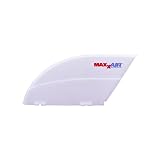


🛒 Best Price Today on Amazon
Prime members get fast, free shipping on everything above, plus member-only deals. New members get a 30-day free trial — cancel anytime.
Start 30-Day Prime Free Trial →See Today’s Amazon DealsTop Pick
The Critical Difference: Rain-Open Operation
See also: Best Portable Heater for Van Life: Safe Options Compared • Best Mattresses Under $500
The single most-discussed difference between these two fans is rain-open capability — the ability to keep the fan running with the lid open while it is actively raining without water entering the van interior. Maxxair fans feature a raised dome lid design that creates a weather cap over the vent opening. Rain hits the dome and deflects away from the fan blade area; airflow continues through the sides of the dome opening. In moderate rain, a Maxxair fan running on exhaust mode reliably keeps the van interior dry while maintaining ventilation.
Fantastic Fan lids are flat or low-profile. In rain, water runs down the lid surface and can drip into the van if the lid remains open. Most Fantastic Fan users close the lid when rain starts — meaning they sacrifice ventilation for weather protection. For vanlifers sleeping in areas with unpredictable overnight rain, this is a meaningful operational difference. Waking at 2am to close a roof fan during a surprise rainstorm is an experience that converts many people from Fantastic Fan to Maxxair on their next build.
Head-to-Head Spec Comparison
| Spec | Maxxair 00-07000K | Fantastic Fan 01100WH |
|---|---|---|
| CFM (max airflow) | 900 CFM | 900 CFM |
| Speed settings | 10 speeds | 10 speeds |
| Power draw (max) | 3.5A at 12V | 3.5A at 12V |
| Power draw (low) | ~0.3A | ~0.3A |
| Rain-open operation | Yes — dome lid design | No — lid must close in rain |
| Lid operation | Manual crank | Manual crank (motorized on upgrade models) |
| Thermostat control | Available on Pro models | Available on select models |
| Remote control | Optional add-on | Available on select models |
| Directions | Intake and exhaust | Intake and exhaust |
| Vent size compatibility | 14″×14″ standard | 14″×14″ standard |
Noise at Low Speed: Where Fantastic Fan Has an Edge
At speeds 1 through 3 — the settings most vanlifers use while sleeping — Fantastic Fan is marginally quieter than most Maxxair models. The Fantastic Fan motor and blade geometry produce a smooth, low-frequency hum at low speeds that many users describe as white-noise-like and easy to sleep through. Some Maxxair units at low speed produce a slight bearing resonance that, while not loud, has a slightly more mechanical quality.
This difference matters primarily for light sleepers and those parking in quiet campgrounds where any mechanical sound is noticeable. For vanlifers sleeping in noisier environments — city streets, campgrounds with other vans — neither fan’s low-speed sound is distinguishable from ambient noise. At medium and high speeds, both fans produce comparable sound levels and the noise character difference disappears into the general fan noise.
Installation: What Both Fans Have in Common
Both fans cut into a standard 14×14-inch roof vent opening, which is the same size as the OEM roof vents found on many Transits, Sprinters, and ProMasters — meaning many van builders remove the factory vent and drop either fan directly into the existing hole without additional cutting. Both fans connect to 12V power via two wires (positive and negative), draw from 0.3A at low speed to 3.5A at full speed, and should be fused at 5A for installation safety.
Butyl tape or self-leveling lap sealant around the fan flange is required on both models to create a watertight roof seal. This is the most critical installation step — a fan installed without proper sealing will leak during heavy rain regardless of which brand you choose. Apply butyl tape to the underside of the fan flange before setting it into the opening, then seal the exterior perimeter with lap sealant after bolting down.
Frequently Asked Questions
Can you run a roof vent fan while driving?
Yes, at low to medium speeds. At highway speeds, strong airflow from the van’s motion can create positive pressure that works against exhaust mode operation — the fan essentially fights the wind. In intake mode at highway speeds, the fan supplements the natural airflow created by driving. Most vanlifers run the fan on low intake while driving and switch to exhaust mode when parked to draw hot air out of the stationary van.
How much does a roof vent fan reduce van interior temperature?
On a hot day parked in direct sun, a properly installed roof vent fan running on exhaust can reduce interior temperature by 15–25°F compared to a sealed van. The actual reduction depends heavily on insulation quality, sun exposure, and ambient temperature. With good insulation and a reflective window covering on the windshield, a roof fan running on exhaust creates a livable environment on days up to 85°F ambient. Above 90°F in direct sun, a fan alone is insufficient — shade and insulation become the primary variables.
Should the roof fan run on intake or exhaust for sleeping?
Exhaust mode is the standard recommendation for sleeping ventilation. Running exhaust pulls hot air (which rises) out of the van’s ceiling zone and creates a slight negative pressure that draws cooler outside air in through any gaps — window cracking, door seals, or a secondary vent. Intake mode pushes outside air in directly but can introduce insects, dust, and pollen more readily. Most vanlifers crack a side window slightly and run the roof fan on exhaust for the most effective sleeping ventilation.
Do I need one fan or two for effective van ventilation?
One fan handles ventilation for most full-size cargo van builds. Two fans — positioned front and rear of the van — allow one to run intake and one exhaust simultaneously, creating a through-draft that is more effective than a single fan at temperature equalization. Two-fan setups are more common in longer vans (Transit 148 extended, Sprinter 170) where the interior length makes front-to-rear airflow meaningful. For standard-length builds, one well-positioned fan is sufficient.
What is the power draw of a roof vent fan over a full night?
At low speed (setting 2–3), most fans draw 0.3–0.5A — roughly 4–6Wh per hour. Running 8 hours overnight costs 32–48Wh. On a 100Ah LiFePO4 battery system, this is less than 4% of total capacity — a negligible overnight load that should not factor into battery sizing decisions. Even at medium speed (1.5A draw), 8 hours overnight costs 144Wh — still well within the safe daily budget of any properly sized van electrical system.
Plan your full van ventilation system using our roof vent fan installation guide, maximize the fan’s effectiveness with quality van insulation, and add supplemental air movement with a 12V cabin fan for hot nights when the roof vent alone is not enough.