Last updated: October 17, 2026
Ram ProMaster Tire Size & Best Tires for Van Life (2026)
For most Ram ProMaster vans, the stock tire is an LT225/75R16 Load Range E (Load Range 10-ply rating) tire, and the best replacement depends on whether you prioritize highway comfort and wet-road grip or extra traction on rough access roads. For a lift-free build, staying with LT225/75R16 is the simplest, safest choice; modest upsizing may work, but only after checking clearance, wheel specifications, and load capacity for your exact van.
Start with the van’s placard, not a generic fitment list
See also: How Many Watts of Solar Do You Need for Van Life? • Truma vs Webasto Water Heaters for Vans: Combi, Aquago and Alternatives
Ram ProMaster tire sizes can vary by model year, wheel, and configuration. Check the tire-information placard on the driver-side door area and your owner’s manual before ordering. The placard specifies the original size and cold inflation pressure for your vehicle; the tire sidewall’s maximum pressure is not the recommended operating pressure.

Starfire Solarus AS All-Season 225/65R17 102H Tire | Truck/SUV Touring All Season Traction 102H Rated Standard Load Radial Construction Black Sidewall Tire
Included for 'Ram ProMaster Tire Size & Best Tires for Van Life' as a relevant option in this category; details come from the product listing.
View on Amazon
Hankook H735 KINERGY ST Touring Radial Tire - 225/65R17 102T | Truck/SUV Touring All Season Traction 102T Rated Standard Load Radial Construction Black Sidewall Tire
Included for 'Ram ProMaster Tire Size & Best Tires for Van Life' because the listing specifies 225/65R17 102T, details this guide uses to compare options.
View on Amazon
Nexen Roadian CT8 HL All- Season Radial Tire-225/75R16 115R
Included for 'Ram ProMaster Tire Size & Best Tires for Van Life' as a relevant option in this category; details come from the product listing.
View on Amazon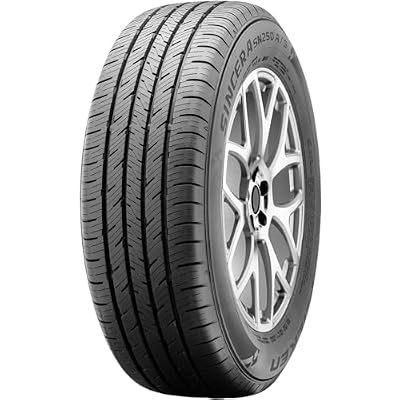
Falken Sincera SN250 AS All-Season Radial Tire-215/55R16 97H
Included for 'Ram ProMaster Tire Size & Best Tires for Van Life' as a relevant option in this category; details come from the product listing.
View on AmazonFor ProMaster 1500 tires, the common stock size is LT225/75R16 Load Range E. Many 2500 and 3500 models also use this size, but do not assume the same tire pressure or load requirement applies across trims. A camper conversion can also change axle loads substantially. Have the fully equipped van weighed, ideally by axle, and make sure each tire’s load capacity at the chosen pressure is adequate for the actual load.
What the stock size means
| Specification | LT225/75R16 | Why it matters |
|---|---|---|
| Nominal width | 225 mm (about 8.9 in) | Affects section width and clearance. |
| Aspect ratio | 75 | Sidewall height is 75% of the nominal width. |
| Wheel diameter | 16 in | The tire must match the wheel diameter. |
| Approximate overall diameter | 29.3 in | Actual dimensions vary by tire model and tread. |
| Load range | E | Commercial-grade construction; check the tire’s actual load index and pressure table. |
“Load Range E” is not a guarantee that every tire in that range can carry the same load at every pressure. Compare the specific tire’s load-and-inflation chart with your axle weights, and follow the vehicle or tire professional’s guidance. Never exceed the van, wheel, or tire load ratings.
Best tires by van-life situation
| Your use | Good starting choice | Trade-off to expect |
|---|---|---|
| Mostly pavement, long trips, frequent rain | Highway all-season commercial tire, such as Michelin Defender LTX M/S 2 in an appropriate LT size and load rating | Quieter ride and road-focused manners; less emphasis on loose-surface bite. |
| Mixed pavement, gravel, and occasional muddy access roads | All-terrain tire, such as BFGoodrich All-Terrain T/A KO2, if available in a suitable fitment | More tread noise and potentially less wet-road composure than a highway tire. |
| High annual mileage and a tight replacement budget | Quality highway tire in the placard size | May give up some traction on rough tracks; compare warranty terms and replacement cost. |
| Regular rough-road travel with a heavily equipped van | Load-appropriate all-terrain tire, after confirming axle weights and fitment | Heavier tires can affect acceleration, braking feel, and fuel use. |
Highway tires: best for pavement-first travel
The Michelin Defender LTX line is a road-oriented option to consider when quiet cruising, wet-weather use, and long-distance comfort matter more than aggressive off-road traction. Verify the exact product name, size, load index, and availability for your model year before buying; product ranges can change. Highway tread generally makes less noise than an aggressive all-terrain pattern, but actual noise depends on the van, tire condition, and road surface.
Wet grip is not determined by tread appearance alone. Compound, tread design, wear, temperature, and inflation all matter. A highway tire is often the sensible pick for a van that spends most of its time on asphalt, but slow down in heavy rain and replace tires before tread wear compromises performance.
All-terrain tires: choose them for the roads you actually drive
The BFGoodrich All-Terrain T/A KO2 is a well-known all-terrain option. Its more open tread and rugged construction suit drivers who regularly encounter gravel, dirt, or rough access roads. The cost is usually more road noise than a highway tire, and an all-terrain pattern is not automatically better in rain, especially as it wears. If your van rarely leaves pavement, the extra tread may be weight, noise, and expense without much practical benefit.
Compare current manufacturer specifications rather than relying on a model name alone: available LT225/75R16 versions, load index, published weight, treadwear warranty (if offered), and any severe-snow marking can vary by size or product generation. There is no single tread-life number that applies to every ProMaster; load, alignment, pressure, driving style, and rotation have a large effect.
Can you upsize without a lift?
Sometimes, but there is no universal “safe upsize” for every ProMaster. A common comparison is LT225/75R16 versus LT245/75R16: the latter is nominally wider and approximately 1.2 inches larger in diameter based on size math. That adds roughly 0.6 inches of radius, so a lift-free van has less room at the fender and suspension. The actual tire can be larger or wider than its nominal dimensions, and wheel width and offset also affect fit.
Before choosing a larger tire, have a tire shop verify clearance at full steering lock and through suspension movement, including with the van loaded. Confirm the wheel is approved for the tire, the replacement tire has adequate load capacity, and no rubbing occurs. A larger rolling diameter also makes the speedometer read low relative to actual speed: if the tire is 4% larger in diameter, an indicated 60 mph would be about 62.4 mph, assuming the original calibration. It can also change gearing and braking feel. If these checks are uncertain, keep the stock size.
Buying and ownership checks that prevent expensive mistakes
- Match the full specification. Confirm LT construction, size, load index, and wheel compatibility—not just “16-inch” or “fits ProMaster.”
- Weigh the finished van. Water, passengers, bikes, tools, and a full fuel tank add up. Axle weights help identify whether your setup is within ratings and inform pressure discussions.
- Use appropriate cold pressure. Start with the vehicle placard and consult a qualified tire professional if the van’s conversion or load differs significantly from its original configuration. Recheck pressure when tires are cold.
- Rotate and inspect regularly. Follow the tire maker’s rotation guidance. Watch for uneven shoulder wear, cupping, cuts, bulges, and embedded debris; uneven wear can point to alignment or pressure problems.
- Budget for the whole set. As a rough planning range, commercial LT tires commonly cost about $180–$350 each before installation, depending on brand, size, and season. A four-tire set can therefore run roughly $720–$1,400 before mounting, balancing, taxes, or alignment work.
Bottom line: For most pavement-focused builds, choose a load-appropriate highway tire in the placard’s LT225/75R16 size. Pick an all-terrain such as the KO2 when rough-road traction is a regular need, not just an occasional possibility. Upsize only after a physical clearance and load-capacity check; on a heavy van, keeping the correct stock-size tire is often the more useful upgrade than chasing a larger diameter.