Last updated: October 4, 2026
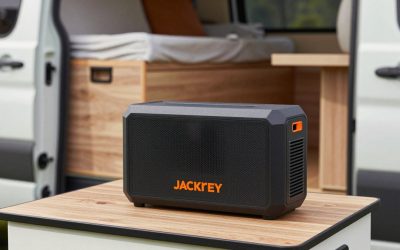
The Jackery Explorer 300 is still a sensible buy in 2026 for van lifers and campers who need to keep phones, laptops, cameras, lights and small fans charged for a weekend. Its roughly 292Wh battery and 300W rated AC output cover small electronics comfortably, and the whole unit is light enough to carry with one hand. It usually sells around $230 to $300, which puts it in the entry tier of name-brand power stations.
It is the wrong tool for running a 12V compressor fridge for days, a microwave, a hair dryer, an induction cooktop or anything with a heating element. Those loads either exceed 300W or drain under 300Wh in a few hours. If your van build depends on refrigeration or cooking off battery, look at a larger station in the 1,000Wh class, or treat the Explorer 300 as a secondary unit for electronics only.
Who it fits
- Weekend campers and car campers who need to top up devices and run LED lights.
- Remote workers on the road who charge a laptop once or twice a day from a quiet battery instead of an idling engine.
- Photographers and drone pilots who need to recharge batteries in the field.
- Light home backup for a router, phones and a lamp during a short outage.
Who should look bigger
Full-time van dwellers, anyone powering a fridge around the clock, and people who want to run kitchen appliances will find 292Wh too small. Plan on 1,000Wh or more for those use cases, ideally with a LiFePO4 battery for higher cycle life.
Key specs
See also: How Many Watts of Solar Do You Need for Van Life? • Truma vs Webasto Water Heaters for Vans: Combi, Aquago and Alternatives
| Spec | Jackery Explorer 300 |
|---|---|
| Battery capacity | 292Wh (as listed; often quoted as 293Wh) |
| AC output | 2 pure sine wave outlets, 300W rated, 500W surge |
| USB-C | 1 port, up to 60W PD |
| USB-A | 2 ports, including 1 Quick Charge 3.0 |
| 12V car port | 1 |
| Weight | About 7 lb |
| Recharging | AC wall, 12V car, solar; about 2 hours to 80% using wall and USB-C together |
| Typical price range | About $230–$300 |
Real-world runtime estimates
Usable energy is lower than the rated capacity because of inverter and conversion losses. A practical rule is to plan on about 80 to 85 percent of 292Wh through the AC outlets, or roughly 235 to 250Wh. Direct DC and USB loads lose less.
| Device | Typical draw | Estimated runtime or charges |
|---|---|---|
| Smartphone (about 15Wh battery) | Charging | About 15 full charges |
| Laptop (about 60Wh battery) | Charging via USB-C | About 4 full charges |
| LED camp light string | 10W | About 24 hours |
| Wi-Fi router or hotspot | 10–15W | About 16–24 hours |
| 12V compressor fridge (average cycling) | Around 40–50Wh per hour of mixed cycling, varies widely | Roughly 5–7 hours, depending on temperature |
| Small electric blanket | 50–60W | About 4 hours |
These are estimates by simple division. Your actual runtime depends on device efficiency, ambient temperature and battery age.
What stands out
Portability
At about 7 pounds, the Explorer 300 is easy to move from the van to a picnic table or into a tent. Larger 1,000Wh stations often weigh 20 to 30 pounds, so the 300 is far easier to live with when you only need device charging.
Useful port mix
The 60W USB-C port is the standout for laptop users. Charging a laptop directly from USB-C avoids the inefficiency of running its AC brick through the inverter, so you get more charges per battery. Two AC outlets cover chargers that still need a wall plug.
Fast recharge
Using the AC adapter and a USB-C PD charger together brings the battery to about 80 percent in around 2 hours, according to Jackery. That makes a quick top-up at a campground outlet or coffee shop realistic.
Clean AC power
The pure sine wave inverter is friendly to sensitive electronics such as laptop chargers and camera battery chargers.
Trade-offs to know
- 300W ceiling. Anything with a heating element, plus most kettles and coffee makers, will overload it.
- Battery chemistry. The Explorer 300 uses a lithium-ion pack rather than LiFePO4. Newer LiFePO4 stations typically offer far higher cycle ratings, which matters for daily full-time use.
- Solar input is modest. It accepts solar charging, but a single small panel will take most of a sunny day to refill it. Size your panel with that in mind.
- Older design. Newer models add app control, faster AC charging and UPS features. If those matter, compare current Jackery and competitor lineups before buying.
Tips for van and camp use
- Charge laptops over USB-C rather than AC to stretch capacity.
- Use the 12V car port while driving to top up between campsites, but expect slower charging than from the wall.
- Keep it out of extreme heat. Do not leave it on a dashboard in summer sun. Heat shortens battery life.
- Store at partial charge. For long storage, keep it around 60 to 80 percent and top it up every few months.
- Turn off AC when idle. The inverter draws power even with nothing plugged in.
Quick answers
Can the Jackery Explorer 300 run a 12V fridge?
For a few hours to an overnight stretch, depending on fridge size, temperature and settings. For multi-day refrigeration, it is too small on its own without solar or driving recharge.
Can it run a small fan overnight?
Usually yes. A 12V or USB fan drawing 10 to 20W can run for roughly 12 to 24 hours from the Explorer 300, depending on speed setting. Check the fan’s rated wattage and divide usable capacity by that number.
Is it still worth it with newer models available?
Yes, if you want a light, simple battery for electronics at an entry price. If you need more cycles, more capacity or app features, step up to a newer LiFePO4 model.