Last updated: October 8, 2026
- Best Scuba Regulators for Travel and Cold Water
- Quick comparison of leading travel and cold-water regulators
- Best overall: Apeks XTX50
- Best value for cold water: Apeks XTX40
- Best for demanding cold-water diving: Scubapro MK17 EVO/G260
- Best lighter travel option: Scubapro MK11/C370
- What environmental sealing actually changes
- DIN or yoke for international travel?
- Decision matrix: which regulator fits your diving?
- Service intervals and ownership costs
- Care mistakes that shorten regulator life
- Final recommendation
Best Scuba Regulators for Travel and Cold Water
The best scuba regulators for most traveling divers are the Apeks XTX50 for dependable cold-water performance, the Scubapro MK17 EVO/G260 for a strong balance of environmental sealing and breathing adjustment, and a compact travel regulator such as the Scubapro MK11/C370 when luggage weight matters more than extreme-water capability.
A regulator should not be chosen by brand reputation alone. For travel and cold-water diving, compare five practical factors: breathing performance at depth, protection against freezing, service availability, packed weight, and the conditions in which you will actually dive.
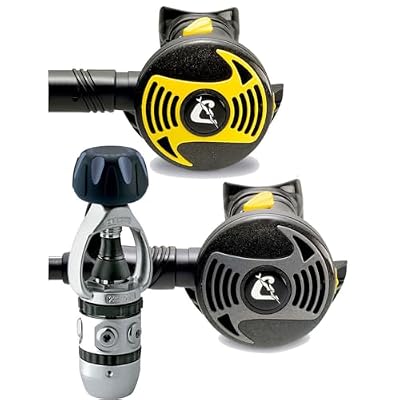
CRESSI AC2/XS2 Regulator XS2 Octo Package
Included for 'Best Scuba Regulators for Travel and Cold Water' as a relevant option in this category; details come from the product listing.
View on Amazon
SCUBAPRO MK25 EVO/S620Ti Dive Regulator System for Scuba Diving, INT
Included for 'Best Scuba Regulators for Travel and Cold Water' because the listing specifies INT, details this guide uses to compare options.
View on Amazon
Mares Rover 15X Scuba Diving Regulator Set - 1st (INT) and 2nd Stage
Included for 'Best Scuba Regulators for Travel and Cold Water' because the listing specifies 1st (INT) and 2nd Stage, details this guide uses to compare options.
View on Amazon
Mares SXS 62X Scuba Diving Regulator Set - First (DIN) and Second Stage
Included for 'Best Scuba Regulators for Travel and Cold Water' because the listing specifies First (DIN) and Second Stage, details this guide uses to compare options.
View on AmazonQuick comparison of leading travel and cold-water regulators
See also: Best Black Friday Ride-On Toy Deals • Best Telescopes for Astrophotography
| Regulator system | Best suited to | First-stage design | Cold-water suitability | Approx. complete-set weight* | Typical price range |
|---|---|---|---|---|---|
| Apeks XTX50 | Frequent travelers who also dive cold water | Balanced diaphragm, environmental sealing | Excellent when configured and serviced correctly | 2.3–2.6 kg | $600–$850 |
| Apeks XTX40 | Value-focused cold-water divers | Balanced diaphragm, environmental sealing | Very good | 2.2–2.5 kg | $450–$650 |
| Scubapro MK17 EVO/G260 | Cold water, depth, and adjustable breathing | Balanced diaphragm, sealed first stage | Excellent | 2.4–2.8 kg | $650–$950 |
| Scubapro MK19 EVO/C370 | Cold water with a more compact second stage | Balanced diaphragm, sealed first stage | Excellent | 2.2–2.6 kg | $650–$950 |
| Scubapro MK11/C370 | Warm-water travel and occasional moderate-cold diving | Compact balanced diaphragm | Good, subject to configuration and local guidance | 1.8–2.2 kg | $450–$700 |
| Aqualung Legend MBS | Comfort, adjustment, and cold-water versatility | Balanced diaphragm, environmentally sealed variants | Very good to excellent, depending on version | 2.4–2.8 kg | $600–$900 |
*Approximate weight for a first stage, second stage, alternate second stage, and hoses, without a pressure gauge or computer. DIN/yoke fittings, hose length, and regional versions can change the result. Prices are broad 2026 market ranges rather than fixed prices.
Best overall: Apeks XTX50
The Apeks XTX50 is a strong all-round choice for divers who move between warm-water holidays and genuinely cold conditions. Its balanced diaphragm first stage is environmentally sealed, keeping water and contaminants away from the internal spring chamber. That matters in cold water because moisture and contamination around the spring can contribute to inconsistent performance or freezing.
The XTX50 also provides useful second-stage adjustments, including inhalation effort and venturi assistance. These controls can help a diver fine-tune breathing at depth, although they should not be treated as a substitute for proper servicing or correct gas-management practices. The regulator is not the lightest option for a carry-on bag, but its extra cold-water margin often justifies the additional few hundred grams.
Why choose it
- Sealed diaphragm first stage for cold, silty, or frequently used equipment.
- Balanced breathing performance as cylinder pressure falls.
- Good availability of parts and technician familiarity in many diving regions.
- Suitable for a single regulator set used across multiple climates.
Best value for cold water: Apeks XTX40
The XTX40 is the sensible choice when you want the main advantages of a sealed Apeks system without paying for every adjustment found on higher trims. Its breathing performance is designed to remain consistent over the dive, and the environmentally sealed first stage is more relevant to cold-water reliability than cosmetic features or premium finishes.
Choose the XTX40 over a compact warm-water set if your travel regularly includes quarries, alpine lakes, the North Atlantic, or water below about 10°C. It is still important to check the exact cold-water approval for the regional model and to use a suitable alternate second stage and hose arrangement.
Best for demanding cold-water diving: Scubapro MK17 EVO/G260
The MK17 EVO/G260 combination is built around a sealed, balanced diaphragm first stage and a larger second stage with substantial breathing adjustment. The G260 is popular with divers who want a robust, highly adjustable second stage for deeper or colder dives rather than the smallest possible luggage footprint.
Compared with a compact travel set, this combination is bulkier and can add noticeable weight to checked baggage. Its advantage is breathing control and cold-water confidence. The larger second stage may also be easier to operate while wearing thick gloves, though individual hand fit still matters.
The related MK19 EVO/C370 combination retains a sealed first stage while using a more compact second stage. It is a better compromise when you want cold-water capability but do not want the size of the G260.
Best lighter travel option: Scubapro MK11/C370
The MK11/C370 is attractive for warm-water travel because its compact architecture reduces both packed volume and weight. It offers balanced performance and is a better travel solution than a very small unbalanced regulator if you expect frequent dives or changing cylinder pressures.
Its limitation is not necessarily breathing quality; it is the smaller margin for specialized cold-water use compared with a fully sealed system designed for harsher conditions. Before taking it into cold water, confirm the manual’s temperature limits, the local operator’s requirements, and whether the exact first-stage version is environmentally sealed.
What environmental sealing actually changes
A sealed diaphragm first stage separates the internal moving parts from the surrounding water. This can reduce the chance of ice formation around the spring and helps keep silt, salt deposits, and other contaminants away from sensitive components. Some piston regulators are also designed for cold water, so “diaphragm” alone is not a complete buying test; the specific model’s cold-water rating and service instructions matter.
Environmental sealing does not make a regulator immune to freezing. Free-flow can still result from breathing too hard, pressing the purge button for too long, incorrect cylinder-gas handling, contaminated air, inadequate maintenance, or operating outside the equipment’s intended temperature range. In very cold water, use a regulator system approved for that environment and follow the dive operator’s procedures.
DIN or yoke for international travel?
Choose DIN when you mainly use modern European, technical, or cold-water cylinders. DIN connections are compact, make a direct seal inside the valve, and are less bulky in luggage. A DIN-to-yoke adapter can allow use with many yoke cylinders, but it adds another component and several hundred grams.
Choose yoke if your destinations commonly provide older rental cylinders or if you want the broadest immediate compatibility without an adapter. A yoke first stage is usually larger around the valve and can be less convenient when packed. For a single worldwide travel setup, a DIN regulator plus a good-quality adapter is often the more flexible arrangement, provided the adapter is inspected and maintained.
Decision matrix: which regulator fits your diving?
| Your situation | Priority | Best direction |
|---|---|---|
| Mostly tropical holidays, fewer than 20 dives per year | Low weight and simple ownership | Compact balanced travel set such as MK11/C370 |
| Warm water plus occasional 8–12°C diving | Versatility without maximum bulk | Sealed compact system such as MK19 EVO/C370 |
| Regular quarry, lake, or northern-sea diving | Cold-water margin and serviceability | Apeks XTX40 or XTX50 |
| Deep, cold, or heavy-glove diving | Adjustment range and rugged second stage | MK17 EVO/G260 or XTX50 |
| Limited local servicing for one brand | Parts and technician access | Choose the brand supported by your nearest authorized technician |
Service intervals and ownership costs
Service intervals vary by manufacturer, regulator model, use, storage conditions, and local regulations. Many manufacturers commonly recommend inspection or service at least every 12–24 months, with additional attention after a specified number of dives. Treat the model manual as the authority rather than assuming every regulator has the same schedule.
A useful ownership calculation is to divide service and consumables by actual use. For example, if a regulator costs $700 and is serviced every two years at $150, with $30 of small replacement parts, the two-year ownership cost is $880. At 20 dives per year, that is about $22 per dive before travel costs. At 80 dives per year, it falls to about $5.50 per dive. Frequent divers gain more from durable, widely supported equipment than from saving a small amount on initial purchase.
What wears first
- Hose outer jackets can crack where they bend near fittings.
- Mouthpieces can split or loosen, especially after repeated biting or storage in heat.
- O-rings flatten, dry, or become damaged by poor lubrication.
- Dust caps and purge covers can deteriorate in sunlight and salt.
- Second-stage diaphragms and exhaust valves can harden or deform over time.
Care mistakes that shorten regulator life
Rinse the fully assembled regulator with clean fresh water while the cylinder is pressurized, so water cannot enter through the first-stage inlet. Do not press purge buttons during rinsing. Allow the set to dry out of direct sunlight, keep hoses loosely coiled, and replace the dust cap before disconnecting from the cylinder.
Never blow compressed air into the first-stage inlet, soak an unprotected inlet with the dust cap missing, or use household oils on seals. After a dive in cold water, do not leave a wet regulator in freezing conditions. A pre-dive check should include a slow leak check, breathing from both second stages, and confirmation that hoses are not twisted or rubbing against sharp edges.
Final recommendation
For one regulator set that must travel and handle cold water, buy the Apeks XTX50 or Scubapro MK17 EVO/G260, choosing based on local service support and whether you prefer a compact or larger second stage. Choose the Apeks XTX40 to control cost, the MK19 EVO/C370 for a sealed but more compact setup, and the MK11/C370 when warm-water travel and luggage weight are the dominant concerns.
Whichever model you select, confirm the exact regional specification, connection type, cold-water rating, and service schedule before purchase. Regulator performance depends as much on correct configuration and maintenance as on the name printed on the first stage.