

Last updated: September 18, 2026
Testing a portable power station’s capacity tells you how much usable energy its battery can deliver—not just the number printed on the box. A model labeled 256Wh or 292Wh will not usually power a device for that many watt-hours because the inverter, display, cooling system, cables, and battery-management electronics consume some energy.
If you test it incorrectly, you may mistake a low-power reading for a failed battery, drain a lithium battery too deeply, overload the AC outlet, or assume a station can run essential equipment longer than it really can. A repeatable test gives you a practical runtime estimate for phones, lights, refrigerators, CPAP machines, laptops, and other emergency loads.
As an Amazon Associate we earn from qualifying purchases at no extra cost to you. Product prices and availability are accurate as of the date shown and are subject to change.
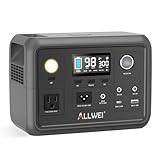

The method below measures AC output, which is the most useful test for household appliances. It also explains how to test USB and DC ports separately. Work in a ventilated, dry area, and read your power station’s manual before beginning.
Quick answer: Our top pick in 2026 is the Portable power station — our #1 rated choice. See the full ranked comparison, alternatives and buying advice below.
What You Need
| Item | Why | Optional? |
|---|---|---|
| Portable power station | The unit being tested; note its stated capacity, such as 256Wh or 292Wh. | No |
| AC watt meter | Measures the power drawn by the test load and can help confirm stable output. | No for an accurate AC test |
| Resistive load, such as a 100W or 200W incandescent work light | Provides a steady, predictable load. A space heater may work but can be unnecessarily powerful. | No, unless using another known load |
| Timer or phone stopwatch | Records how long the station supplies usable power. | No |
| Wall charger supplied with the station | Fully recharges the battery before the test. | No |
| Thermometer and notebook or spreadsheet | Records room temperature, starting charge, wattage, time, and shutdown point. | Yes |
| USB load tester or known USB device | Tests USB output separately from the AC inverter. | Yes |
Choose a load that stays well below the station’s continuous output rating. For a 300W unit, a 100W to 200W load is a sensible range. A 300W-rated station, such as an ALLWEI model priced around $129 and rated at 256Wh, should not be tested with a 1,500W heater. A Jackery Explorer 300, priced around $289 and rated at 292Wh, has a similar capacity-testing approach, but always follow its specific operating limits.
Step-by-Step
See also: How to Install a 12v Fridge Securely (2026): Step-by-Step • How to Sanitize a Camper Water Tank (2026): Step-by-Step
Read the labels and manual (10 minutes)
Record the advertised battery capacity in watt-hours, continuous AC output in watts, surge rating, and any minimum battery percentage recommended by the manufacturer. Confirm whether the capacity refers to the internal battery or an estimated usable output. Also check whether the display reports input energy, output energy, or only an estimate of remaining charge.
Inspect the station and test area (5 minutes)
Look for a swollen case, cracked housing, damaged outlets, loose cables, corrosion, or unusual odors. Do not test a battery with physical damage. Place the station on a hard, nonflammable surface with several inches of clearance around its vents. Keep it away from rain, direct sunlight, bedding, paper, and flammable liquids.
Fully charge the battery (several hours)
Use the supplied wall charger and charge until the station indicates 100 percent or stops charging. Let it rest for 30 to 60 minutes after charging so the voltage can settle. Do not include solar charging in the first capacity test because cloud cover, panel angle, temperature, and controller behavior make the result harder to compare.
Choose and verify a test load (10 minutes)
A resistive load is best because its power draw remains relatively stable. A 100W bulb, for example, should produce a more repeatable test than a refrigerator, whose compressor cycles on and off. If you use a laptop, fan, television, or refrigerator, connect it through an AC watt meter and record both its running wattage and any startup surge.
Do not use a load that approaches the station’s maximum rating. A 150W load is appropriate for many compact 300W stations. If your load changes substantially over time, write down the wattage at regular intervals or use a meter that records watt-hours.
Prepare the AC test (5 minutes)
Disconnect solar panels, car charging cables, and all other devices. Turn on the station and activate its AC output. Plug the watt meter into the station, then plug the test load into the meter. Record the starting battery percentage, displayed voltage, room temperature, and measured wattage.
Some stations automatically shut off when the load is too small. If the AC output turns off, use a larger load within the safe range or enable the station’s low-power mode if the manual provides one. Do not defeat a safety shutoff.
Run the load and record observations (one to several hours)
Start the timer when the load begins operating. Every 15 or 30 minutes, record elapsed time, wattage, battery percentage, and any warning messages. Watch for excessive heat, fan failure, buzzing, smoke, or a sharp odor. Stop immediately if any unsafe condition appears.
Keep the station in the same location throughout the test. A warm room can increase fan operation and reduce usable energy, while a cold battery may deliver less capacity. For a compact station in the 250Wh to 300Wh class, a 100W load may run for roughly two hours in practical use, but the actual result depends on inverter efficiency, battery condition, and the load.
Stop at the normal shutdown point (5 minutes)
Allow the station to shut down on its own when it reaches its normal low-battery cutoff, unless the manual specifies a different stopping point. Do not repeatedly restart it after shutdown. Note the final watt-meter reading, runtime, final battery percentage, and whether the station displayed an error.
Never open the case or attempt to bypass low-voltage protection. Those safeguards help prevent battery damage and may be important for fire safety.
Calculate delivered capacity (10 minutes)
If your watt meter displays total watt-hours, use that number as the delivered AC capacity. If it only shows watts and you kept the load constant, multiply watts by hours:
Delivered watt-hours = average watts × runtime in hours
For example, a steady 120W load running for 1.9 hours delivers about 228Wh. Compare that result with the advertised battery capacity, not just the percentage shown on the display:
Usable-capacity percentage = delivered watt-hours ÷ advertised watt-hours × 100
One home test is not a laboratory certification. Allow for meter accuracy, changing wattage, standby consumption, temperature, and battery age. Repeat the test once or twice and average similar results.
Test USB and DC outputs separately (15 to 60 minutes)
AC testing includes inverter losses, while USB and 12V DC outputs use different electronics. Fully recharge the station, turn off the AC inverter, and connect a USB load tester or a known device. Record voltage, current, and runtime. For a USB device, approximate power with:
Watts = volts × amps
Run the same process for the 12V outlet if you depend on it for a cooler or other DC appliance. Do not combine AC, USB, and DC results as though they were separate full batteries; drawing from multiple outputs at once reduces the energy available to each.
Mistakes to Avoid
- Using the printed watt-hour number as guaranteed output. Inverter losses and reserve capacity mean usable AC energy is lower.
- Testing with a variable appliance. Refrigerators, pumps, and heat-producing appliances cycle, making simple wattage-times-time calculations inaccurate.
- Ignoring startup surge. A motor may briefly demand two to five times its running wattage and trip the overload protection.
- Draining the unit repeatedly to zero. Use the station’s normal cutoff; repeated deep discharges can increase battery wear.
- Testing in extreme temperatures. Keep the test near normal indoor conditions, ideally about 60°F to 80°F.
- Leaving the test unattended. Stay nearby, especially when testing an unfamiliar unit or high-wattage load.
- Confusing charging capacity with output capacity. The energy used by the charger is not the same as energy delivered to an appliance.
How Often
Test a new power station once after purchase and again before hurricane season, camping trips, or an expected outage. For a unit used often, check it every three to six months. A quick monthly inspection is enough for occasional users: confirm the charge level, examine the case and ports, and verify that it accepts a charge.
Keep the battery at the storage percentage recommended by the manufacturer rather than leaving it at 100 percent for months. Recharge it periodically because even an unused station slowly loses charge.
When to Call a Pro or Replace
Stop using the station and contact the manufacturer or a qualified battery service professional if the case swells, becomes unusually hot, leaks, emits smoke or a chemical smell, makes repeated clicking sounds, or shows burn marks. Do not attempt to repair a sealed lithium battery yourself.
Consider replacement when repeated tests show a substantial capacity decline, the station shuts down under a modest load, charging becomes unreliable, or replacement parts and service are unavailable. A single disappointing test is not conclusive; repeat it with a steady load and a known-good meter first. Review the warranty before opening, modifying, or transporting the unit.
FAQ
How many watt-hours should a portable power station deliver?
There is no universal pass percentage because manufacturers measure and publish capacity differently. A 256Wh or 292Wh station should deliver less than its nameplate rating through AC after inverter losses. Compare repeated tests under the same load rather than expecting the label and watt-meter reading to match exactly.
Can I test capacity with a refrigerator?
Yes, but it is less precise. Refrigerators cycle and have a startup surge, so measure total watt-hours with a recording meter over several hours. A steady resistive load is better for comparing one station with another.
Is the station’s battery percentage accurate?
It is an estimate, not a calibrated fuel gauge. The percentage can drop quickly under a heavy load or change after the load is removed. Use a watt-hour meter and runtime for a more meaningful capacity test.
Can solar panels be connected during the test?
Not for a basic capacity test. Solar input changes the energy balance and can make the result impossible to compare. Test battery-only output first, then perform a separate solar test in consistent conditions to measure charging performance.
Ready to decide? Our #1 pick for 2026 is the Portable power station.
Live price & availability on Amazon.


